
Shibuya Crossing: Everything You Need to Know (2025)
Shibuya Crossing is the world's busiest pedestrian intersection. Here's what it actually is, the best place to watch it, when to go, and what to do around it.
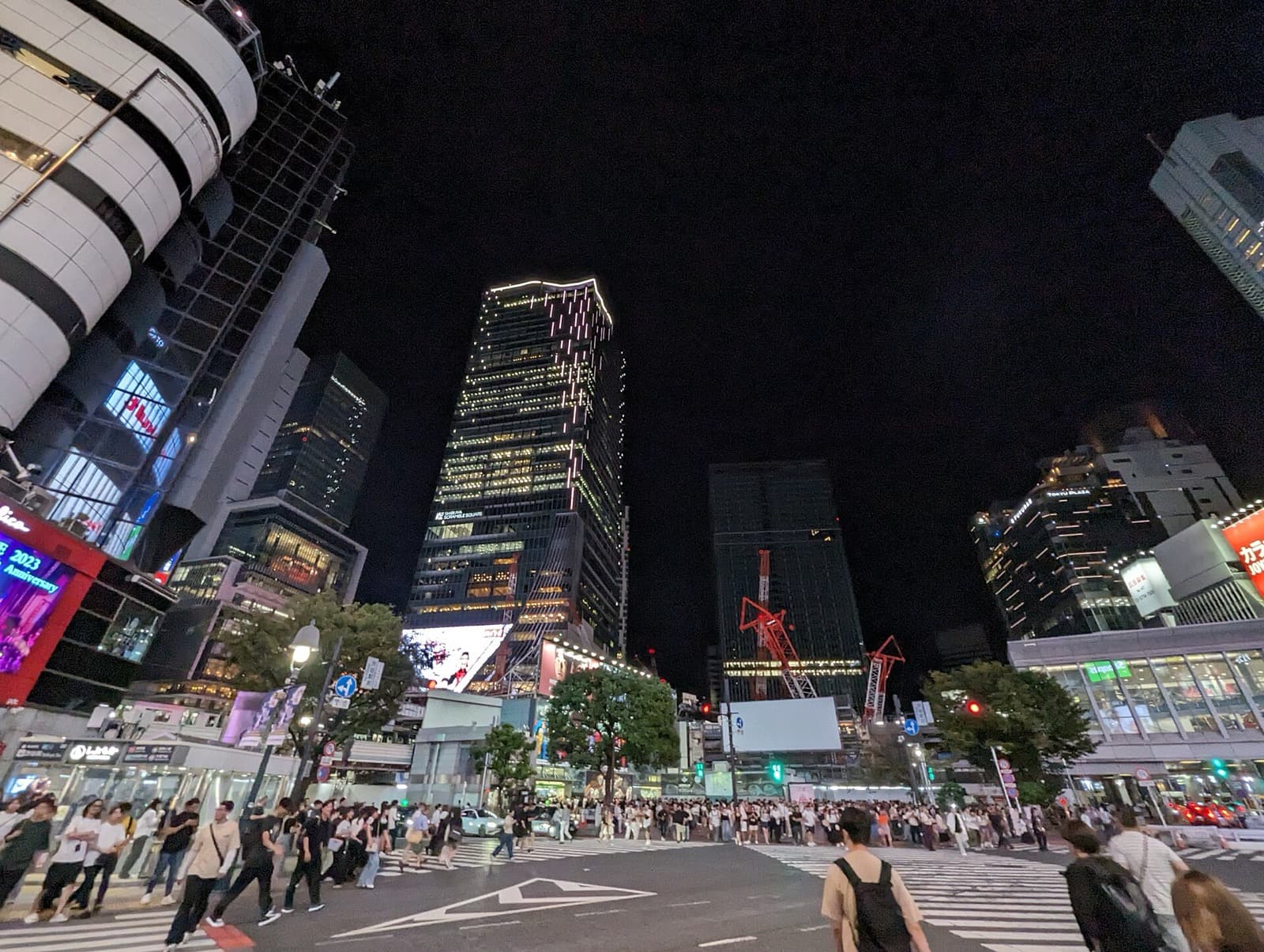
Shibuya Crossing is the world's busiest pedestrian scramble intersection — when the lights change, up to 3,000 people cross simultaneously from all directions. It's hypnotic, it's genuinely impressive, and it tells you something true about how Tokyo works. Here's everything you need to know.
Some links in this article are affiliate links. If you book through them, The Standard Japan may earn a commission at no additional cost to you.
What is Shibuya Crossing?
Shibuya Crossing (officially Shibuya Scramble Crossing, 渋谷スクランブル交差点) is a scramble crossing at the south exit of Shibuya Station in Tokyo. A scramble crossing means all traffic stops simultaneously, and pedestrians can cross in any direction — including diagonally.
At peak times, an estimated 500,000 people pass through Shibuya Station daily, and thousands cross at each light cycle. The scale is genuinely difficult to comprehend until you're standing in the middle of it.
When to Go
Peak hours: Rush hour (8–9:30am, 6–9pm) sees the most pedestrians. Weekend evenings (Friday and Saturday, 7–10pm) are particularly intense.
For photography: Golden hour (just before sunset) gives the best light. After dark, the neon signs illuminate the crossing beautifully — great for long-exposure photography.
Avoid: The crossing is less impressive during the middle of the day on weekdays. Still busy by any global standard, but the scale is reduced.
Best Places to Watch
Shibuya Sky (屋上展望台) — The rooftop observation deck of Shibuya Scramble Square. Open until 10:30pm (last entry 10pm). ¥2,000. The best elevated view of the crossing. Book tickets in advance on busy days.
Mag's Park / QFRONT building — The large window of the Starbucks on the second floor of the QFRONT building (directly facing the crossing) has become famous. Arrive before the rush and claim a window seat. Free (just buy a drink).
Crossing itself — Walk through it. Stand in the middle at peak time. This is the actual experience. More visceral than any elevated view.
L'Occitane cafe — Second floor, south side. Less famous than the Starbucks, often has available window seats.
What's Around Shibuya Crossing
Shibuya Crossing is in the heart of the Shibuya entertainment and shopping district. Within walking distance:
Hachiko Statue — The famous Akita dog who waited for his owner every day at Shibuya Station for years after the owner's death. Now a bronze statue and the most popular meeting point in Tokyo. 2-minute walk from the crossing.
Shibuya 109 — The iconic fashion building, center of gyaru (glamour girl) culture in the 1990s and 2000s. Still worth visiting for the cultural history and for fast fashion. On the crossing's southwest corner.
Shibuya Stream — The entertainment and dining complex along the Shibuya River. Modern, pleasant, good for dinner. 5 minutes from the crossing.
Center-gai — The pedestrian shopping street running north from the crossing. Teen fashion, fast food, game centers. Busy and energetic.
Nonbei Yokocho — A narrow alley of small bars behind the crossing. This is the hidden Shibuya — cramped, smoky, covered, the antithesis of the international landmark 200 meters away. Go here for drinks after watching the crossing.
Practical Information
Getting there: Shibuya Station (JR Yamanote Line, Tokyo Metro multiple lines, Tokyu, Keio lines). Take the Hachiko exit — you'll see the crossing immediately.
Access: The crossing is a public street — it's free to walk through at all times.
Photography: You can photograph freely from the crossing and public streets. Elevated venues have their own policies.
Crowds: It's always busy. On New Year's Eve and Halloween the crossing becomes genuinely chaotic, though Shibuya's now-permanent street-drinking ban has changed what that actually looks like — see our Shibuya Halloween 2026 guide and Japan's 2026 tourist fines for the current rules before you go.
The Bigger Shibuya Context
The crossing is the most photographed intersection in the world, but Shibuya itself is one of Tokyo's most interesting and rapidly changing districts. The area around the station is being completely redeveloped — the Scramble Square towers, Shibuya Stream, and Shibuya Fukuras have transformed what was a fairly gritty 1980s entertainment district into something more mixed. The older parts (Nonbei Yokocho, the side streets south of the station) retain the original character.
Spend more than an hour at the crossing. Go deeper into the district. Eat somewhere without a famous photo above the door.
FAQ
What makes Shibuya Crossing special? It's a scramble crossing — all traffic halts simultaneously, and pedestrians cross from all directions at once. The volume of people and the orchestrated chaos is unique at this scale. At peak times, up to 3,000 people cross in a single cycle.
Is Shibuya Crossing the busiest intersection in the world? It's consistently cited as the world's busiest pedestrian crossing. By some measures, Times Square in New York has more total foot traffic, but the scramble format makes Shibuya's single intersection distinctive.
What time is best to visit Shibuya Crossing? Friday and Saturday evenings between 7pm and 10pm. Rush hour (8–9:30am) is authentic but hectic. Late afternoon on weekdays gives reasonable crowds with better light.
Is Shibuya safe? Yes. Shibuya has the normal risks of any busy urban entertainment district — pickpocketing in dense crowds, the odd drunk on weekend nights. By global city standards, it's very safe.
How long should I spend at Shibuya Crossing? The crossing itself: 15–30 minutes. Watch a few light cycles from street level, walk through once. If you go to Shibuya Sky or a rooftop bar, add an hour. Then leave the crossing and explore the rest of Shibuya.
Need Help with This?
Have questions about Shibuya Crossing: Everything You Need to Know (2025)? We're here to help. Send us a message and we'll get back to you within 24-48 hours.

Yuki Tanaka
Culture & Food Editor
Born and raised in Tokyo. Writes about the city most tourists never see.
Grew up in Shibuya, 1988–2006. Moved to NYC for university, returned to Tokyo in 2012. Has lived in Shimokitazawa, Nakameguro, and now Yoyogi.
Tokyo
Expertise
Japanese convenience store culture, izakaya etiquette, Tokyo neighborhoods, daily life
The Standard Newsletter
Tokyo in your inbox. Weekly.
No algorithms curating your culture. No sponsored content disguised as journalism. Just the real Tokyo — the izakayas at 2am, the Harajuku kids who never made it to the algorithm, the ramen shop with no sign.
8K+
Subscribers
Weekly
Editions
Free
Always
Join the underground.
One email a week. Unsubscribe anytime.
No spam. No sharing your data. Tokyo only.
Related Stories
Asakusa Guide: Senso-ji, Skytree, and Old Tokyo Done Right
Asakusa guide for first-timers: Senso-ji early, Nakamise without the crush, Skytree timing, Kappabashi, and when a short tour beats wandering alone.
Shinjuku Guide: What to Do in Tokyo’s Chaos District
Shinjuku guide: west exit chaos, Golden Gai, Omoide Yokocho, Gyoen, observatories, and the food-and-bar nights worth booking — without getting lost for hours.
Tokyo at Night: 14 Things to Do After Dark
Tokyo at night done right — Golden Gai, izakaya, jazz bars, observation decks, bar crawls, and last-train strategy without the tourist-trap detours.