
Japan Etiquette Rules: What You Must Know Before You Go (2026)
Japan etiquette rules are not complicated — but breaking them signals disrespect, not ignorance. Here are the ones that actually matter, explained clearly.
Japan etiquette is not about perfection. It is about awareness. Japanese culture does not expect foreigners to know every rule. What it does notice — and what does create genuine discomfort — is behavior that signals you have made no effort to understand where you are.
Most first-time visitors worry too much about the wrong things. You do not need to master chopstick etiquette. You do need to understand how to behave in shared spaces. Here is what actually matters.
The One Rule That Covers Everything
Before the list: there is a single principle that explains almost all of Japanese social behavior. Do not cause inconvenience to others.
Every etiquette rule below is an application of this principle. If you are ever in a situation this guide does not cover, ask yourself: "Is what I am doing or about to do going to create inconvenience, noise, or disruption for the people around me?" If yes, do not do it.
Train and Public Transport Etiquette
This is where you will spend the most time in Japan, and where the rules are most strictly observed.
Do not talk on your phone on trains. This is not a guideline. It is a hard rule. If you receive a call, step off at the next station or let it go to voicemail. Observe what everyone around you is doing: they are silent or speaking in whispers. Match that.
Do not eat or drink on local trains. Shinkansen (bullet trains) are the exception — eating is expected on long-distance services. On any local subway or commuter train, eating is considered rude.
Give up priority seats. The designated priority seats near each car's entrance are for elderly passengers, pregnant women, passengers with small children, and people with injuries. If you are sitting in one, stand when any of these people board.
Stand on the correct side of escalators. In Tokyo, stand on the left, walk on the right. In Osaka, the opposite applies. Pay attention for the first few minutes and mirror what locals do.
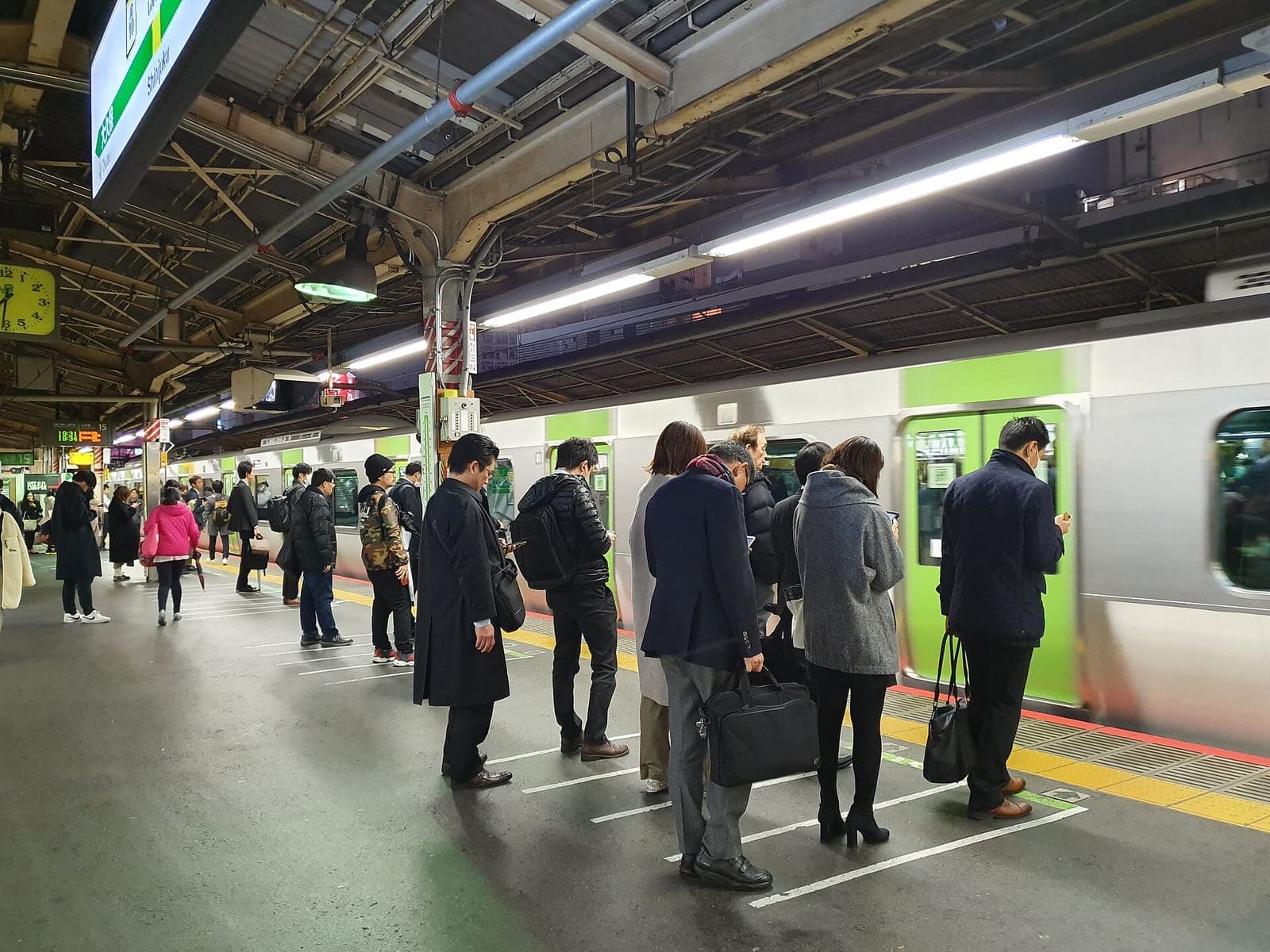
Queue properly. Train platforms have marked queue lines. Stand in them. This is one of the areas where Japanese public order is most visible — and most appreciated.
Onsen (Hot Spring) Etiquette
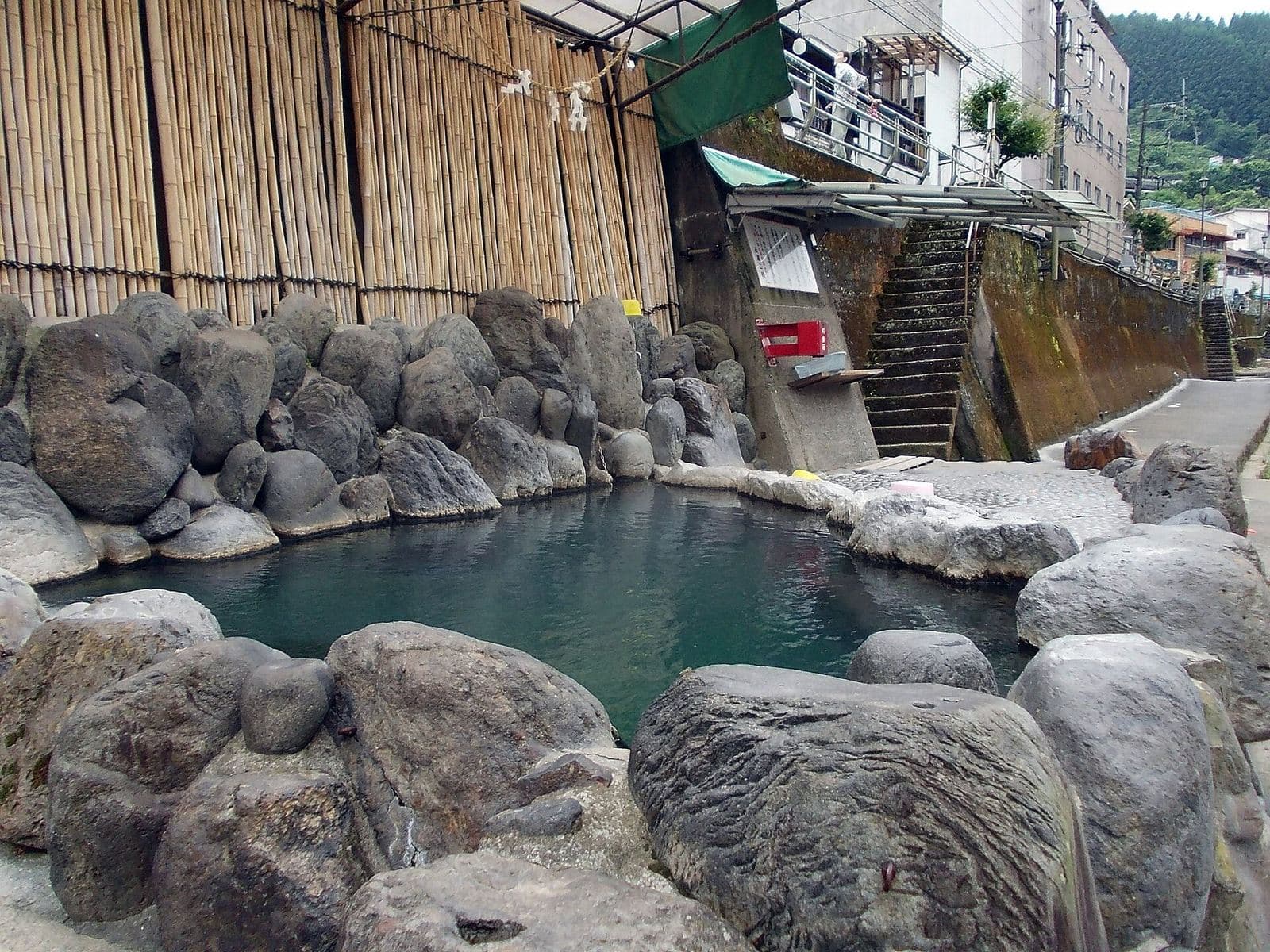
Onsen have more rules than any other context you will encounter in Japan. All of them exist to maintain hygiene and the shared experience.
Shower before entering. This is non-negotiable. Every onsen has a shower area — use it thoroughly before getting in the communal bath. Use the provided soap and shampoo.
Do not bring towels into the water. The small modesty towel you receive is for walking between the showers and the bath. Fold it on your head or set it aside before entering the water. Never let it touch the bath.
Tattoos are still restricted at most onsen. This is changing, but slowly. Many traditional onsen — particularly at ryokan — still prohibit visible tattoos. Check the policy before you arrive. Private baths (kashikiri onsen) are an option if you have tattoos.
Do not swim or splash. Onsen are for soaking, not exercise. Move calmly.
Tie back long hair. Keep your hair out of the water.
Onsen are typically separated by gender. Do not enter the wrong side.
Dining Etiquette
Japanese dining has its own rituals, but most are straightforward.
Say "itadakimasu" before eating. This expression — roughly "I humbly receive" — is said before beginning a meal. You do not need to know its meaning to use it. Just say it. Locals will notice and appreciate it.
Do not stick chopsticks upright in rice. This gesture is associated with funeral rites. Set chopsticks on the chopstick rest (hashioki) when not in use, or lay them across your bowl.
Do not pass food chopstick-to-chopstick. This is also a funeral reference. Place food on a plate or directly in someone's bowl instead.
It is polite to pour drinks for others before yourself. If you are at an izakaya with others, pour for the person next to you first and let others pour for you.
Slurping noodles is acceptable. Do not suppress it. Slurping ramen or soba is normal — some argue it aerates the noodles and enhances flavor.
You will not be expected to tip. Tipping is not practiced in Japan. Attempting to tip can create confusion and mild discomfort. The service you receive is not contingent on gratuity — it is simply a reflection of Japanese service standards.
Shoes and Entrance Etiquette
Remove your shoes when entering homes and many traditional spaces. Look for the entryway (genkan) — a slightly recessed area at the entrance of a home or traditional building. Remove your shoes there and step up into the space. Slippers are often provided.
Check whether to remove shoes at restaurants. Some traditional restaurants (especially those with tatami seating) require shoe removal. Look for a genkan or watch what other guests are doing.
Wear clean socks. Given how often you will be removing your shoes, this matters more in Japan than anywhere else you will travel.
Shrines and Temples
Bow at the torii gate before entering a Shinto shrine. A small bow signals respect for the sacred space you are entering. You do not need to understand Shinto to observe this.
Do not take photographs inside shrines without checking. Many shrine buildings and ritual objects are not to be photographed. Look for posted signs or ask.
Be quiet and respectful during ceremonies. If a ceremony is taking place, observe silently from a distance. Do not approach or photograph unless explicitly invited.
Wash your hands at the temizuya. The stone basin at shrine entrances is for ritual hand-washing. Scoop water with the ladle, rinse your left hand, then your right, then rinse your mouth (without swallowing), then rinse the ladle handle by holding it vertically.
General Public Behavior
Do not eat while walking. Japanese people do not eat while walking as a general rule. Standing in front of a food stall to eat is fine. Walking through a market eating from a container is considered inconsiderate. Sit or stand to eat.
Do not litter. Japan has almost no public rubbish bins outside of convenience stores. Carry a small bag for your rubbish until you find a bin or return to your accommodation.
Speak quietly in public. Large groups of tourists speaking loudly are one of the few genuine sources of irritation for Japanese urban residents. Be aware of your volume, especially on trains and in quiet neighborhoods.
Smoke only in designated smoking areas. Smoking on the street is banned across all of Osaka city since 27 January 2025, with a ¥1,000 fine, and in most of central Tokyo, where Chiyoda Ward, around Tokyo Station, has fined street smokers ¥2,000 since 2002. Look for the marked smoking areas outside stations and convenience stores.
Do not block narrow streets or corridors. If you stop to check your phone or take a photo, step to the side first.
Know where enforcement has actual teeth in 2026. Several places now fine visitors for ignoring exactly these kinds of rules — see our guide to Japan's 2026 tourist fines in Hakuba, Kyoto, and Shibuya.
What Japanese People Will Not Say to You
Japanese social culture emphasizes harmony and avoids direct confrontation. If you violate a social norm, most people will not tell you directly. They will look away, quietly move, or simply absorb the discomfort without comment.
This is important to understand: the absence of complaint does not mean what you are doing is acceptable. It means Japanese social norms prevent the person from saying so.
Pay attention to non-verbal cues. If the people around you have gone very quiet, if someone has physically moved away from you, if a staff member is hovering — something has likely gone wrong. Reflect on what it might be.
FAQ: Japan Etiquette
Will Japanese people correct me if I make a mistake? Almost certainly not. Japanese social culture avoids direct confrontation. This is why learning in advance matters more than it would in countries where correction is more common.
Is it rude to refuse food in Japan? No. You can politely decline food without causing offense. Saying "daijoubu desu" (I'm fine, thank you) or "suki ja nai desu" (I don't like it) is acceptable.
Can I wear shorts to temples? Yes, in most cases. A few temples and shrines require covered knees and shoulders for entry, but this is not universal. Some provide sarongs at the entrance for those who need them.
Is it rude to blow your nose in public? Yes, considered impolite to blow your nose loudly in public. Sniffling quietly is more socially acceptable. Step away from others or find a private space if possible.
Do I need to bow? A slight nod or bow of the head when thanking someone, entering a business, or greeting a host is appreciated but not required. Deep, formal bowing is for specific ceremonial contexts.
Can I drink alcohol in public in Japan? Technically yes — public drinking is legal in Japan. Drinking in parks during cherry blossom season (hanami) is a beloved tradition. Loud drunk behavior in the street is, however, frowned upon.
What should I do if I accidentally break an etiquette rule? Apologize briefly ("sumimasen" means "I'm sorry / excuse me") and correct the behavior. Japanese culture values the acknowledgment of error much more than it dwells on the error itself.
Culture Desk
The Standard Japan
Customs, festivals, pop culture and everyday Japan, explained for people who want to understand what they are looking at.
Facts are taken from primary sources (operators, venues, official tourism and government pages) and dates and prices are checked on the day of writing. Pages are revised when those sources change.
Expertise
Festivals, etiquette, pop culture, mascots, convenience-store culture
Have a question or a correction?
Ask us anything about Japan Etiquette Rules: What You Must Know Before You Go (2026), or tell us what we got wrong. We reply within 24 to 48 hours.
Related Stories
Visit Japan Web: How to Fill It Out Before You Land (2026 Guide)
Visit Japan Web lets you pre-register immigration and customs online, skip the paper forms and use the airport's fast-track QR gates. How to fill it out.

Bringing Medicine to Japan: What's Allowed (MHLW Rules)
Pseudoephedrine cold medicine and ADHD stimulants are high-risk in Japan. Personal-use limits, the Yunyu Kakunin-sho import certificate, and who to ask.
Tipping in Japan: Do You Tip? (2026 Guide)
Tipping in Japan: you generally do not tip in 2026. Restaurants, taxis, and hotels — what's expected, rare exceptions, and what to do instead.