
Universities Abroad
日本語What Is a Liberal Arts College? The US Option Few Japanese Families Know
As selective as the Ivy League, taught by professors in small classes, and in some cases need-blind for international students: how US liberal arts colleges work.
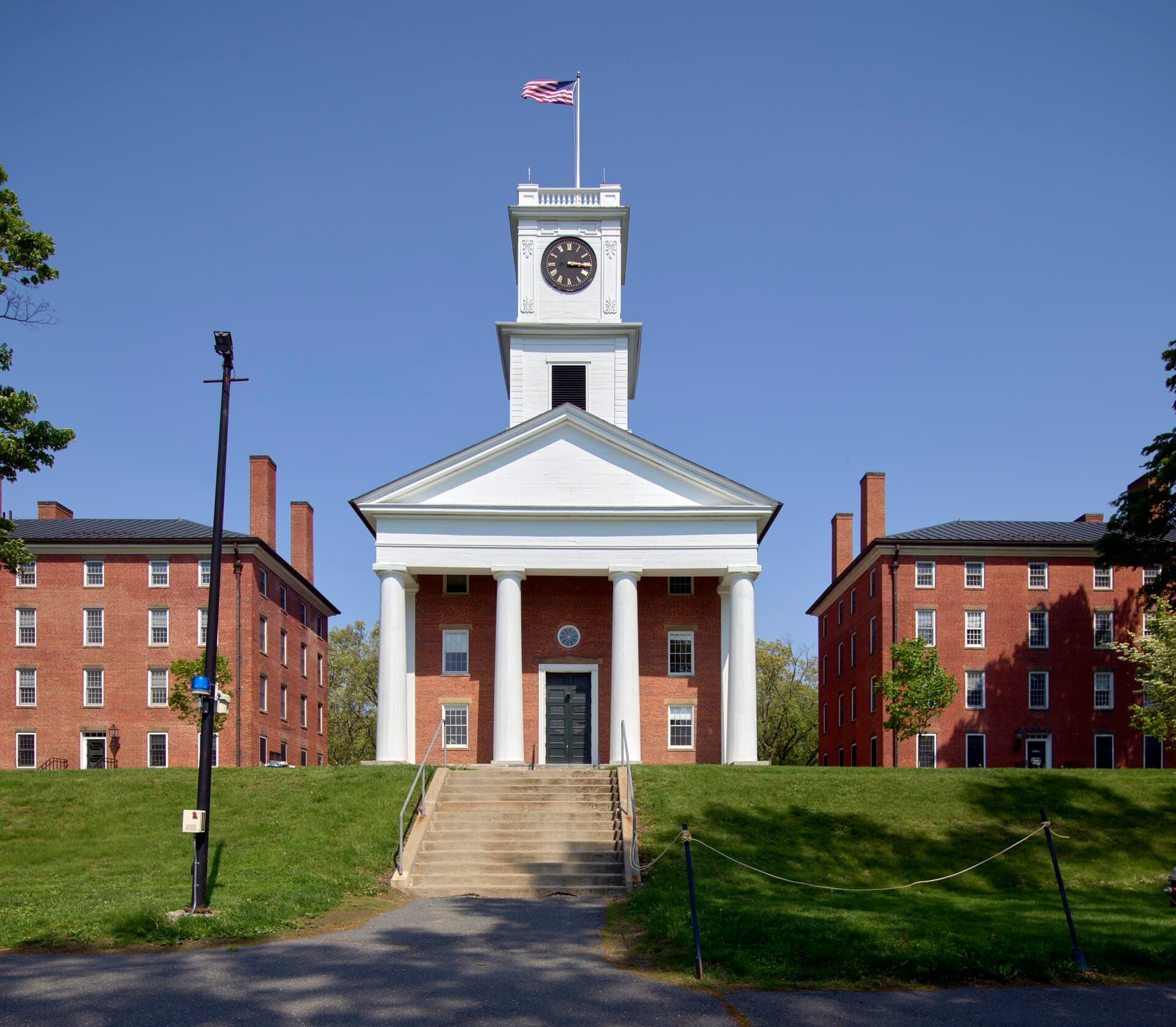
Most families in Japan who think about American universities think of Harvard, Stanford or the big state universities. There is a second group that is just as hard to get into and well known inside the US, yet barely known in Japan: the liberal arts colleges.
This page explains what they are, how they differ from research universities, and what they cost a family applying from Japan. Figures come from the colleges' own published data and their student newspapers, checked in October 2026.
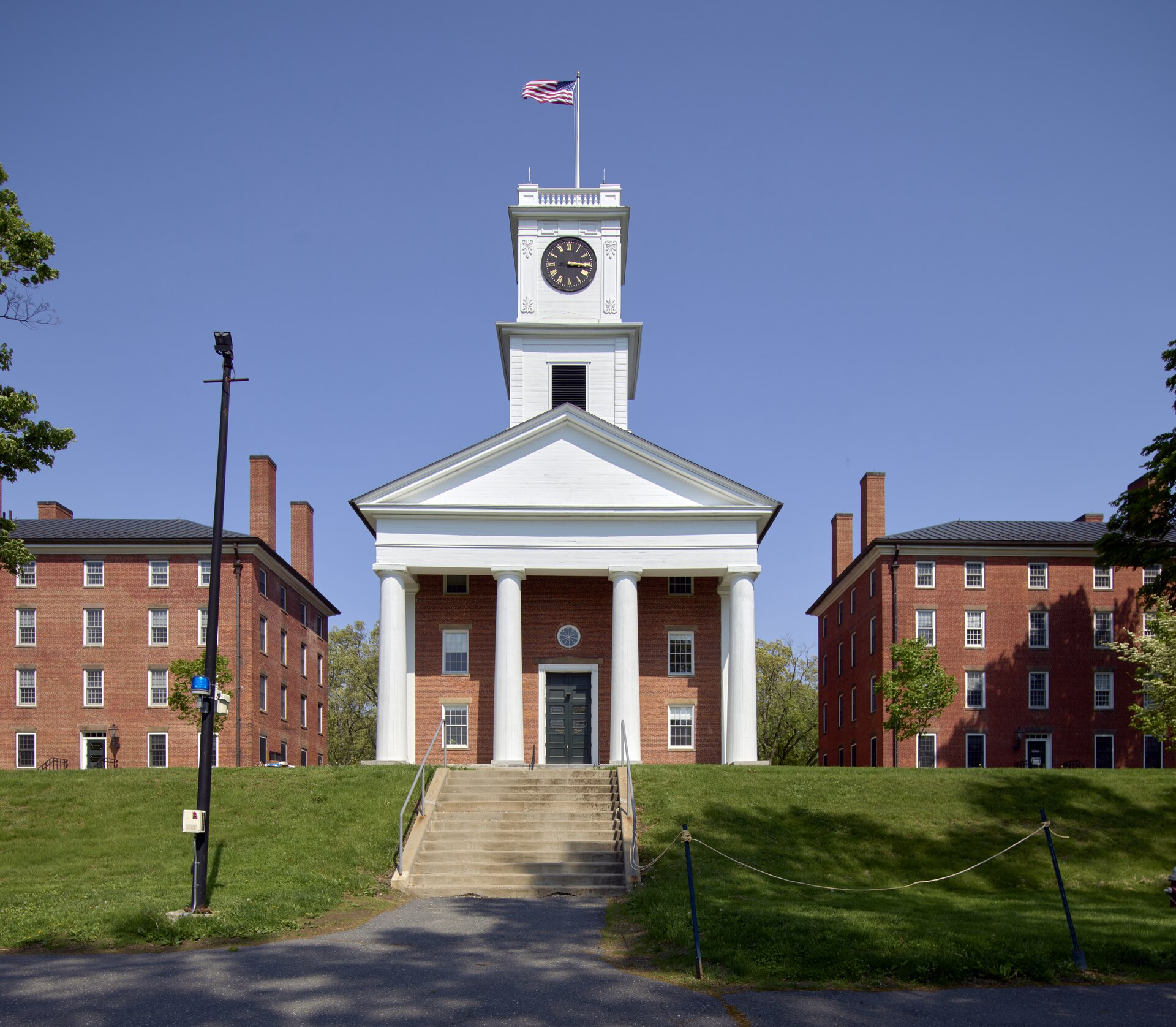 Johnson Chapel at Amherst College, built in 1827
What a liberal arts college is
A liberal arts college is a small college that teaches undergraduates almost exclusively. It has little or no graduate school, and students study widely before choosing a major.
| Liberal arts college | Research university | |
|---|---|---|
| Students | Around 2,000 | 10,000 to tens of thousands |
| Who teaches | Professors | Large introductory courses may be lectures, with graduate teaching assistants |
| Classes | Mostly small seminars and discussion | Mix of lectures and small classes |
| Major | Usually declared in the second year | Some programmes admit directly into a major |
| Degrees | Mainly the BA | Bachelor's to doctorate |
Amherst, for example, has 1,907 students, a 7:1 student-faculty ratio and an average class of 18. Carleton reports 2,086 students, an 8:1 ratio and an average class of 12.
Why they are "hidden"
They rarely appear in world university rankings, which weigh research output and graduate programmes. Inside the US, though, the best of them are as selective as the Ivy League.
| College | Admit rate, class entering 2026 | Source |
|---|---|---|
| Bowdoin | 6.5% | College's published data |
| Amherst | 6.78% | The Amherst Student |
| Williams | 7.4% | The Williams Record |
| Swarthmore | 7.44% | The Swarthmore Phoenix |
Their graduates also go on to research careers at high rates. Swarthmore says 21.3% of its graduates complete a doctorate, third in the nation; Carleton, citing the National Center for Science and Engineering Statistics, calls itself a top-10 producer of STEM PhDs.
There is a Japan connection too. Shigeo Yamada, who took up the post of Japan's ambassador to the United States in December 2023, studied at Carleton in Minnesota on the Foreign Ministry's training programme after graduating from Keio, and took a BA in political science there in 1989.
Cost and financial aid
The leading liberal arts colleges cost about $95,000 a year for tuition, housing and food.
| College | 2026-27 cost | International applicants |
|---|---|---|
| Bowdoin | $97,900+ (full cost of attendance) | Need-blind |
| Amherst | $98,460 in the college's own example (full cost) | Need-blind |
| Williams | $95,960 | Need-aware (Williams Record, 2022) |
| Swarthmore | $95,770 | Need-aware |
That is where they differ most from a typical university. Many of them meet the full demonstrated need of every student they admit, with grants rather than loans:
- Amherst is need-blind for international applicants and requires no loans. In 2025-26, 82% of international students received aid, averaging more than $84,000.
- Bowdoin is need-blind for all applicants including international ones, and its aid is entirely grants. It says it is one of only eleven US colleges and universities with that policy.
- Swarthmore considers ability to pay when admitting international students but meets full need for those it admits; the average award to international admits for the Class of 2030 was more than $93,000.
Need-blind means your finances play no part in the admission decision. Need-aware means they can. At most of these colleges, you must ask for aid when you apply; you cannot ask after you are admitted.
What a family actually pays: Amherst's example
Amherst publishes a worked example. A student whose full cost is $98,460 receives $79,760 in grants and is expected to earn $1,800 from a campus job, for a total aid offer of $81,560. That family pays about $16,900 a year.
The example family has an income of $168,000 and $392,000 in home equity. Your figure will depend on your own income and assets, so use each college's net price calculator. Many colleges ask international applicants for the CSS Profile, with income documents translated into English.
Applying from a Japanese high school
Students at Japanese high schools can apply directly; the Japanese school record is read as it is.
| When | What to do |
|---|---|
| By the end of year 2 (高2) | Keep grades up, start English tests (TOEFL, IELTS, Duolingo), keep up activities |
| Summer–autumn of year 3 | Write essays in the Common App or similar, ask teachers for English references and the school for an English transcript |
| Around November | Many early deadlines |
| Around January | Many regular deadlines |
| Late March | Decisions and aid offers (Amherst released regular decisions on 20 March 2026) |
| Around 1 May | Reply to your offer |
Deadlines vary by college, so check each one. Many colleges are test-optional: 46% of Bowdoin's Class of 2030 applied without scores.
Japanese high schools finish in March and US colleges start in late August or September, which leaves about five months for English preparation and getting ready for residential life.
What families in Japan should know
Many are in small towns. Williams is in rural western Massachusetts, Carleton in Northfield, Minnesota, Bowdoin in Brunswick, Maine. Swarthmore, eleven miles from Philadelphia, is the exception among the best known.
English requirements are real. Carleton, for applicants who have not used English at home or school, looks for TOEFL iBT 100 or above (pre-2026 format), IELTS 7.0 or Duolingo 130.
There is Japanese funding. The Grew Bancroft Foundation supports Japanese students at US liberal arts colleges, including Carleton; check its site for the current application cycle.
FAQ
Is a liberal arts degree recognised in Japan? It is a bachelor's degree (BA), the same degree a university awards. Many graduates go on to graduate school; Swarthmore says 21.3% of its graduates complete a doctorate.
Can you study science? Yes. Carleton describes itself as a top-10 producer of STEM PhDs. Many liberal arts colleges have no engineering school, so check the programme if engineering is the goal.
Are there many Japanese students? International students are around a tenth of the student body at each college, and students from Japan are a small part of that. It makes for fast immersion in English, but fewer people to talk to in Japanese.
For six colleges side by side, see six top liberal arts colleges. For other countries, see US, UK, Canadian or Australian university?. For the student visa, see the US student visa guide for parents.
Related guides
Stay current
Admissions details change. We will tell you when.
Fees, application windows and year-group availability move every cycle, and schools rarely announce it loudly. One email when something in these guides changes, plus new guides as they publish.
No schools pay to appear in these guides. Unsubscribe whenever you like.
Who wrote this
The Standard Japan editorial desk
The Standard Japan is run from Japan. No school pays to appear in these guides. We check facts against primary sources and update pages when official information changes.