
Universities Abroad
日本語Williams, Amherst, Swarthmore, Bowdoin, Hamilton, Carleton: Six Top Liberal Arts Colleges
Six US liberal arts colleges that are as hard to get into, and as strong on outcomes, as the Ivy League: admission rates, 2026-27 costs and aid for international students.
Ask a family in Japan to name a top American university and you will hear Harvard, Stanford or MIT. Ask an American admissions counsellor and the list will also include a handful of colleges with about 2,000 students each: places that admit as small a share of applicants as the Ivy League, send graduates on to doctorates at high rates, and are taught by professors rather than graduate assistants.
These are six of them. The figures come from each college's own published data or, where the college had not yet published, from its student newspaper, all checked in October 2026. For what a liberal arts college is and how it differs from a research university, see what is a liberal arts college.
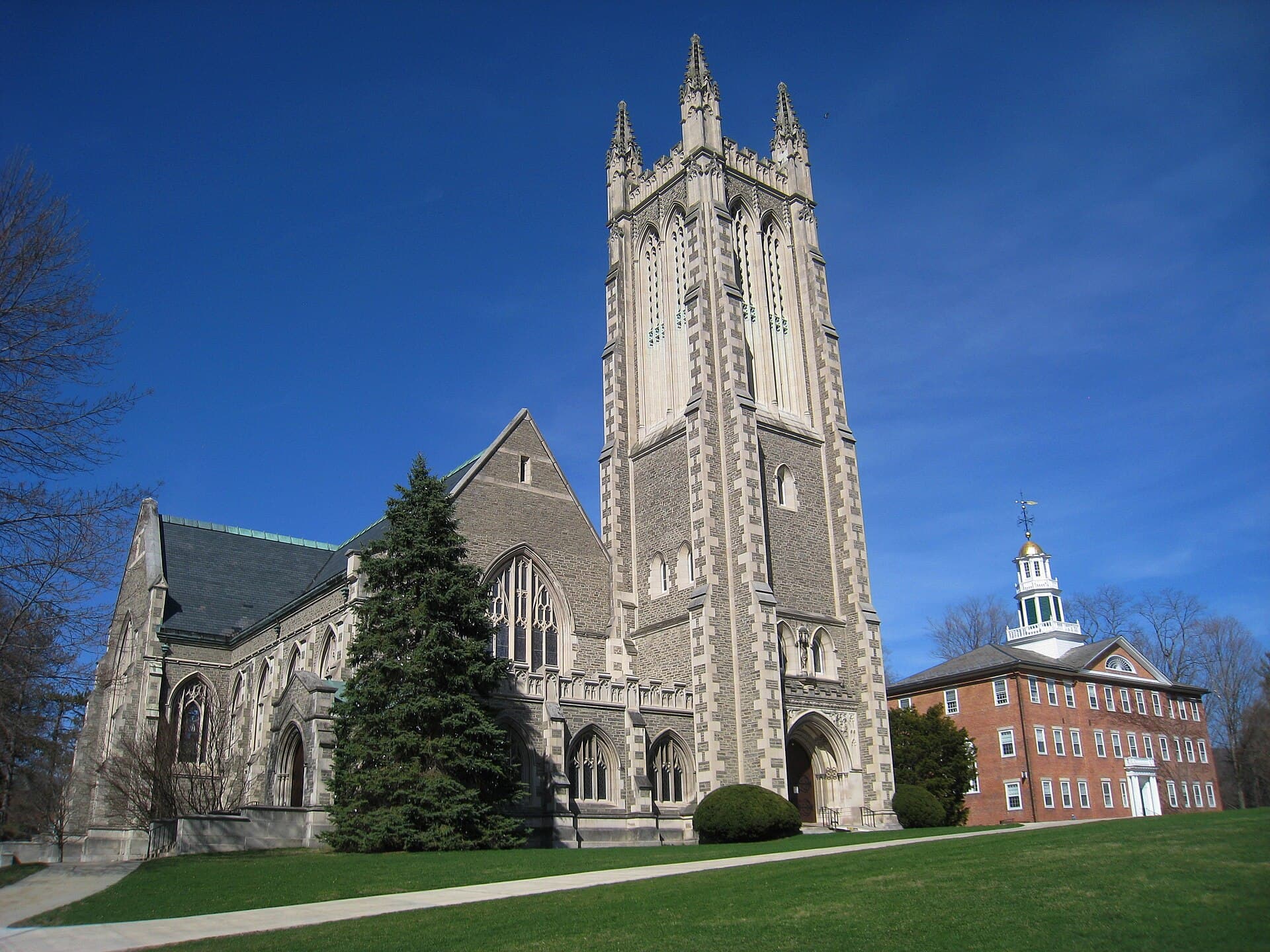
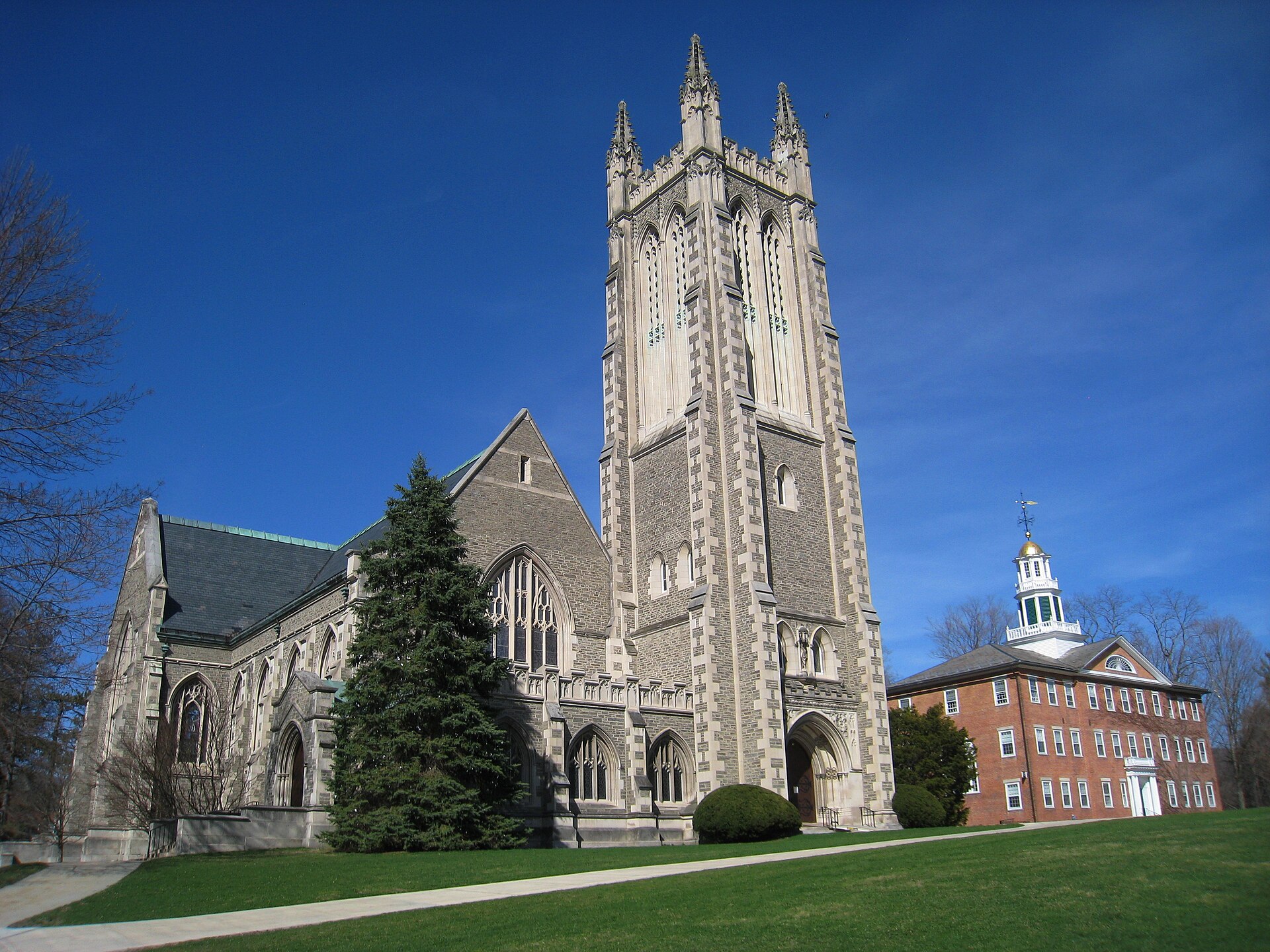 Thompson Memorial Chapel at Williams College
The six compared
First, admit rates and size.
| College | Location | Students | Admit rate (entering 2026) |
|---|---|---|---|
| Bowdoin | Brunswick, Maine | 1,881 | 6.5% |
| Amherst | Amherst, Massachusetts | 1,907 | 6.78% |
| Williams | Williamstown, Massachusetts | 2,000+ | 7.4% |
| Swarthmore | Swarthmore, Pennsylvania | 1,695 | 7.44% |
| Hamilton | Clinton, New York | 2,046 | 14.3% |
| Carleton | Northfield, Minnesota | 2,086 | 18% |
Admit rates for Bowdoin, Hamilton and Carleton are the colleges' own; Amherst, Williams and Swarthmore figures come from their student newspapers.
Then cost, and whether finances affect admission for international applicants.
| College | Cost, 2026-27 | International applicants |
|---|---|---|
| Bowdoin | $97,900+ (full cost of attendance) | Need-blind |
| Amherst | $98,460 in the college's own example (full cost) | Need-blind |
| Williams | $95,960 | Need-aware |
| Swarthmore | $95,770 | Need-aware |
| Hamilton | $95,250 (tuition and fees plus room and board) | Not need-blind |
| Carleton | $99,580 (2025-26 full cost) | Limited aid budget |
"Full cost" figures include books, personal costs and travel estimates; the others are billed charges. Williams's policy for international applicants is as reported by the Williams Record in 2022.
All six say they meet the full demonstrated need of the students they admit. The difference that matters to a family outside the US is whether the college looks at your finances before deciding to admit you. A need-blind college does not; a need-aware one does, so asking for aid can make admission harder.
Next to the Ivy League
The same year's admit rates at two Ivy League universities that published them:
| University | Admit rate (entering 2026) | Source |
|---|---|---|
| Brown | 5.35% | The Brown Daily Herald |
| Dartmouth | 5.8% | Dartmouth admissions newsroom |
| Bowdoin | 6.5% | Bowdoin |
| Amherst | 6.78% | The Amherst Student |
Bowdoin and Amherst are within about a percentage point of Brown and Dartmouth. Harvard, Princeton and Penn did not publish an admit rate for this class.
Bowdoin: need-blind for everyone, and no loans
On the Maine coast in Brunswick, with 1,881 students and an 8:1 student-faculty ratio. It admitted 6.5% of applicants for the Class of 2030, the lowest in its history according to the student newspaper.
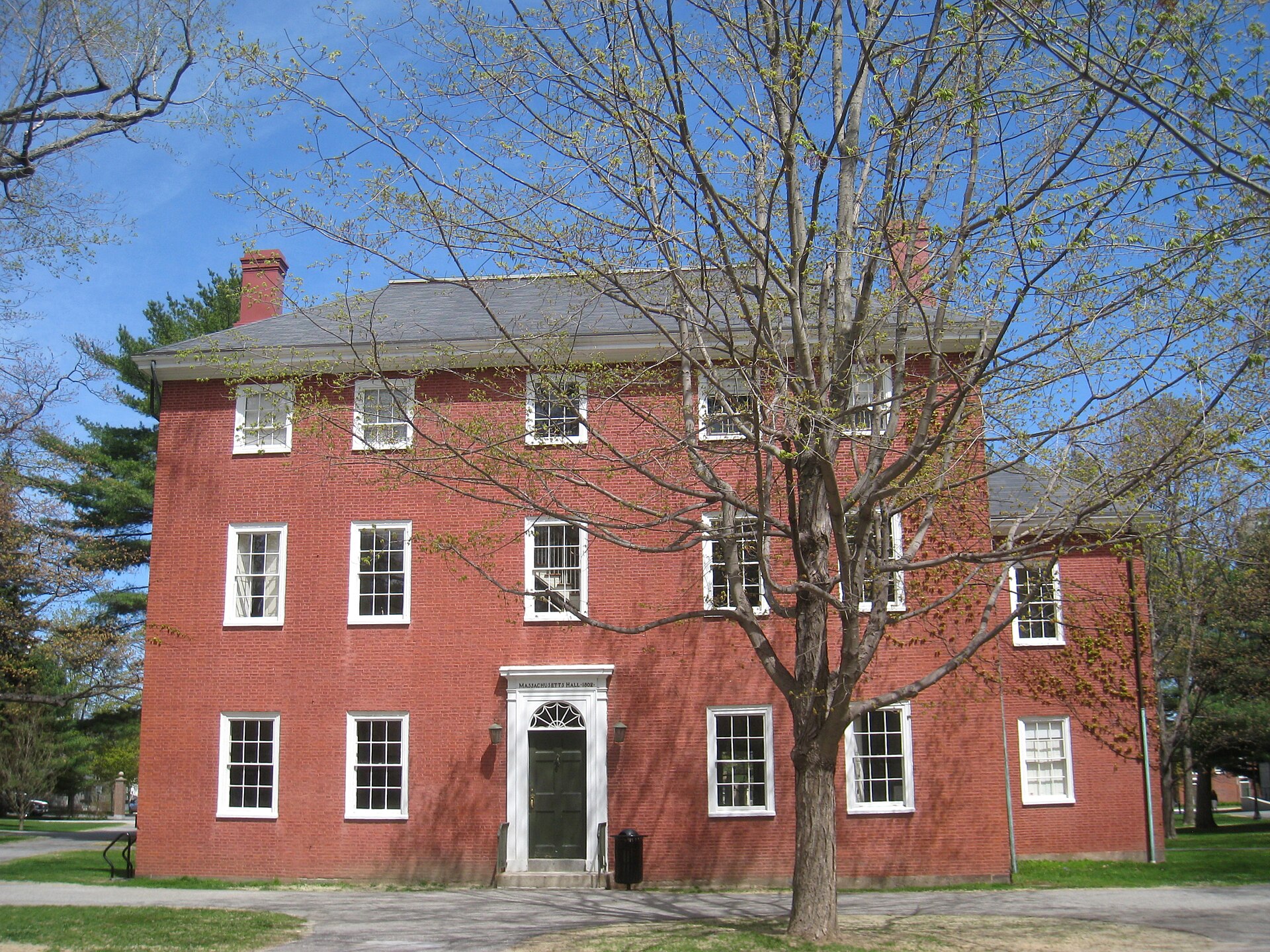 Massachusetts Hall at Bowdoin College
Bowdoin is need-blind for international applicants and meets full need entirely with grants; it says it is one of only eleven colleges and universities in the US that is need-blind on that basis. It was also the first college in the country to make test scores optional, in 1969, and 46% of the Class of 2030 applied without them. Twelve percent of the class have a home address, school address or citizenship outside the US.
Amherst: 82% of international students on aid
In the college town of Amherst, Massachusetts, with 1,907 students, a 7:1 student-faculty ratio and an average class of 18. It admitted 6.78% of applicants for the Class of 2030.
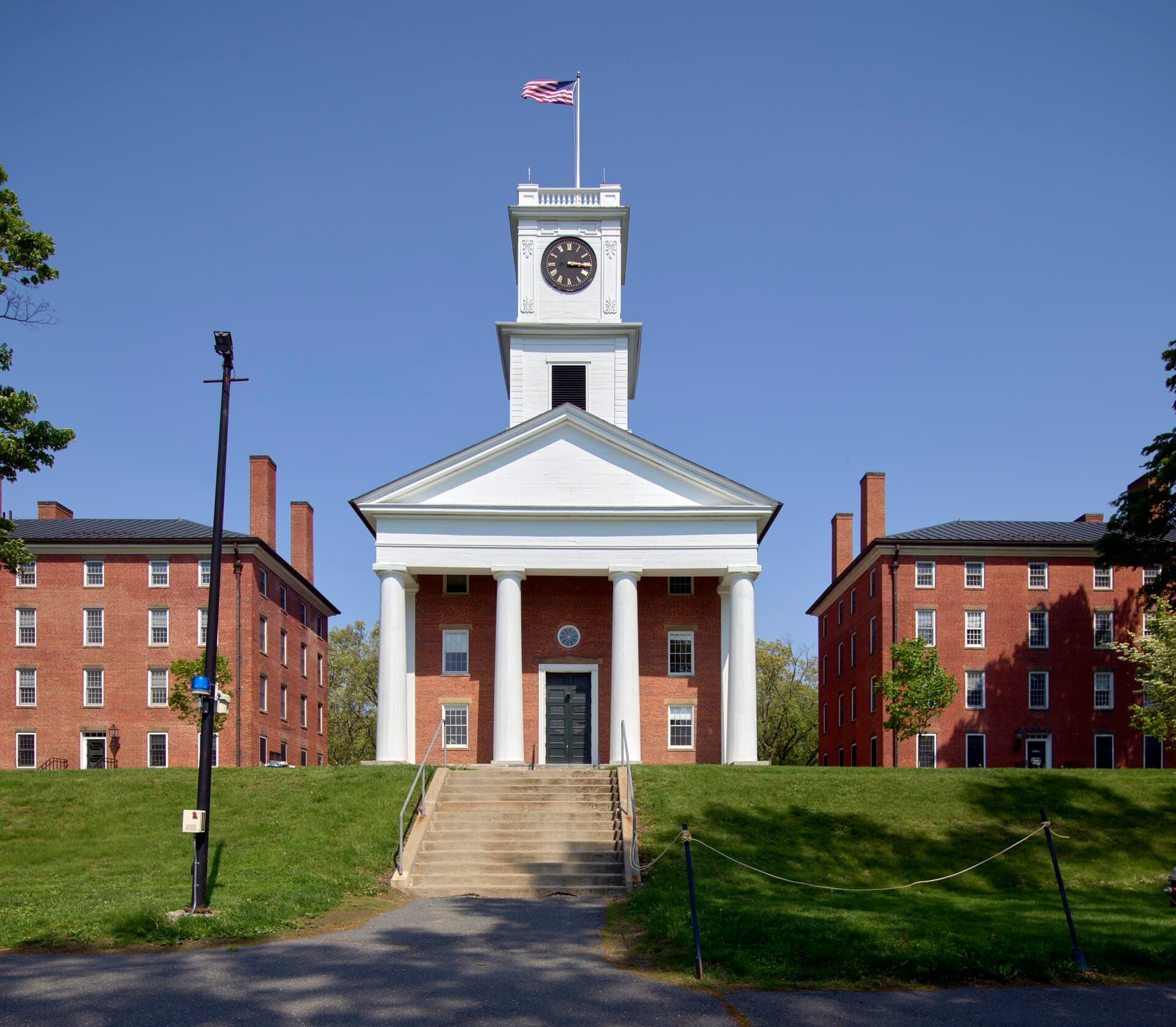
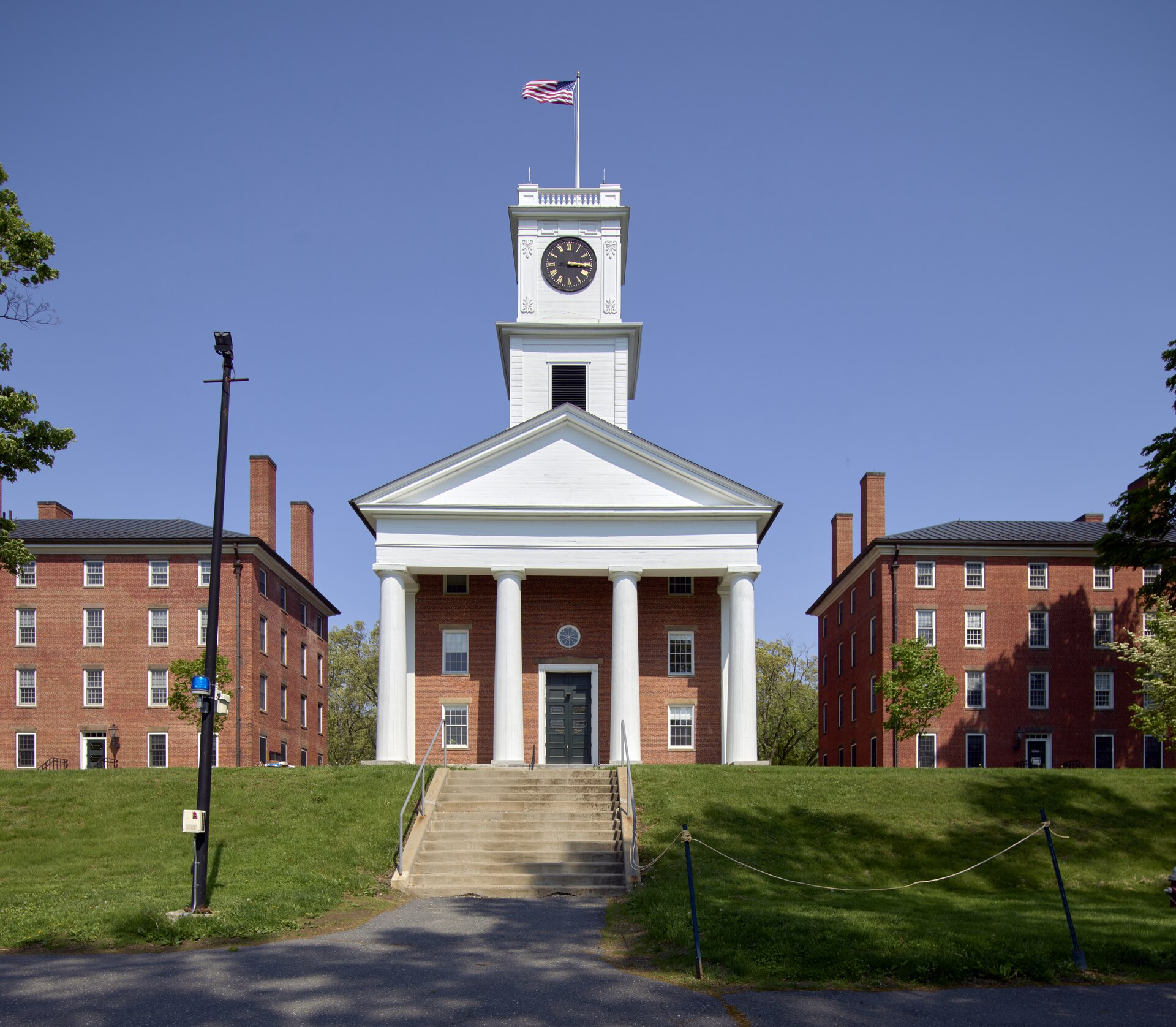 Johnson Chapel at Amherst College, built in 1827
Amherst is need-blind for international applicants and meets calculated need with no loans. In 2025-26, 82% of its international students received aid, and the average award was more than $84,000. About 13% of students are non-US citizens, from 76 countries. Students can also take classes at Smith, Mount Holyoke, Hampshire and the University of Massachusetts through the Five College consortium.
Williams: two students, one professor
In Williamstown, a small town in the hills of western Massachusetts. It admitted 7.4% of applicants for the Class of 2030, which the Williams Record called a record low. The 2026-27 comprehensive fee is $95,960, and aid is all grants.
Williams is known for its Oxford-style tutorials, in which two students and one professor meet across a semester to argue over each other's work. Admission is need-aware for international applicants, so decide carefully whether to apply for aid; most colleges will not let you ask for it later.
Swarthmore: third in the country for doctorates
Eleven miles southwest of Philadelphia, the closest to a big city of the six. It has 1,695 students, an 8:1 ratio, and admitted 7.44% of applicants for the Class of 2030.
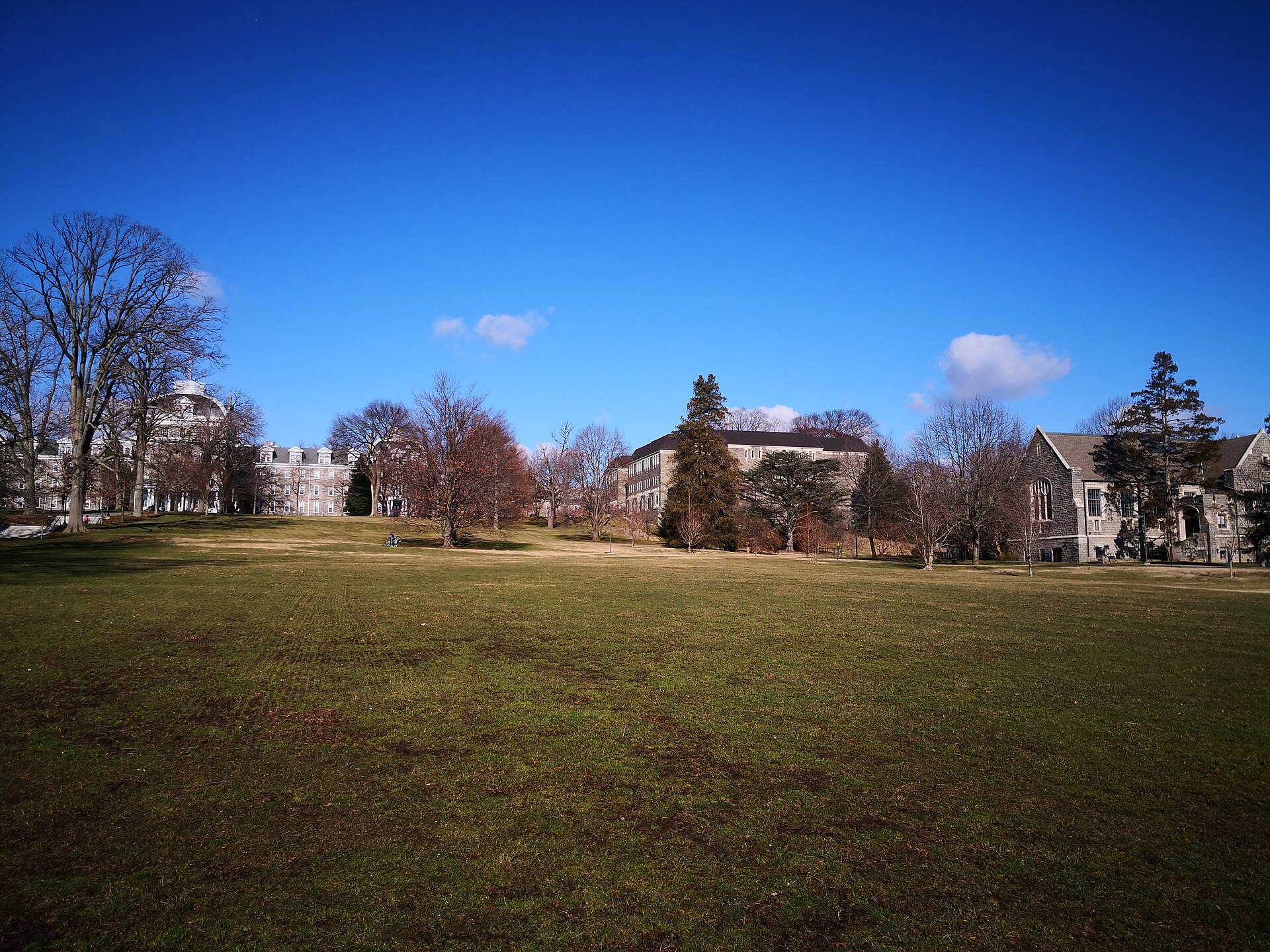 The lawn by Parrish Hall at Swarthmore College
Swarthmore says 21.3% of its graduates complete a doctoral programme, which it ranks third in the nation. It shares classes with Bryn Mawr and Haverford in the Tri-College Consortium and offers cross-registration at the University of Pennsylvania. It is need-aware for international applicants but meets full need for those it admits, with no loans; the average aid award to international students admitted to the Class of 2030 was more than $93,000. About 13% of students are international.
Hamilton: no required subjects
On a hilltop campus in Clinton, in central New York, with 2,046 students and a 9:1 ratio. It admitted 14.3% of applicants for the Class of 2030.
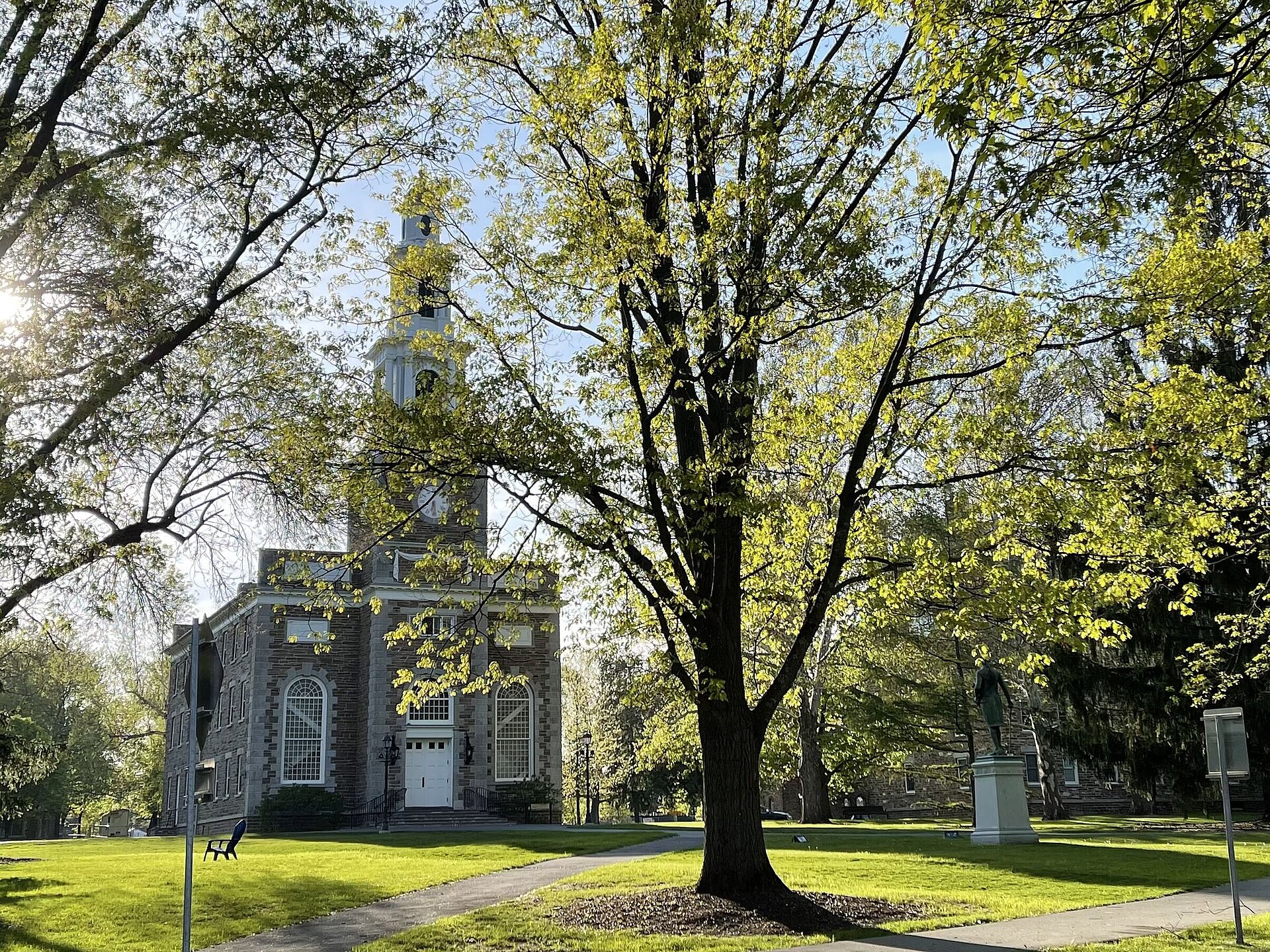 Hamilton College Chapel
Hamilton is one of the few US colleges with an open curriculum: no distribution requirements push students into set subjects. It reports that 95% of graduates are employed within a year. It is not need-blind for non-US citizens, and aid must be requested with the application. Eight percent of students are foreign nationals.
Carleton: STEM PhDs, and Japan's ambassador's college
In the small town of Northfield, Minnesota, with 2,086 students, an 8:1 ratio and an average class of 12. It admitted 18% of applicants for the Class of 2030.
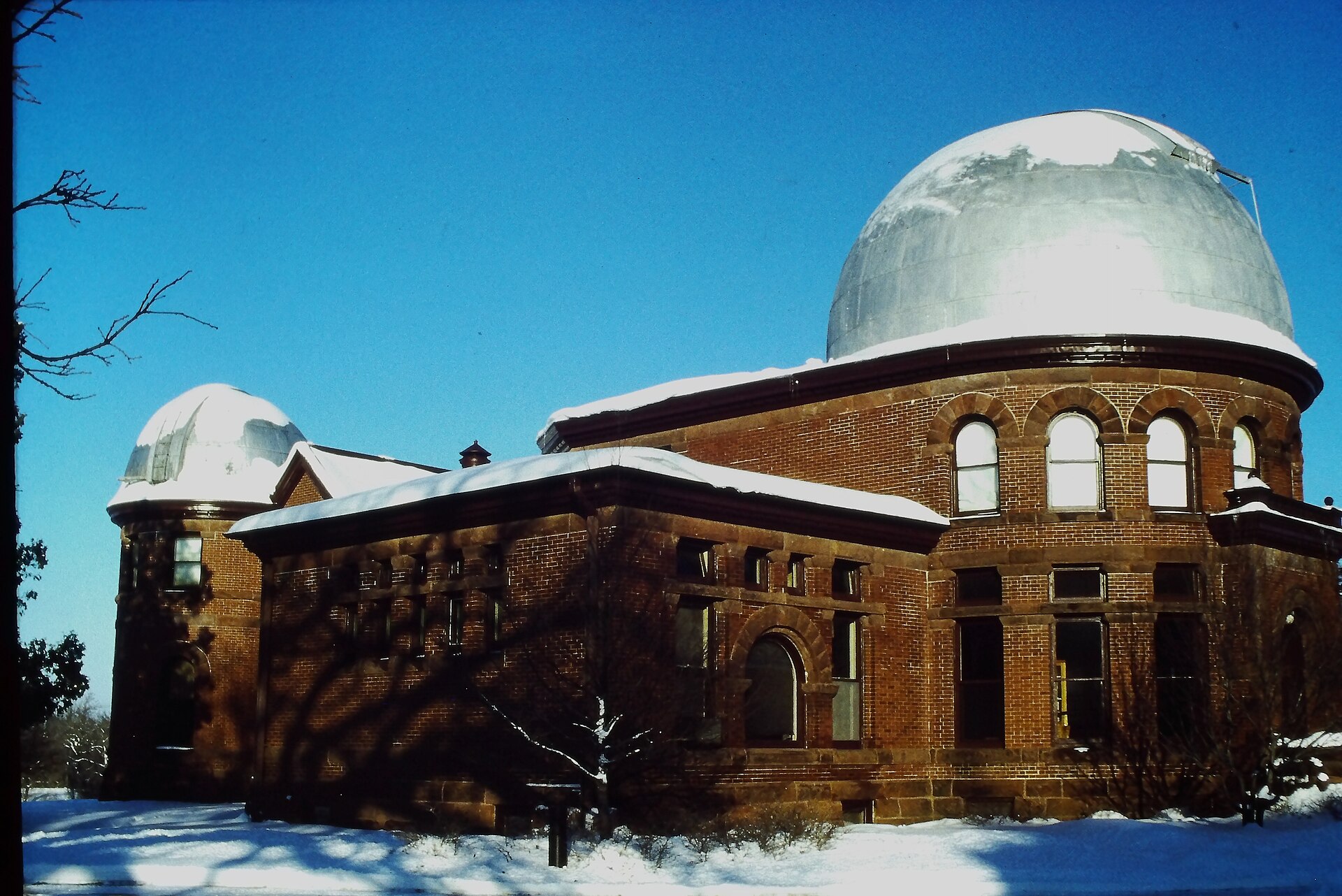 Goodsell Observatory at Carleton College in snow
Citing the National Center for Science and Engineering Statistics, it describes itself as a top-10 producer of STEM PhDs in the US. The year runs in three ten-week terms.
Carleton also has a direct line to Japan. Shigeo Yamada, who took up the post of Japan's ambassador to the United States in December 2023, graduated from Carleton in 1989 with a degree in political science. He had already graduated from Keio University and spent two years at Carleton on the Japanese Foreign Ministry's training programme for young diplomats. Some Japanese students have chosen Carleton over the University of Tokyo. Hiromichi Ueda, from Musashi High School, decided in June of his final year to apply to US colleges and applied in Japan and the US at the same time. He learned in March that he had passed the entrance exam for Todai's Science I stream, spent a semester there, and started at Carleton in September 2017. He was a scholar of the Grew Bancroft Foundation, which supports Japanese students at US colleges, and graduated in 2021 with a major in mathematics. In his account for the foundation, he writes that Carleton's professors say, almost word for word, that they chose the college because they love teaching undergraduates directly. His reports from his time there are on AGOS Japan (in Japanese).
Carleton's 2025-26 cost of attendance was $99,580, which it expects to rise 4–5% a year. It says it meets full demonstrated need but has limited funding for international students.
Choosing from Japan
- Need aid? Start with Amherst and Bowdoin, where your finances do not affect the decision.
- Look past the admit rate. Hamilton's open curriculum and Carleton's record in science are reasons to choose them in their own right.
- Want a city nearby? Swarthmore is eleven miles from Philadelphia.
- Apply for aid with your application. Most of these colleges will not consider a request made after admission.
For how university systems differ across the US, UK, Canada and Australia, see US, UK, Canadian or Australian university?. For where Japan's international school graduates go, see international school university outcomes.
Related guides
Stay current
Admissions details change. We will tell you when.
Fees, application windows and year-group availability move every cycle, and schools rarely announce it loudly. One email when something in these guides changes, plus new guides as they publish.
No schools pay to appear in these guides. Unsubscribe whenever you like.
Who wrote this
The Standard Japan editorial desk
The Standard Japan is run from Japan. No school pays to appear in these guides. We check facts against primary sources and update pages when official information changes.