
Japanese Food Guide: What to Eat in Japan (2026)
What to eat in Japan in 2026: ramen, sushi, yakitori, tempura, tonkatsu, izakaya, depachika, and regional specialties — from konbini onigiri to kaiseki.

What to eat in Japan? Start with ramen, sushi, yakitori, and a convenience-store onigiri. Then work through tonkatsu, tempura, shabu-shabu, udon, okonomiyaki, and whatever is on the specials board at the nearest izakaya. Japanese food is not one cuisine — it is a country of regional specialties, seasonal obsessions, and culinary seriousness that applies equally to a ¥500 konbini meal and a ¥50,000 kaiseki dinner.
This is the map: essentials first, then experiences, categories, regions, and how to order without freezing at the counter. Plant-based travelers should also open vegetarian/vegan Japan. Muslim travelers: Halal Japan.
The Non-Negotiables
Ramen — Japan’s everyday obsession. Four styles everyone should know: shoyu (soy, Tokyo standard), miso (Sapporo), tonkotsu (pork bone, Fukuoka), and shio (salt, lighter). Tokyo alone has thousands of shops. Order at the vending machine, sit at the counter, slurp. For a curated shortlist, see best ramen in Tokyo.
Sushi — Everyday conveyor-belt (kaiten-zushi, often ¥100–¥300 a plate) and transcendent omakase counters (¥15,000–¥50,000+). The gap between them is enormous. Start on a belt for the rhythm; save for one proper counter if the budget allows.
Yakitori — Skewered chicken over charcoal — and every part of the bird. Order tsukune, negima, kawa, reba if you are adventurous, and nankotsu. Salt or tare. A cold beer is not required, but it is traditional. Tokyo deep-dive: best yakitori.
Tempura — Seafood and vegetables in a barely-there batter. Eat immediately. Dip in tentsuyu (dashi with grated daikon) — vegetarians, note that tentsuyu is usually fish-based.
Tonkatsu — Breaded pork cutlet with shredded cabbage, miso soup, and rice. Rosu (loin) or hire (fillet). Sauce is thick and fruity. Maisen in Harajuku remains a classic reference.
The Essential Experiences
Conveyor-belt sushi — Order on a screen, watch plates arrive. Price by plate color or display. Modern chains: Sushiro, Kura Sushi, Hama Sushi.
Standing sushi bars — Often the best value. Point at the case, pay per piece. Around Tsukiji Outer Market in Tokyo is still a useful corridor.
Izakaya dining — Edamame, yakitori, karaage, dashimaki tamago, beer or sake, kitchen firing all night. The social rhythm matters as much as the food. Starter list: best izakaya Tokyo.
Depachika — Department-store basement food halls (Isetan, Mitsukoshi, Takashimaya) for bento, wagashi, prepared foods, sake, and pastry. Go hungry. Guide: Tokyo depachika.
Konbini — Not a backup plan; a category. Onigiri, fried chicken, oden in winter. See konbini culture and 7-Eleven vs Lawson.
By Category
Noodles
- Ramen — covered above
- Udon — thick wheat noodles in clear dashi; Marugame Seimen is the reliable chain. Deeper: udon guide
- Soba — thin buckwheat; cold zaru soba is summer gold
- Tsukemen — cold noodles dipped in concentrated warm broth
- Somen — ultra-thin wheat noodles, iced, seasonal
Rice dishes
- Donburi — gyudon, oyakodon, katsudon, kaisendon
- Onigiri — salmon, tuna mayo, kombu classics from any konbini
- Katsu curry — mild, thick Japanese curry under a cutlet; CoCo Ichibanya is the national chain
- Ochazuke — rice in tea or dashi, usually a closer
Street food
- Takoyaki — Osaka’s octopus balls
- Taiyaki — fish-shaped waffle, usually red bean
- Yakisoba — festival fried noodles
- Harajuku crepes — cream and fruit, still a Tokyo institution
Sweets
- Wagashi — mochi, dorayaki, yokan — precision sweets from specialty shops
- Matcha desserts — quality varies wildly; Uji near Kyoto is the reference region
- Konbini sweets — premium puddings and seasonal limiteds that punch above their price
Regional Specialties
Leave Tokyo and the menu changes:
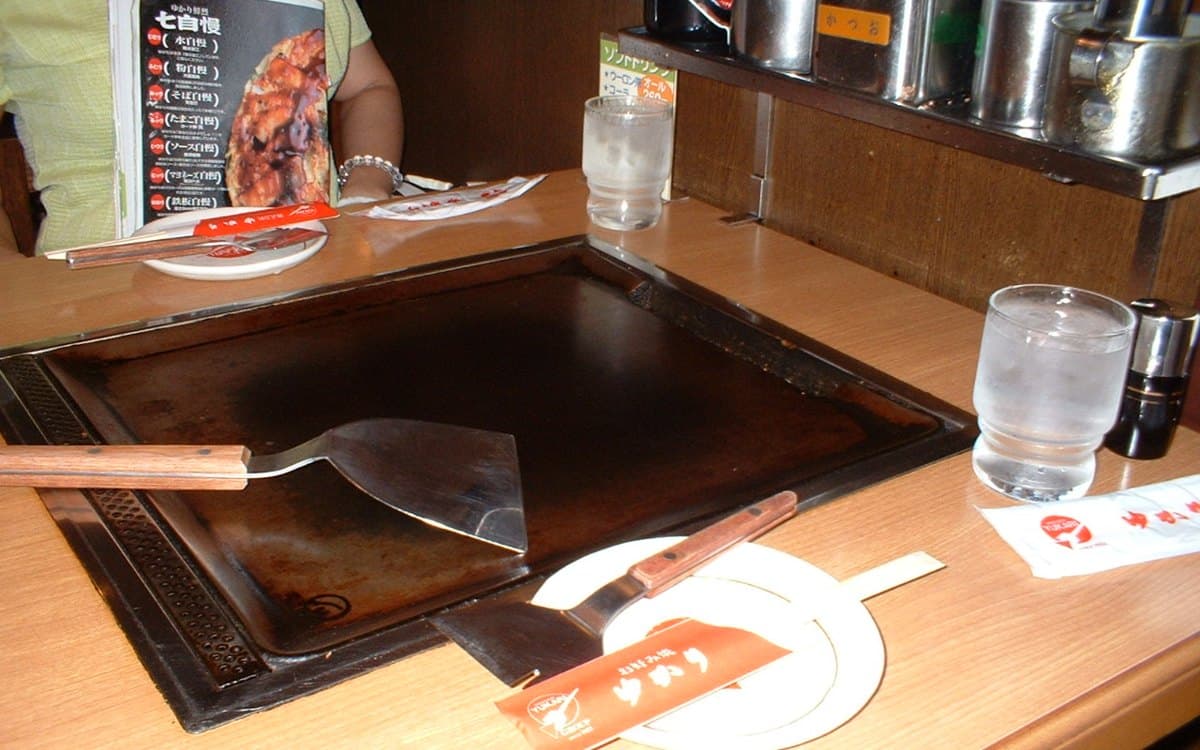
- Osaka — okonomiyaki, kushikatsu, takoyaki
- Kyoto — kaiseki, tofu cuisine, yudofu, wagashi
- Fukuoka — tonkotsu ramen, mentaiko, motsu nabe
- Sapporo — miso ramen, soup curry, Jingisukan (mutton), seafood
- Hiroshima — layered okonomiyaki, oysters, momiji manju
How to Order
Picture menus and plastic food displays outside are normal. Point, hold up fingers for quantity, say kore (this one). Many chains now have English tablet ordering. If you freeze: look at the next counter, then say you want the same — it works almost everywhere.
FAQ
What is Japanese food (washoku)?
Seasonal ingredients, umami broths (dashi), fermented condiments (soy, miso, sake), precise prep, and presentation — from conveyor sushi and ramen to kaiseki.
Is Japanese food healthy?
Traditional patterns are often high in vegetables and fish, lower in saturated fat, with controlled portions. Modern fast food is a different story.
What can vegetarians eat?
Assume fish dashi unless confirmed otherwise. Urban vegan restaurants and confirmed shojin help; tofu, vegetable tempura, and inari are not automatically safe. Full playbook: vegetarian/vegan Japan.
What is umami?
The savory fifth taste — glutamates in soy, mushrooms, tomatoes, aged cheese, and especially dashi from kombu and dried fish.
How much does food cost?
Ramen ¥900–¥1,500. Conveyor sushi ¥1,000–¥3,000 per person. Tonkatsu set ¥1,200–¥2,000. Konbini meal ¥500–¥800. Omakase sushi ¥15,000–¥50,000+. Kaiseki ¥15,000–¥80,000+.
What is kaiseki?
A multi-course seasonal tasting menu with Kyoto roots. Expect two to three hours and serious precision — Kyoto for the tradition, Tokyo for depth of options.
Need Help with This?
Have questions about Japanese Food Guide: What to Eat in Japan (2026)? We're here to help. Send us a message and we'll get back to you within 24-48 hours.

James Chen
Food & Drink Writer
Former chef. Now eats his way through Tokyo and writes about it.
Moved to Tokyo from San Francisco in 2016. Worked in kitchens in both cities before switching to food journalism. Lives in Nakameguro.
Tokyo
Expertise
Ramen, izakaya, Tokyo restaurants, food culture
The Standard Newsletter
Tokyo in your inbox. Weekly.
No algorithms curating your culture. No sponsored content disguised as journalism. Just the real Tokyo — the izakayas at 2am, the Harajuku kids who never made it to the algorithm, the ramen shop with no sign.
8K+
Subscribers
Weekly
Editions
Free
Always
Join the underground.
One email a week. Unsubscribe anytime.
No spam. No sharing your data. Tokyo only.
Related Stories
Best Tokyo Food Tours: Markets, Izakaya, and Sake (2026)
The best Tokyo food tours worth booking — Tsukiji and Toyosu markets, Shinjuku izakaya nights, and sake tastings — plus when to skip a tour and eat alone.

Vegetarian and Vegan Japan 2026: Honest Survival Guide
Fish dashi hides in “vegetable” dishes. Use HappyCow, a Japanese vegan card, confirmed shojin, and city-by-city tactics so plant-based Japan actually works.

How to Order at Ichiran in Japan: Ticket Machine, Booths, Order Sheet, Kaedama
Official Ichiran system: vacant-seat panel (空), flavor booths, circle the order sheet, call button, and kaedama sensor — no reservations.