
Kyoto Travel Guide: What to Do, See, and Experience (2026)
Japan's ancient capital rewards patience and repetition. Here is how to experience Kyoto beyond the temple checklist.
Correction, 7 October 2026: an earlier version said Kyoto's north–south streets are numbered (it is the east–west streets, such as Shijo and Gojo), placed deer in Arashiyama (the area is known for monkeys), and called Kinkaku-ji Japan's most visited site.
Kyoto was Japan's imperial capital for more than a thousand years, and it has well over a thousand temples and shrines. Seventeen sites in and around the city make up its UNESCO World Heritage listing. The risk is treating all that as a checklist: Fushimi Inari, Arashiyama, Kinkaku-ji, done.
The city is better approached slowly. The best of Kyoto is in neighborhoods where tour buses don't stop, in temples visited at opening time before the crowds arrive, and in small restaurants with eight seats at the counter.
Getting there
From Osaka: 15 minutes by Shinkansen from Shin-Osaka, or about 30 minutes on a JR Special Rapid from Osaka Station. The two cities work as a single destination.
From Kobe: about 30 minutes by Shinkansen from Shin-Kobe, or about 50 minutes on a JR Special Rapid from Sannomiya.
From Tokyo: about 2 hours 15 minutes on the Nozomi Shinkansen.
From Kansai International Airport: about 75 minutes on the Haruka limited express to Kyoto Station.
Finding your way around
Central Kyoto is laid out on a grid that dates back to the 8th century. The main east–west streets are numbered: Shijo is Fourth Avenue and Gojo is Fifth. The north–south streets have names, such as Karasuma and Kawaramachi. An address given as a crossing of two streets is usually all you need.
Key areas:
- Downtown and Gion. Shops and restaurants around Kawaramachi and Shijo, and the geisha district of Gion just across the Kamo River.
- Higashiyama. The eastern hills, with the densest cluster of temples and old streets.
- Arashiyama. Western Kyoto: the bamboo grove, the river and some major temples.
- Fushimi. Southern Kyoto: Fushimi Inari Taisha, with the sake brewery district a short train ride beyond it.
- Nishiki Market. In the center of downtown, walkable from most hotels.
What to do
Fushimi Inari Taisha
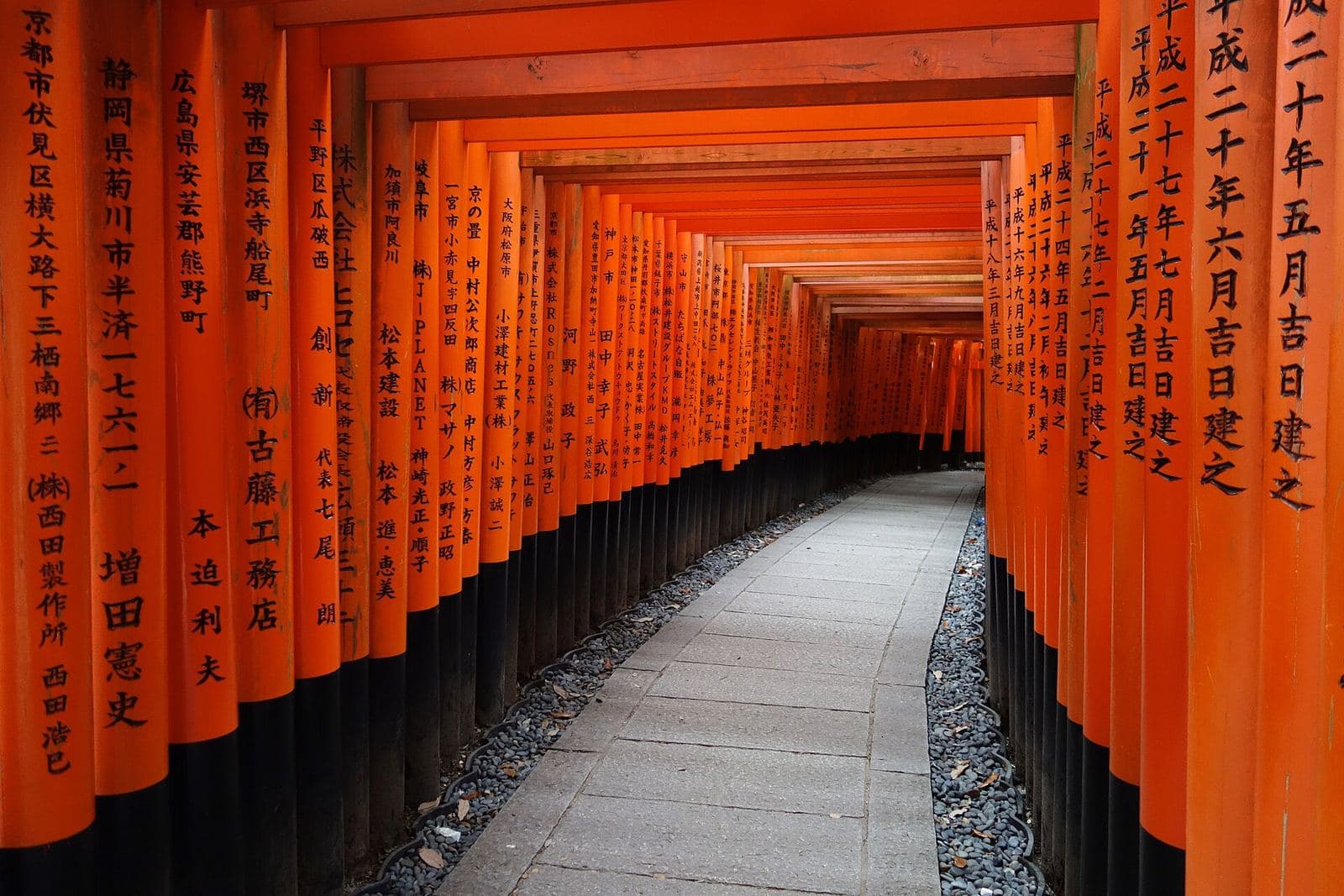
Fushimi Inari (伏見稲荷大社) is the shrine of thousands of vermilion torii gates winding up Mount Inari. It is Kyoto's most photographed sight and still one of its best.
Go early or late. The shrine grounds are open around the clock. Arrive by 7 a.m. or after 6 p.m. During the day the lower gates are packed, but the crowds thin quickly once you are 20 minutes up the hill. Higher up, the path runs through forest past smaller shrines and stone foxes, the messengers of Inari.
The full loop to the summit and back takes two to three hours. The lower gates are what people photograph. The mountain is the better experience.
Arashiyama
Arashiyama (嵐山) has three main sights.
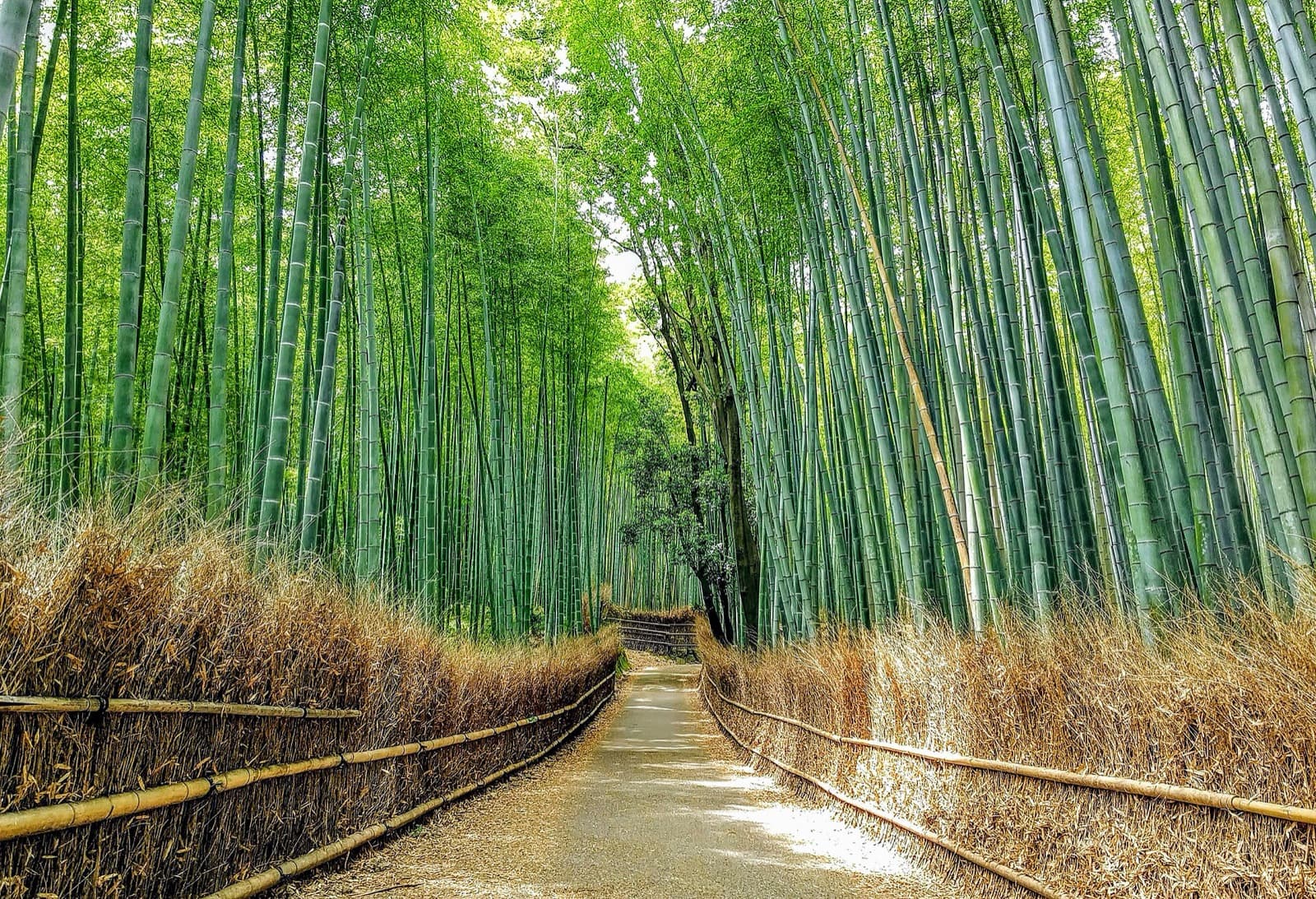
The bamboo grove in Sagano is a short path and always busy. The light in the early morning is beautiful; by 10 a.m. it is a slow-moving queue. Go first thing, or accept the crowd.
Tenryu-ji is a Zen temple with one of Japan's great gardens, designed to "borrow" the Arashiyama hills behind it as part of the view. It is worth the entrance fee.
Togetsukyo Bridge crosses the river with the wooded hills behind it. It looks best from the riverbanks in the early morning or late afternoon.
The area is also known for tofu restaurants, for the wild monkeys at Iwatayama Monkey Park, and for some of Kyoto's best autumn leaves in November.
Gion and Higashiyama
Gion (祇園) is Kyoto's best-known geisha district, with old wooden townhouses along Hanamikoji Street, teahouses (ochaya), and the occasional maiko, an apprentice geisha, on her way to an appointment.
Photographing geisha and maiko without permission is intrusive, and blocking their way is worse. Since April 2024, some private lanes off Hanamikoji have been closed to tourists, and signs mark them. Follow the signs.
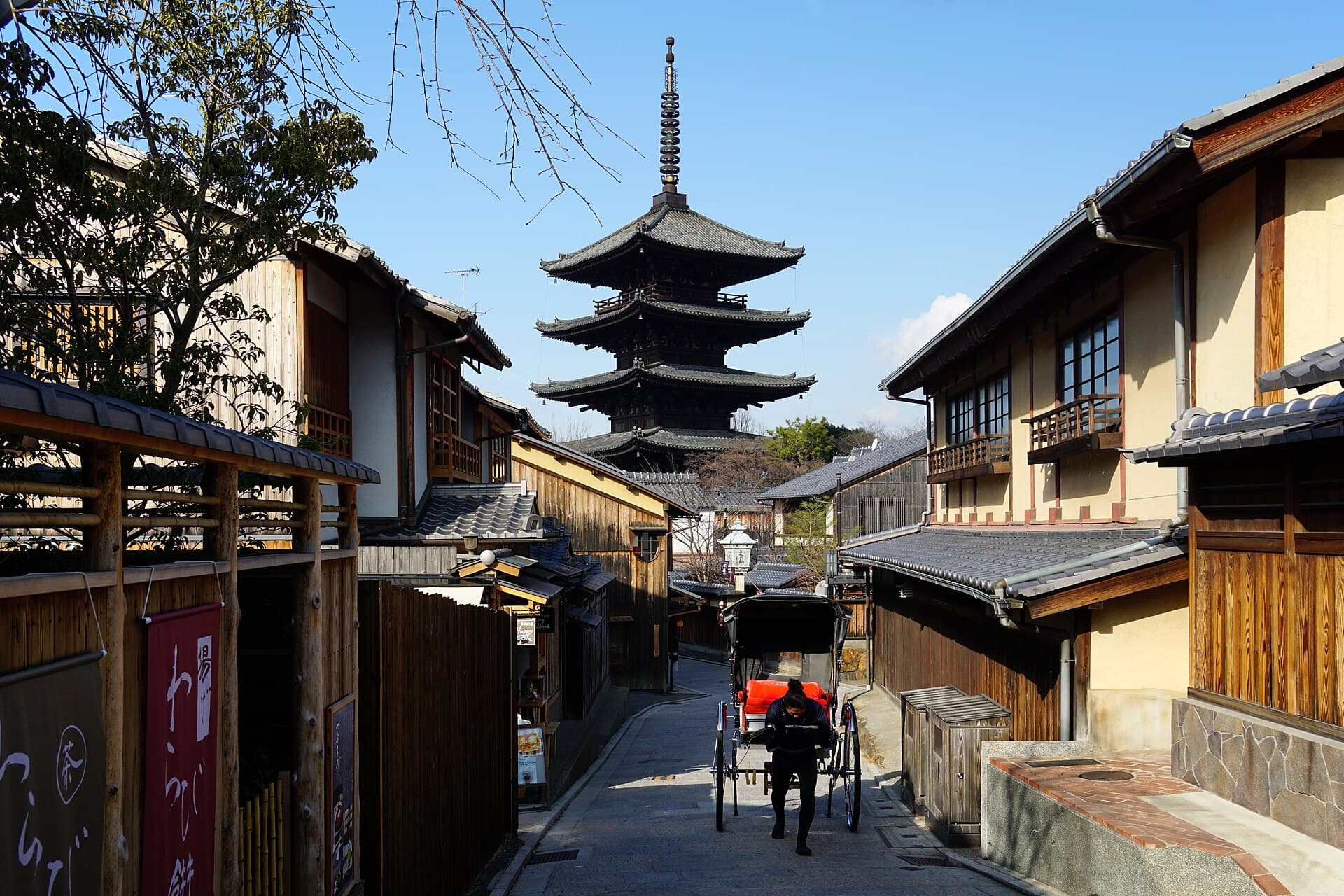
Ninenzaka and Sannenzaka are stone-paved streets below Kiyomizu-dera, lined with old shops. They are lovely and very crowded. Go before 9 a.m.
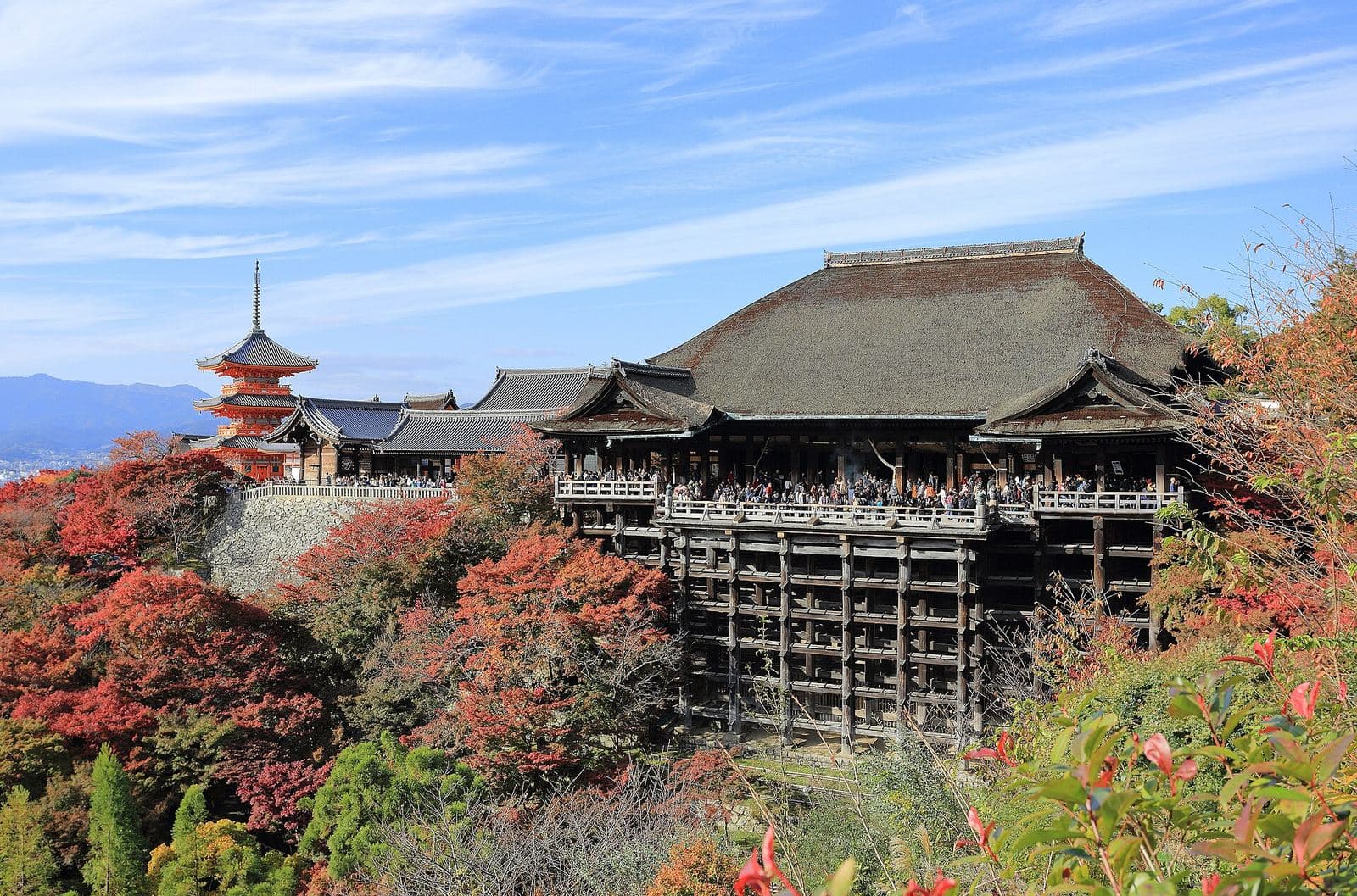
Kiyomizu-dera (清水寺) stands on the eastern hillside, and its main hall's wooden stage rises about 13 meters above the slope, with a view over the city. Below it, visitors queue to drink from the three streams of the Otowa waterfall, each said to bring a different blessing.
Kinkaku-ji (the Golden Pavilion)
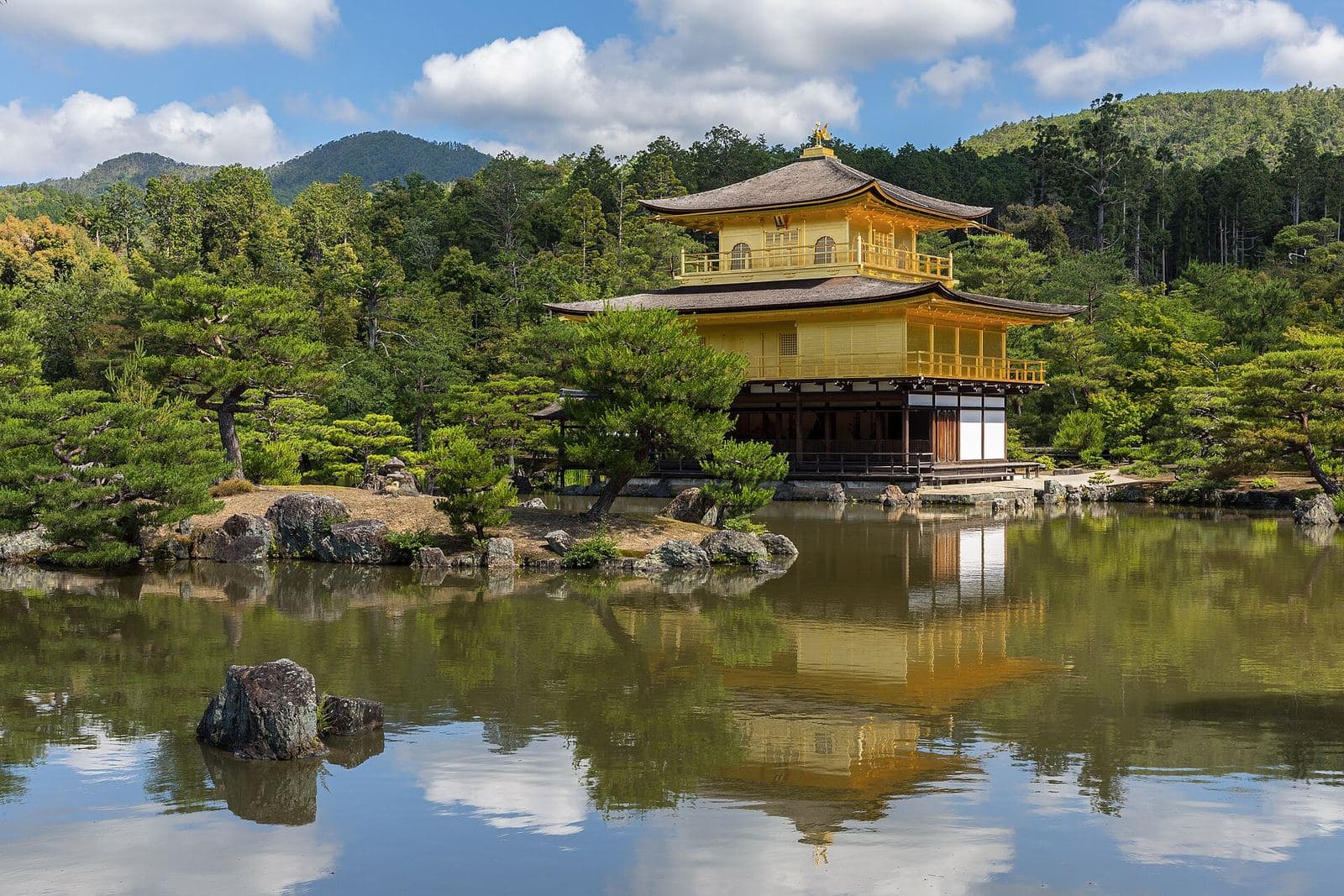
Kinkaku-ji (金閣寺), the gold-covered pavilion reflected in its pond, is one of the most reproduced images of Japan.
Set your expectations. The visit is a single short circuit of the garden, the crowds are heavy, and the pavilion is a 1955 reconstruction: a young monk burned the original down in 1950. The view is still remarkable. Go as close to opening time as you can.
Philosopher's Path
The Philosopher's Path (哲学の道) is a canal-side walk of about two kilometers between the Nanzen-ji area and Ginkaku-ji. It is named after the philosopher Kitaro Nishida, who walked it daily. Cherry trees line the canal, making it one of Kyoto's best blossom walks in spring, and it passes several temples on the way.
It is beautiful in autumn, at its best in spring, and green and quiet on summer mornings.
Nishiki Market
Nishiki Market (錦市場) is a narrow covered street about 400 meters long, known as "Kyoto's kitchen." Its stalls sell fresh tofu, pickles, sweets, dried fish and snacks to eat on the spot, and the market has been trading for centuries.
Come for lunch or an afternoon of snacking. The choice is best before midday.
Choosing temples
You can't see everything, and trying to makes every visit worse. See three or four temples properly rather than ten in a rush.
Some quieter temples that repay the effort:
- Daitoku-ji. A complex of more than 20 sub-temples in northern Kyoto. Most open only on special days, but a few, including Daisen-in and Zuiho-in, are open year-round and have some of Japan's finest dry gardens.
- Ryoan-ji. Japan's most famous rock garden: 15 stones in raked gravel, placed so that you can't see all 15 at once from anywhere on the veranda. It is quieter than you might expect if you arrive at opening.
- Nijo Castle. The shogun's Kyoto residence rather than a temple. The "nightingale floors," which squeak to warn of intruders, and the painted Edo-period rooms are worth the visit.
Eating in Kyoto
Kyoto cooking, Kyo-ryori, grew out of the imperial court, the vegetarian cooking of Buddhist temples (shojin ryori), and the multi-course kaiseki meal. It favors seasonal ingredients, light seasoning and careful presentation.
What to eat:
- Kaiseki. The formal multi-course meal. Budget ¥15,000–¥30,000 or more per person for a serious dinner, and book weeks ahead in peak seasons.
- Obanzai. Kyoto home cooking: small dishes of seasonal vegetables, tofu, fish and pickles. Easier and cheaper than kaiseki, and served at many izakaya.
- Yudofu. Tofu simmered in kombu broth, best in the restaurants around Nanzen-ji in the cooler months.
- Kyoto pickles (kyozuke). Sold at Nishiki Market and at specialist shops across the city.
When to visit
Spring (late March to early April). Cherry blossoms. Beautiful, crowded and expensive. Book accommodation three to six months ahead.
Autumn (mid-November to early December). The leaves turn in the temple gardens. Just as crowded as spring, and just as beautiful.
Summer (June to August). Hot and humid, and a little less crowded. The Gion Matsuri in July is one of Japan's most important festivals. The heat makes temple-heavy days hard work.
Winter (December to February). Fewer crowds, cold but manageable days and clear light. If it snows, the temple roofs are spectacular.
For where to base yourself, see where to stay in Kyoto.
How long to stay
Two days covers the highlights (Fushimi Inari, Arashiyama, Gion and one temple done properly), but it is rushed.
Three to four days gives you time for neighborhoods, proper meals and temples at quiet hours.
A week or more suits Kyoto better than almost any other Japanese city. The longer you stay, the more you find.
FAQ
How many days do I need in Kyoto? Two days covers the highlights but feels rushed. Three to four days lets you explore neighborhoods and see temples at quiet hours, and a week or more rewards anyone with the time.
What time should I visit Fushimi Inari to avoid crowds? Arrive by 7 a.m. or after 6 p.m. The shrine is open around the clock. The lower gates are packed during the day, but the crowds thin about 20 minutes up the hill.
Is it okay to photograph geisha in Gion? Not without permission. Photographing or blocking geisha and maiko is intrusive, and some private lanes in Gion have been closed to tourists since April 2024.
When is the best time to visit Kyoto? Late March to early April for cherry blossoms, and mid-November to early December for autumn leaves, are the most beautiful times but also the busiest and most expensive. May and October have good weather with fewer crowds.
How do I get to Kyoto from Osaka or Tokyo? From Shin-Osaka the Shinkansen takes 15 minutes, and a JR Special Rapid from Osaka Station takes about 30. From Tokyo, the Nozomi Shinkansen takes about 2 hours 15 minutes.
Travel Desk
The Standard Japan
Trip planning: seasons and crowds, getting around, airports, where to stay, and the practical steps before and after you land.
Facts are taken from primary sources (operators, venues, official tourism and government pages) and dates and prices are checked on the day of writing. Pages are revised when those sources change.
Expertise
Seasonal crowds, transport and airports, itineraries, lodging, pre-trip logistics
Have a question or a correction?
Ask us anything about Kyoto Travel Guide: What to Do, See, and Experience (2026), or tell us what we got wrong. We reply within 24 to 48 hours.
Related Stories
What to Do in Kyoto: 18 Things Worth Your Time
18 specific things to do in Kyoto — temples at dawn, Gion etiquette, Arashiyama without the crush, Nishiki, and day trips that actually fit a short stay.
Fushimi Inari Guide: Torii Gates Without the Midday Crush
Fushimi Inari guide: dawn hike strategy, how far to climb, shrine etiquette, sake district add-ons, and when a Kyoto morning tour is worth booking.
Arashiyama Guide: Bamboo Grove, Temples, and Crowds (2026)
Arashiyama done right: bamboo grove at opening, Tenryu-ji gardens, Togetsukyo, monkey park tradeoffs, and when a guided west-Kyoto half-day is smarter.