
Osaka Travel Guide: What to Do, Eat, and See (2026)
Japan's loudest, most food-obsessed city is also one of its most welcoming. Here is how to spend your time in Osaka.

Correction, 7 October 2026: an earlier version described Shinsekai as built to look retro. It was built in 1912 as a modern entertainment district.
Correction, 1 October 2026: an earlier version said the Haruka express takes about 75 minutes from Kansai Airport to Osaka Station. JR West gives about 47 minutes; it has stopped at Osaka Station (Umekita) since March 2023.
Osaka is louder, more commercial and more food-obsessed than Tokyo, and proud of all three. Its people have a reputation for being warm and direct, and for eating well and often.
If Tokyo feels too polished, Osaka is the antidote: this is Japan with the formality turned down.
Getting there
From Tokyo: about 2½ hours on the Nozomi Shinkansen to Shin-Osaka. For most visitors this is the quickest and easiest way.
From Kobe: about 20–25 minutes on a JR Special Rapid from Sannomiya to Osaka. The Hankyu line takes a little longer and works just as well.
From Kyoto: 15 minutes by Shinkansen, or 25–30 minutes on a JR Special Rapid.
From Kansai International Airport (KIX): the Haruka limited express to Osaka Station (Umekita) takes about 47 minutes, and the Nankai Rapi:t to Namba about 40. Choose by where you are staying: Nankai for Namba and Dotonbori, Haruka for Umeda. Full comparison: Kansai Airport to Kyoto and Osaka.
Finding your way around
Osaka has two centers.
Umeda (Kita), around Osaka Station, is the northern hub for shopping and transport: department stores, underground malls and most train connections.
Namba (Minami), around Dotonbori, is the southern center for food and nightlife, and where most visitors spend their time. The Dotonbori canal, the Shinsaibashi shopping arcade and hundreds of restaurants are all within walking distance.
Between them lie the Shinsaibashi shopping streets and Amerika-mura, the center of the city's youth fashion.
What to do
Dotonbori
Dotonbori is Osaka's best-known sight: a canal lined with huge illuminated signs, the giant moving crab and the Glico running man. It is crowded and commercial, and still worth an evening walk, when the signs reflect in the water.
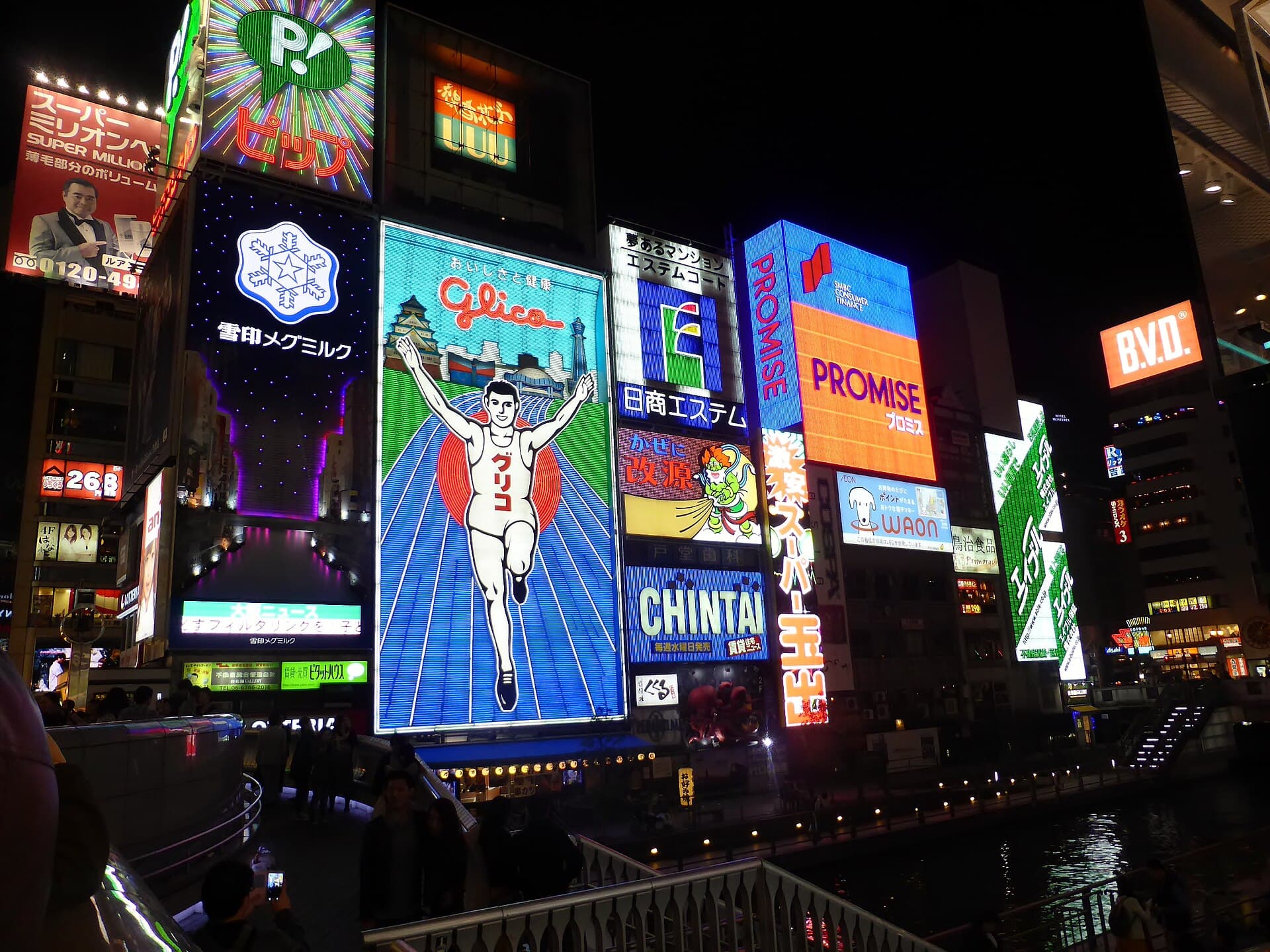
Walk it rather than ride. From Dotonbori you can continue south through the Namba entertainment district on foot.
Osaka Castle
Osaka Castle (大阪城) is one of Japan's most visited landmarks. The main tower is a 1931 reinforced-concrete reconstruction. The original, built for the warlord Toyotomi Hideyoshi in the 16th century, was destroyed long ago. The massive stone walls and moats around it date from the 17th century.
The park is good for walking and picnics, and the tower holds a museum about Hideyoshi. Allow two to three hours.
Kuromon Market
Kuromon Ichiba (黒門市場) is a covered market of about 150 shops selling seafood, meat, produce and ready-to-eat food. It has supplied Osaka's cooks since the early 19th century.
Come hungry. Stalls sell grilled scallops, sea urchin, tamagoyaki and other snacks to eat on the spot. Prices are aimed at visitors now, so compare before you buy.
Shinsekai
Shinsekai (新世界), "New World," was built in 1912 as a modern entertainment district, partly modeled on Paris and New York's Coney Island, around the Tsutenkaku tower. It has kept its old-fashioned look. Today it is known for cheap kushikatsu (fried skewers), retro game halls and a rougher, more local feel than Namba.
Amerika-mura (America Village)
Amerika-mura (アメリカ村) is a compact area in Shinsaibashi full of vintage clothing shops, record stores and streetwear.
It is smaller than Tokyo's Harajuku and less of a show. It is better for actual vintage shopping than for people-watching. See our Amerika-mura guide.
Umeda Sky Building
The Umeda Sky Building has one of Japan's best city views from its Floating Garden Observatory, an open-air deck that bridges the top of its two towers. The escalator up to it runs through a glass tube across open air. On a clear day you can see across the city to Osaka Bay and the Rokko mountains.
It is less crowded than Osaka Castle, which makes it a better use of an hour.
What to eat
Osaka's food culture is summed up in the word kuidaore, "eat until you drop." Several dishes found all over Japan started here or are done best here.
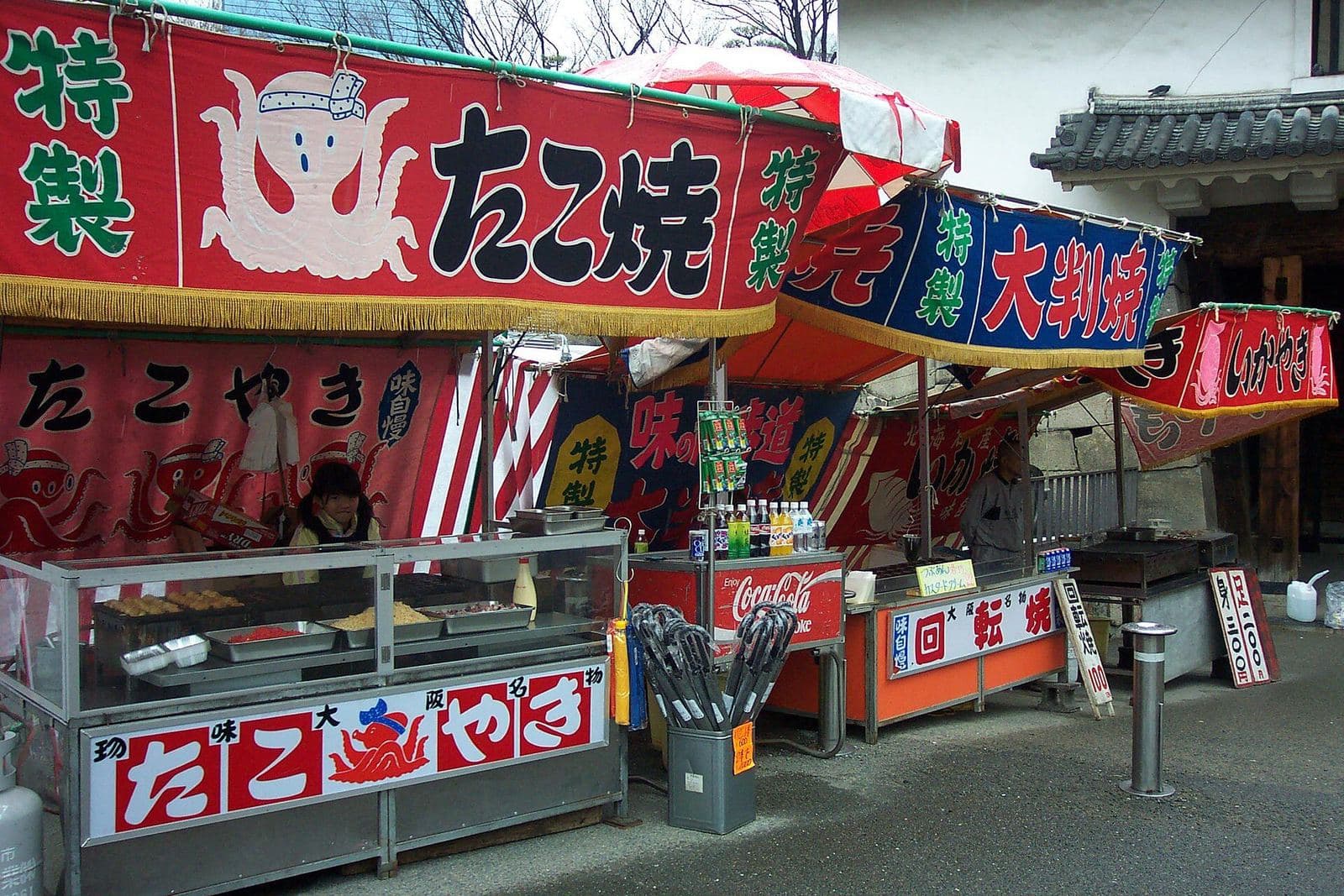
Takoyaki
Takoyaki (たこ焼き) are balls of batter with octopus inside, cooked in a molded iron pan and topped with sauce, mayonnaise, bonito flakes and seaweed. The best are soft inside and lightly crisp outside, eaten from a paper tray on the street. Aizuya, which says it created takoyaki in the 1930s, and Wanaka are two of the best-known names.
Okonomiyaki
Osaka-style okonomiyaki (お好み焼き) is a savory pancake of batter, cabbage, pork belly and other fillings, mixed together and cooked on a hot iron plate (teppan). Hiroshima-style, by contrast, layers the ingredients separately.
Chibo in Dotonbori is a well-known place to try it. A sit-down restaurant with a teppan at the table costs more than a takeaway stall and is worth it at least once.
Kushikatsu
Kushikatsu (串カツ) are skewers of meat, seafood and vegetables, battered and deep-fried. Shinsekai is the place to eat them. The one rule: no double-dipping in the shared sauce. Break it in a proper kushikatsu restaurant and people will notice.
Ramen
Osaka has no signature ramen style of its own, as Sapporo, Hakata or Kitakata do, but it has plenty of good ramen, especially around Namba. Kinryu Ramen, with the giant dragon on its sign, is a Dotonbori landmark.
Kappo and fine dining
Osaka's street food gets the attention, but the city also has a serious high-end dining culture. Around Kitahama and Honmachi, the old merchant district, there are many kappo restaurants, where the chef cooks in front of you at the counter, and kaiseki restaurants. It is a different Osaka from Dotonbori and worth seeking out.
Day trips from Osaka
Kyoto: 15 minutes by Shinkansen or about 30 minutes by JR. Close enough to treat as part of the same trip.
Nara: about 40 minutes on the Kintetsu line from Osaka-Namba, for the deer park and Todai-ji.
Kobe: 20–25 minutes by JR or a little longer by Hankyu. Good for a half day or an evening.
Himeji: about 30–35 minutes by Shinkansen from Shin-Osaka, for Japan's finest surviving original castle. Adults who don't live in Himeji pay ¥2,500 to enter since March 2026; our Opinion Desk explains why that pricing is fair.
Hiroshima: about 1 hour 20 minutes by Shinkansen from Shin-Osaka. Possible as a day trip, but better as an overnight stay.
More options are in our day trips from Osaka guide.
How long to stay
One day: Dotonbori, Osaka Castle, Kuromon Market and dinner in Namba. Tight, but possible.
Two days: add Shinsekai, the Umeda Sky Building, Amerika-mura and a longer evening of eating.
Three days or more: add day trips and neighborhoods outside the tourist core, such as Fukushima's food streets, Nakatsu and Tengachaya.
One evening on Dotonbori shows you very little of Osaka. It rewards a few days.
FAQ
How many days should I spend in Osaka? One day covers Dotonbori, Osaka Castle and Kuromon Market at a rush. Two days lets you add Shinsekai and the Umeda Sky Building, and three or more leaves time for day trips and neighborhoods outside the tourist core.
Is Osaka or Kyoto better as a base for Kansai? Both work, since they are 15 minutes apart by Shinkansen. Osaka has better nightlife and food. Kyoto puts you closer to the temples.
What's the fastest way from Kansai Airport into central Osaka? The Nankai Rapi:t to Namba takes about 40 minutes and drops you in the tourist center. The Haruka to Osaka Station (Umekita) takes about 47 minutes.
What day trips are possible from Osaka? Kyoto (15 minutes by Shinkansen), Nara (about 40 minutes), Kobe (20–25 minutes) and Himeji (about 30–35 minutes by Shinkansen) are all easy in a day.
Is Dotonbori better by day or by night? By night, when the signs and the Glico running man reflect in the canal.
Travel Desk
The Standard Japan
Trip planning: seasons and crowds, getting around, airports, where to stay, and the practical steps before and after you land.
Facts are taken from primary sources (operators, venues, official tourism and government pages) and dates and prices are checked on the day of writing. Pages are revised when those sources change.
Expertise
Seasonal crowds, transport and airports, itineraries, lodging, pre-trip logistics
Have a question or a correction?
Ask us anything about Osaka Travel Guide: What to Do, Eat, and See (2026), or tell us what we got wrong. We reply within 24 to 48 hours.
Related Stories
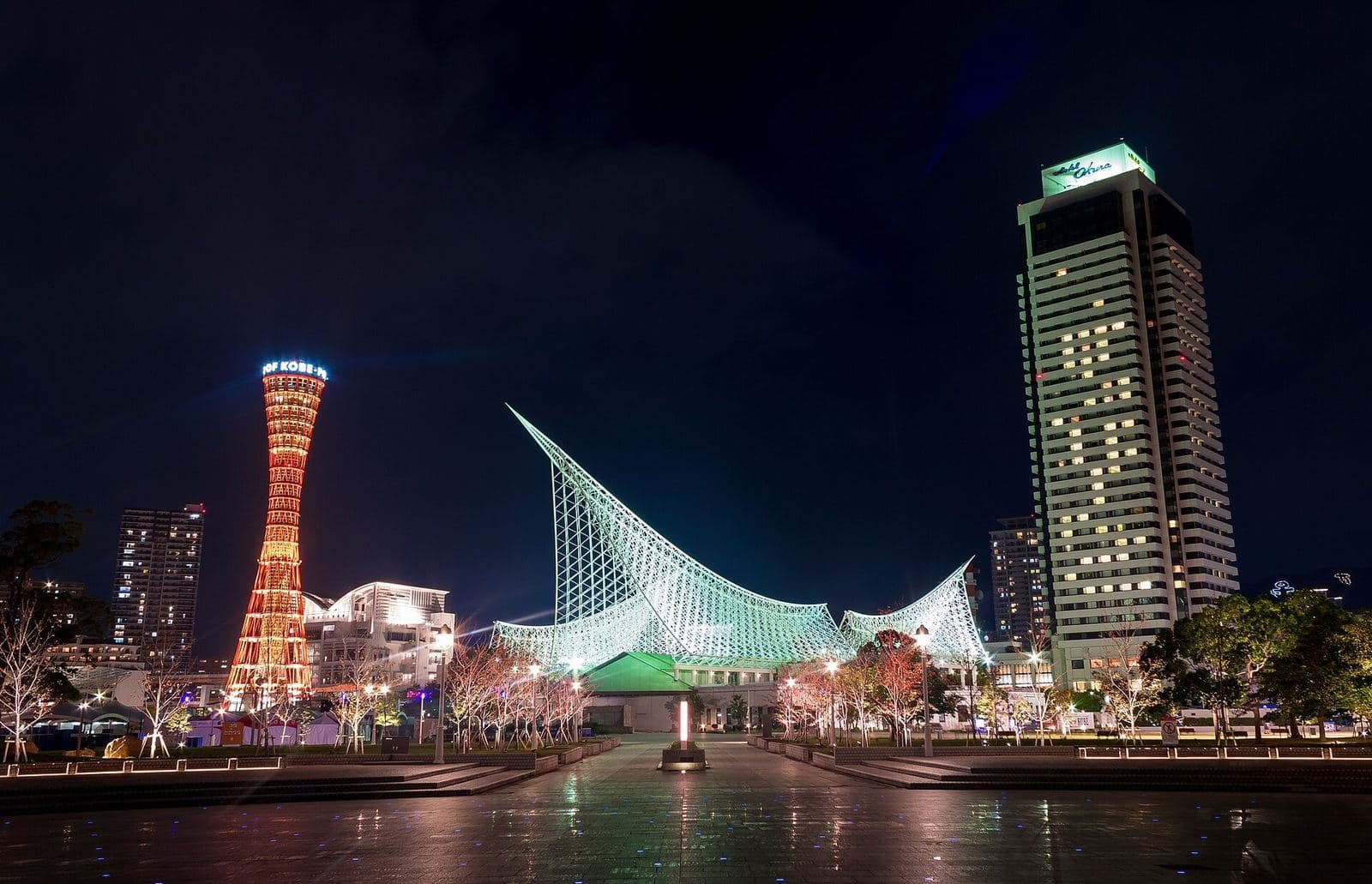
Kobe Travel Guide: What to Do, Eat, and See (2026)
Japan's most international port city is also one of its most underrated destinations. Here is how to spend your time in Kobe.
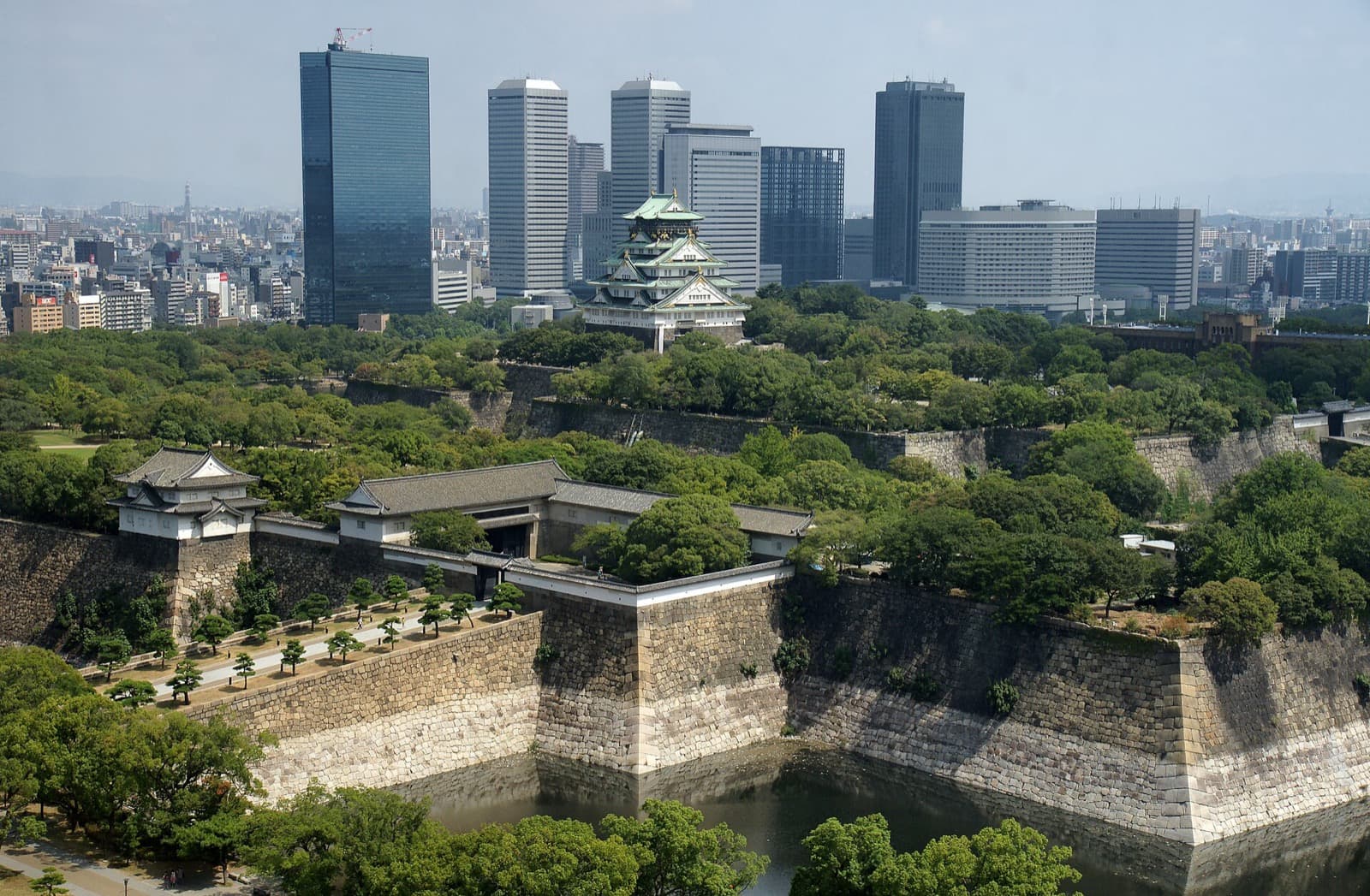
Osaka Itinerary: 2 Days of Castle, Food, and Neighborhoods
A 2-day Osaka itinerary: Osaka Castle, Dotombori food night, Kuromon Market, Den Den Town or USJ, optional Nara half-day — Namba or Umeda base.
Best Day Trips from Osaka: Kyoto, Nara, Kobe, Himeji, Koyasan
Day trips from Osaka: Kyoto and Kobe in about 30 minutes, Nara in 36, Himeji in an hour, Koyasan in two. What each is for, and 2026 price changes.