
Japanese Denim Jackets: Type I, II, III and Fit
Choose a Japanese denim jacket by fit, wash state and useful details. Compare Type I, II and III references without assuming every brand uses the same cut.
Some travel links on The Standard Japan are affiliate links. If you book through one, we may earn a commission at no extra cost to you.
A denim jacket can close comfortably over a T-shirt and feel unusable over your usual sweatshirt. Choose the layers and body length you need before choosing a historical type. Type I, II and III describe design references; they are not three reliable sizes or a quality ranking.
This guide is based on official design histories, product specifications and measuring instructions checked on 30 October 2026. It is not a wear test of competing jackets.
Type I, II and III: what changes?
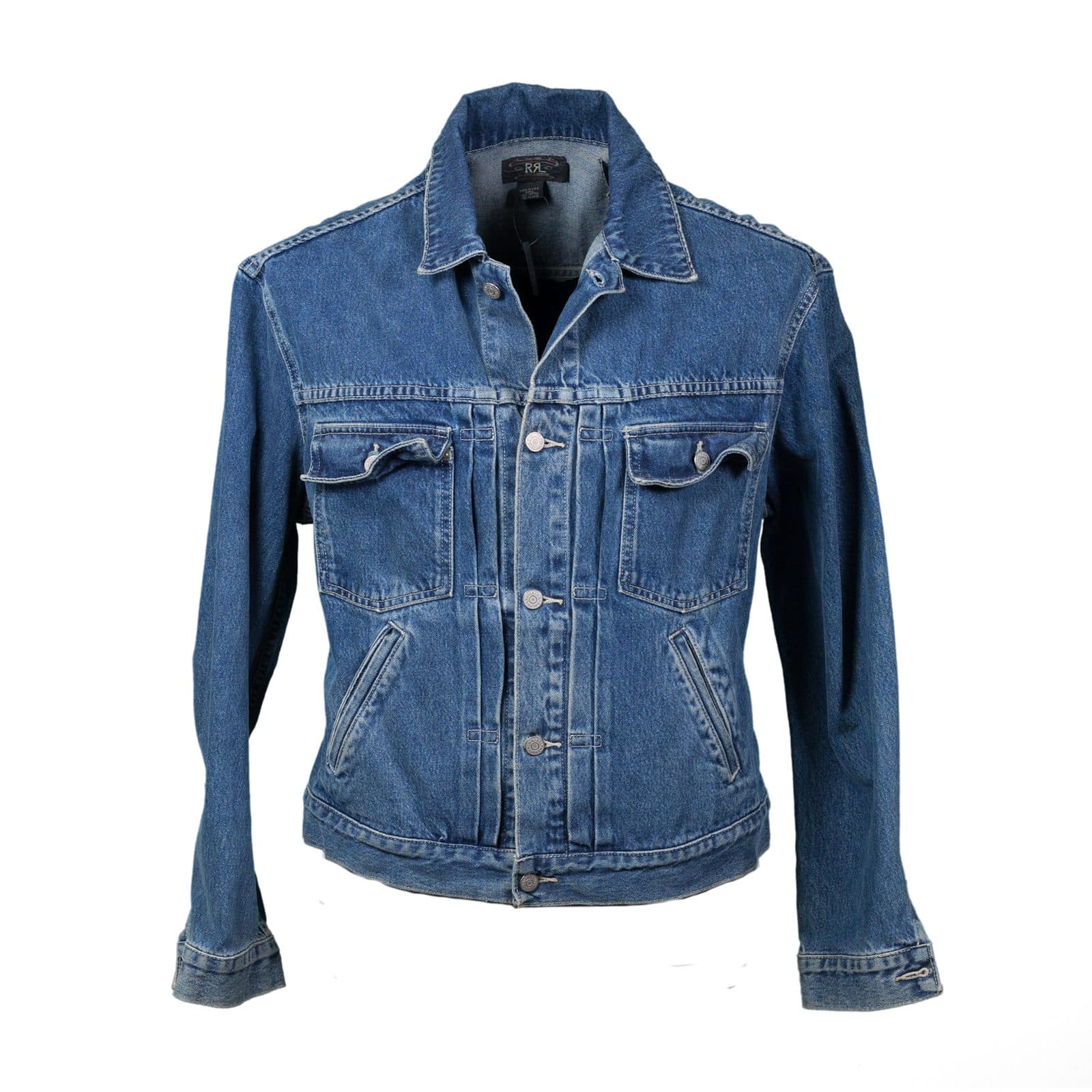
These labels refer to design families associated with Levi's jackets and widely referenced by other makers. Levi Strauss & Co.'s archive explanation describes the progression from earlier boxy, pleated forms to the Type III's tapered design and V-shaped front lines. Iron Heart's explanation identifies the familiar pocket and pleat differences.
Common historical identifiers, not requirements for every reproduction or modified jacket.
| Reference | Details to recognise | Question for a modern purchase |
|---|---|---|
| Type I / first | Usually one front pocket, front pleats; often a rear cinch | Is this model's short or boxy shape what you want? |
| Type II / second | Two front pockets and front pleats | How much chest room and body length does this model provide? |
| Type III / third | V-shaped front seams, two chest pockets; no earlier-style pleats | Is this version close-fitting, modified or roomy enough for your layers? |
Source: Levi Strauss & Co. archives; Iron Heart type guide
Use the design details to narrow the appearance you like, then return to the measurements. A modern maker can change length, add hand pockets or reshape the sleeves without changing the familiar type reference.
Choose a body length, not just a chest size
Decide where you want the jacket to end over your usual trousers. A deliberately short jacket may expose a shirt hem; buying a larger size solely to gain length can also add unwanted width.
Start with a jacket you already enjoy wearing. Iron Heart's jacket measuring guide covers shoulders, chest, length, sleeves and openings, and warns that methods can differ between brands. Compare garments using the prospective seller's method rather than treating your body measurements as the finished jacket dimensions.
When the chest fits but the length does not, try another pattern. Increasing the size is not the only option.
A Japanese example: Sugar Cane's 1953 model
Sugar Cane's SC11953 official product page describes its 1953 model as a second-type jacket. It publishes measurements for shoulder, body width, body length, sleeve length and hem width, and notes individual variation.
That is the useful way to inspect a reproduction: connect the design description to an actual garment chart. The same page distinguishes other finishes and versions. Do not assume that a similarly named aged or black-denim model has identical fabric behaviour or measurements.
This example is not a claim that Sugar Cane makes the best jacket. It is a documented place to start comparing. For a wider introduction to makers, see our Japanese workwear guide.
What to do in the fitting room
Bring or wear the layer you expect to use underneath. Fasten the jacket before deciding whether it works.
- Reach forward as though holding bicycle handlebars. Check the back, shoulders and upper arms for restriction.
- Sit down and notice where the lower edge meets your waistband.
- Bend your elbows and check the cuffs with the sleeves in their normal position.
- Try any hand pockets with the jacket fastened. Their presence and usefulness are model-specific.
- Compare the result with a second cut, not only the next size in the same cut.
Stiff cloth may soften, but do not use an unspecified future break-in to explain away a fit you cannot move in now. Ask the shop about the fabric and the intended fit of the particular model.
Wash state matters for jackets too
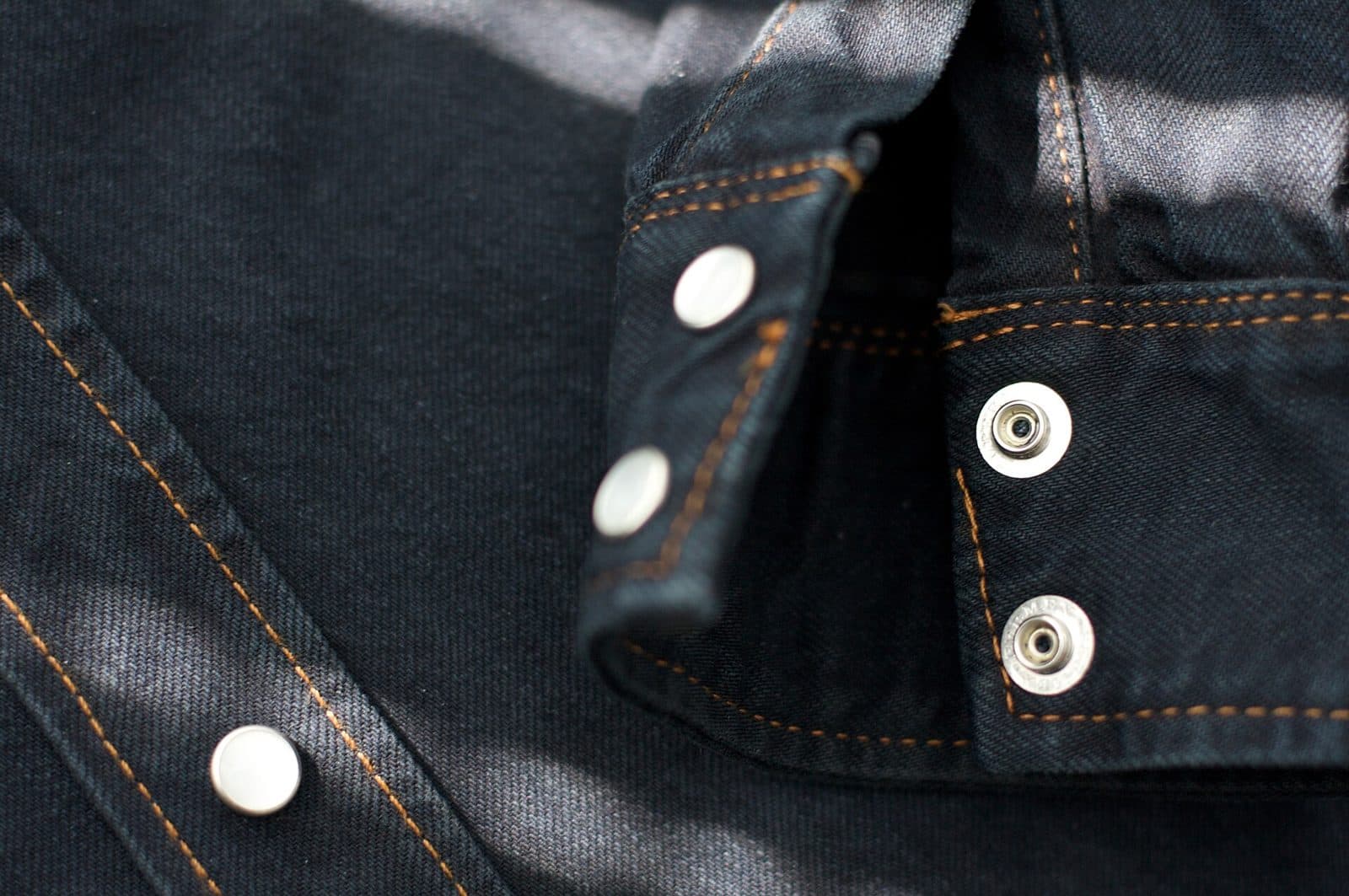
Raw, one-wash and shrink-control treatment are separate details, just as they are for jeans. Ask whether the chart gives the measurements before or after the recommended first wash, and what changes remain under the stated care routine.
Iron Heart's care guide separates instructions by fabric. Do not borrow a washing or soaking recipe from a different jacket simply because both are Japanese denim. Our denim fit and care guide explains the terms without assigning one shrinkage percentage to every product.
Check the garment label before washing, drying or requesting alterations. Sleeve shortening can affect construction details, so ask a provider whether it accepts the jacket and what work it proposes. Do not assume a shop's jeans-hemming service covers jacket alterations.
How to shop without duplicating your wardrobe
If this is your first denim jacket, choose the version you can wear with your existing trousers and footwear. Matching jeans are optional. Compare a lighter or softer option if your main use is travel and you want to wear it straight away; fabric weight alone does not establish quality or comfort.
For Tokyo shop planning, use our Japanese denim buying guide, then confirm the jacket's model and size with the branch. A retailer carrying a maker's jeans does not guarantee it stocks its jackets.
Common questions
Is Type III always slimmer than Type II? That is a useful historical reference, not a universal rule for modern products. Read the actual model's chart.
Do I need matching denim trousers? No. Choose a jacket you can wear with the clothes you already own before buying a matching set.
Should I buy a tight jacket and break it in? Do not count on break-in to create missing room for your intended layers. Check movement and ask about the specific fabric.
Does a jeans shop also alter jacket sleeves? Not necessarily. Confirm the service, proposed work, timing and cost before buying on that assumption.
Style Desk
The Standard Japan
Shopping and fashion in Japan: denim, vintage, streetwear, and where each scene actually lives.
Facts are taken from primary sources (operators, venues, official tourism and government pages) and dates and prices are checked on the day of writing. Pages are revised when those sources change.
Expertise
Japanese denim, vintage, streetwear, shopping districts
Have a question or a correction?
Ask us anything about Japanese Denim Jackets: Type I, II, III and Fit, or tell us what we got wrong. We reply within 24 to 48 hours.
Related Stories
Japanese Workwear Brands: What to Buy and Where
Compare Sugar Cane, Buzz Rickson's, WAREHOUSE and orSlow by garment and style, then use official stockists to plan a Japanese workwear shopping trip.
Japanese Denim in Tokyo: Brands and Stores Worth Visiting
Where to compare Japanese jeans in Tokyo: Momotaro's own stores, Hinoya's Ueno branches, and when Kojima deserves a separate shopping trip.

Japan Voltage and Plugs: 100V, Type A, 50Hz vs 60Hz
Japan runs on 100V AC: 50Hz in the east, 60Hz in the west, Type A plugs. Whether your charger needs an adapter, a transformer, or nothing at all.