
Japanese Workwear Brands: What to Buy and Where
Compare Sugar Cane, Buzz Rickson's, WAREHOUSE and orSlow by garment and style, then use official stockists to plan a Japanese workwear shopping trip.
Some travel links on The Standard Japan are affiliate links. If you book through one, we may earn a commission at no extra cost to you.
You have found the jeans, but the jacket search now runs from work shirts to military flight jackets. Choose the garment's job before choosing the label. A reproduction flight jacket and a loose work jacket can both appear under “Japanese Americana” while fitting very different wardrobes.
This guide narrows that search to four labels with clear official descriptions and a practical place to start trying them. It is desk research checked on 30 October 2026, not a comparative wear test or a ranking of construction quality.
What do workwear, Americana and amekaji mean?
Here, workwear means clothing derived from working garments, such as work shirts, utility trousers and chore jackets. Americana is a broader style reference that can include military, sports and casual clothing. Amekaji is the Japanese abbreviation for American casual style. They overlap, but a military-inspired jacket is not necessarily workwear in the narrower sense.
There is also a purchase distinction. Vintage means an older garment; reproduction means a newly made garment that recreates an older design. A reproduction can offer more predictable sizing and condition, while an original requires you to assess that individual garment's wear and repairs. Neither description by itself tells you whether it will suit you.
For original secondhand pieces, start with our Tokyo vintage shopping guide. For contemporary designer labels and release culture, use the Japanese streetwear guide.
Four labels, four starting points
The choices below follow the makers' stated approaches and current catalogues. They are a shortlist for comparison, not an assertion that one brand wins every category.
Editorial starting points based on official brand descriptions; stock and specifications depend on the model.
| Label | Start your search with | What to inspect in person |
|---|---|---|
| Sugar Cane | Jeans, denim jackets and work shirts | Wash state, cloth and the cut of the specific model |
| Buzz Rickson's | Military reproduction and flight jackets | Length, lining, shoulder movement and room for layers |
| WAREHOUSE & CO. | Vintage reproduction clothing | Model reference, measurements and fabric finish |
| orSlow | Modern interpretations of work and military clothing | Silhouette, trouser rise and how it works with your wardrobe |
Source: Sugar Cane, Buzz Rickson's, WAREHOUSE & CO. and orSlow official sites
Pick the row that fits your actual wardrobe gap. If you need a lighter overshirt, a heavy winter jacket is a distraction regardless of its reputation.
Sugar Cane: start with denim or a work shirt
Sugar Cane's official site sits within Toyo Enterprise's brand family. Its catalogue includes denim, chambray, hickory-stripe and checked work shirts. It gives you more to compare than jeans alone.
Look at a work shirt with the trousers you intend to wear. Check whether you want to tuck it in, use it as an outer layer or wear it underneath a jacket. Those choices change the useful body length and room through the chest. Read the individual fabric description rather than assuming all Sugar Cane cloth contains sugarcane fibre.
Buzz Rickson's: start with a specific military jacket
Buzz Rickson's describes its focus as the reproduction of flight jackets, including their materials, parts and form. That makes it a more focused starting point for a military-jacket search than a general fashion-brand roundup.
Choose the type before the size. A short flight-jacket silhouette may feel unfamiliar if you normally wear a long coat. Try it over the layer you expect to use and reach forward with both arms. Check the care label before assuming a lined jacket can be washed like jeans.
WAREHOUSE & CO.: start with the reference garment
WAREHOUSE's brand statement describes researching vintage garments from yarn through fabric, sewing and washing. Its focus is faithful reproduction rather than simply adding vintage-looking graphics to a modern garment.
Ask what the particular model is recreating, then decide whether that shape suits you. Historically derived proportions are not a guarantee of a comfortable fit for every body. Compare the actual garment measurements and washing instructions, not just the period attached to its name.
orSlow: start with how you want the clothes to fit today
orSlow's concept draws on work and military clothing while filtering those forms through its own design approach. It is a useful comparison when you like those references but do not need a faithful reproduction of one historical garment.
Try a trouser silhouette with your usual shoes and shirt. The practical question is whether the rise, seat and leg shape work together on you. Use the official stockist list to find a retailer, then ask whether it has the exact product and size.
Where to compare heritage clothing in Tokyo
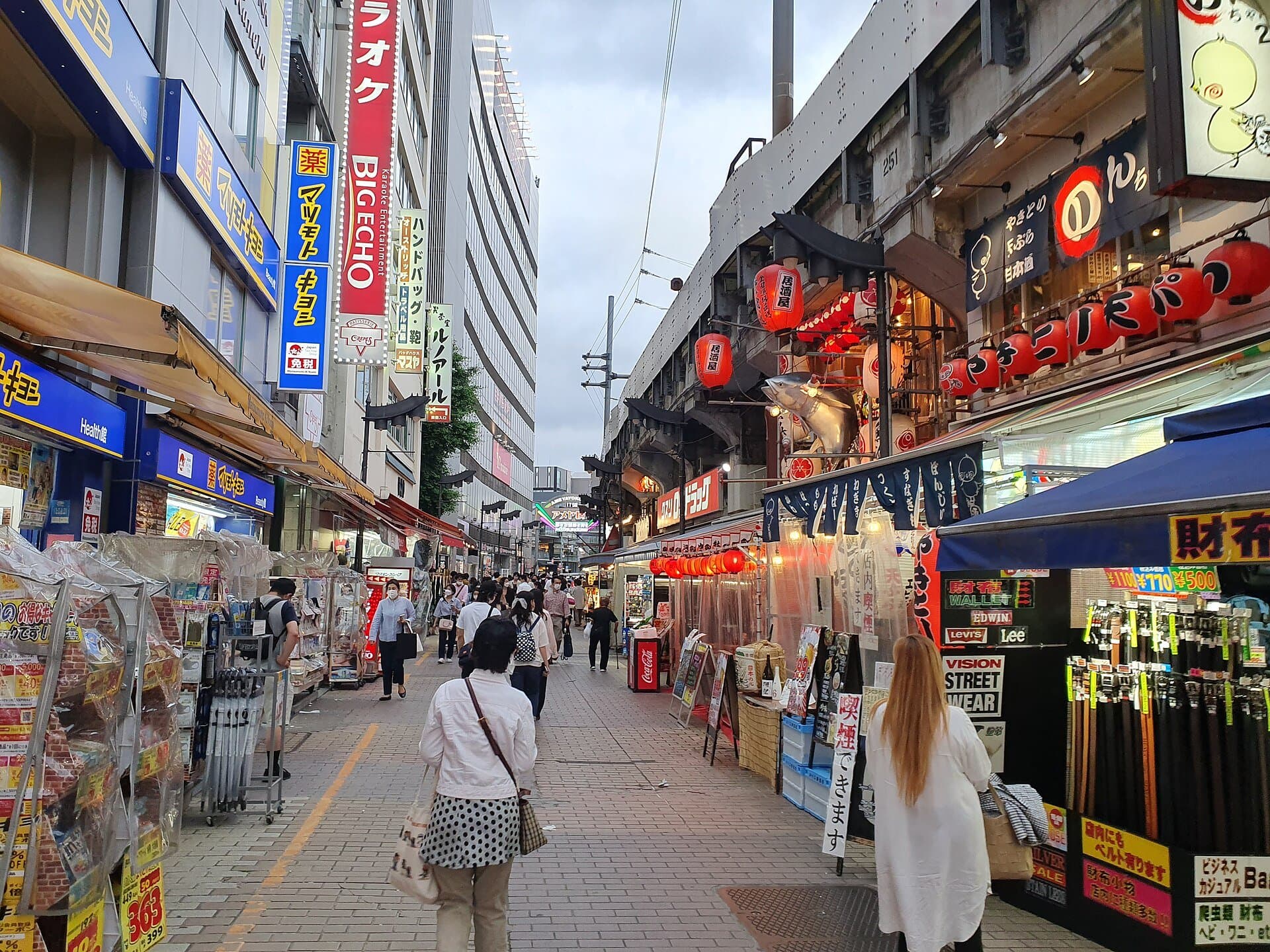
Ueno's Ameyoko area is a sensible first stop for this shortlist. Hinoya publishes separate brand lists for its nearby branches. The official store directory lists:
- Hinoya Honten, 6-10-14 Ueno: Sugar Cane, Buzz Rickson's and other denim and heritage labels.
- Hinoya ONE, 6-10-16 Ueno: a different selection that includes WAREHOUSE and Buzz Rickson's.
- Hinoya MART, 6-10-22 Ueno: a selection including WAREHOUSE, Sugar Cane and other denim makers.
These are stockist listings, not a check of today's shelves. The directory does not establish orSlow availability at these branches: use orSlow's own stockist list for that search. Ask the right branch about the model number and size before building your day around a purchase.
Rather than crossing Tokyo for four unconfirmed items, begin with the branch that carries your first choice and compare a second cut there. If you mainly want jeans, our Japanese denim shops guide adds Momotaro's own Tokyo stores.
How to buy a first piece without replacing your wardrobe
Choose one item you can wear with what you already own: a work shirt with plain trousers, for example, or a jacket over your existing knitwear. Take a photograph of those clothes or wear them to the shop.
Set a total spending limit before browsing. Include any alteration, delivery or later cleaning costs that matter to you. Compare the current Japanese store price for the exact product; this guide does not promise that Japan is always cheaper than buying at home.
For trousers, settle the wash state and hemming plan using our denim sizing and care guide. For jackets, check the intended layering, sleeve length and care requirements before paying. Visitors seeking tax-free treatment should check the current shopping rules and the store's participation before using new purchases in Japan.
Common buying questions
Are these clothes vintage? The brands make new clothing. Some pieces reproduce vintage designs; that does not make the garment an original vintage item.
Is heavier fabric better? Not for every use. Choose a fabric and lining that suit your weather, movement and care routine rather than treating weight as a quality score.
Can I compare all four brands at one shop? Do not assume so. The official directories identify stockists and branch selections, but you still need to confirm the exact item and size.
Choose a jacket or a sportswear range
For jacket shapes and layering, use the Japanese denim jacket guide. For running or gym clothing, the Japanese activewear guide compares ranges by their intended activity.
Style Desk
The Standard Japan
Shopping and fashion in Japan: denim, vintage, streetwear, and where each scene actually lives.
Facts are taken from primary sources (operators, venues, official tourism and government pages) and dates and prices are checked on the day of writing. Pages are revised when those sources change.
Expertise
Japanese denim, vintage, streetwear, shopping districts
Have a question or a correction?
Ask us anything about Japanese Workwear Brands: What to Buy and Where, or tell us what we got wrong. We reply within 24 to 48 hours.
Related Stories
Japanese Denim Jackets: Type I, II, III and Fit
Choose a Japanese denim jacket by fit, wash state and useful details. Compare Type I, II and III references without assuming every brand uses the same cut.

Tokyo Sneaker Shopping: Where to Buy Rare and Exclusive Releases
atmos in Harajuku and mita sneakers in Ueno are Tokyo's two essential sneaker shops. Where to find limited releases, and how sizing and tax-free work.
Japan Drugstore Guide: What to Buy at Matsumoto Kiyoshi and Daikoku Drug
Japan's drugstores sell better eye drops, pain patches, and skincare than most pharmacies back home. Here's what to buy, which chain, and how tax-free works.