
Japan Drugstore Guide: What to Buy at Matsumoto Kiyoshi and Daikoku Drug
Japan's drugstores sell better eye drops, pain patches, and skincare than most pharmacies back home. Here's what to buy, which chain, and how tax-free works.
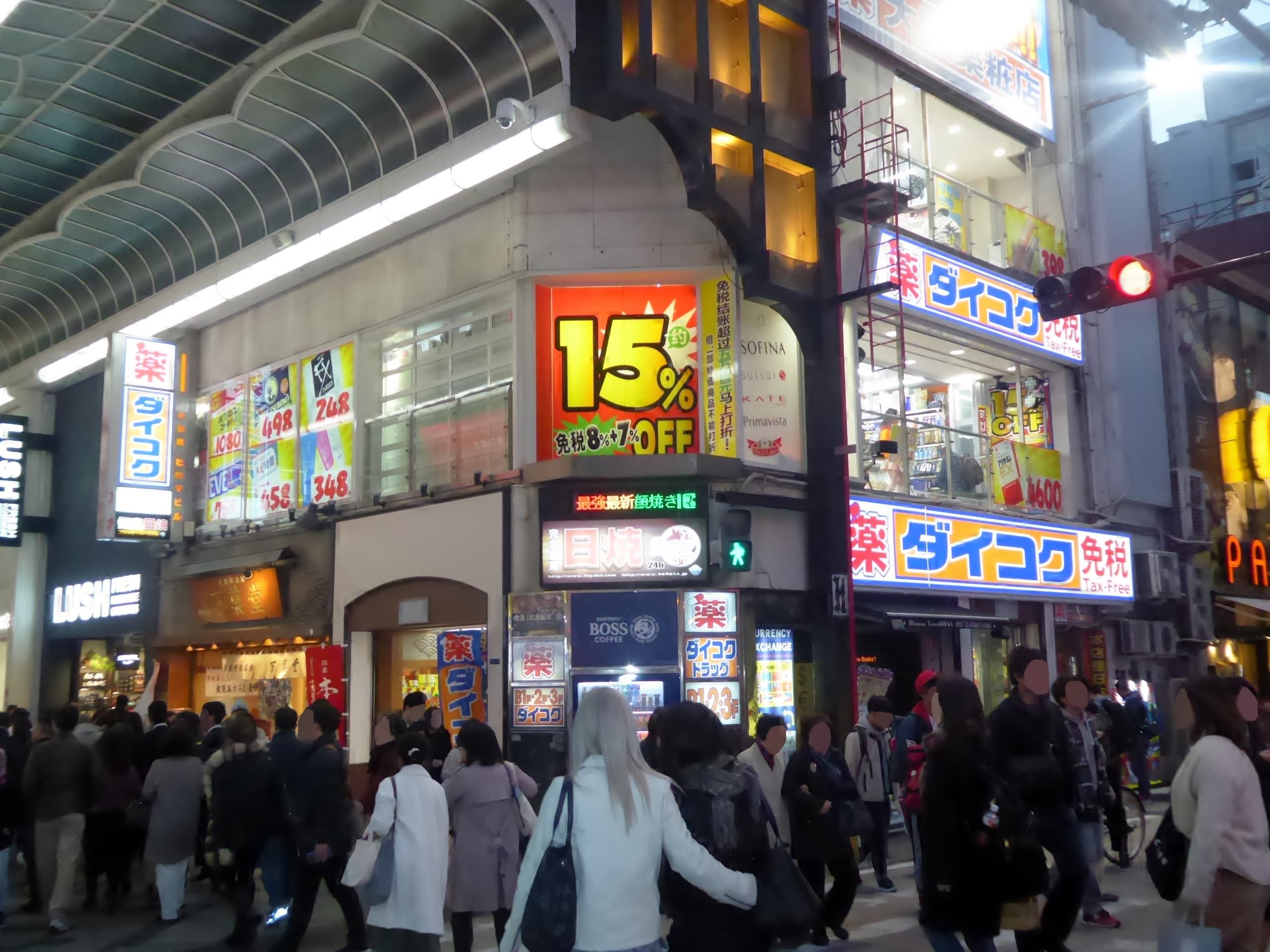
Japan's drugstores (ドラッグストア) are not just pharmacies — they're half of every tourist's shopping list, right after konbini snacks. Eye drops with formulas not sold in the US or EU, pain-relief patches that actually work, and skincare brands most people only find at a markup back home. Here's which chain to walk into and what's actually worth buying.
The Chains, and What Each One Is Known For
You'll see these signs on nearly every shopping street in Tokyo and Osaka, often two or three within a block of each other:
- Matsumoto Kiyoshi (マツモトキヨシ) — the biggest and most tourist-facing chain, yellow signage, usually has an English-speaking or English-signage checkout in busy areas like Shinsaibashi or Shibuya.
- Daikoku Drug (ダイコクドラッグ) — concentrated in Osaka, especially Dotonbori and Shinsaibashi, known for loud storefronts and some of the deepest tax-free discounting in the city.
- Sundrug (サンドラッグ) and Cocokara Fine (ココカラファイン) — broad national chains, slightly more local-shopper focused, good prices on everyday items.
- Welcia (ウエルシア) and Tsuruha (ツルハ) — common outside the main tourist strips, useful if you're staying somewhere less central.
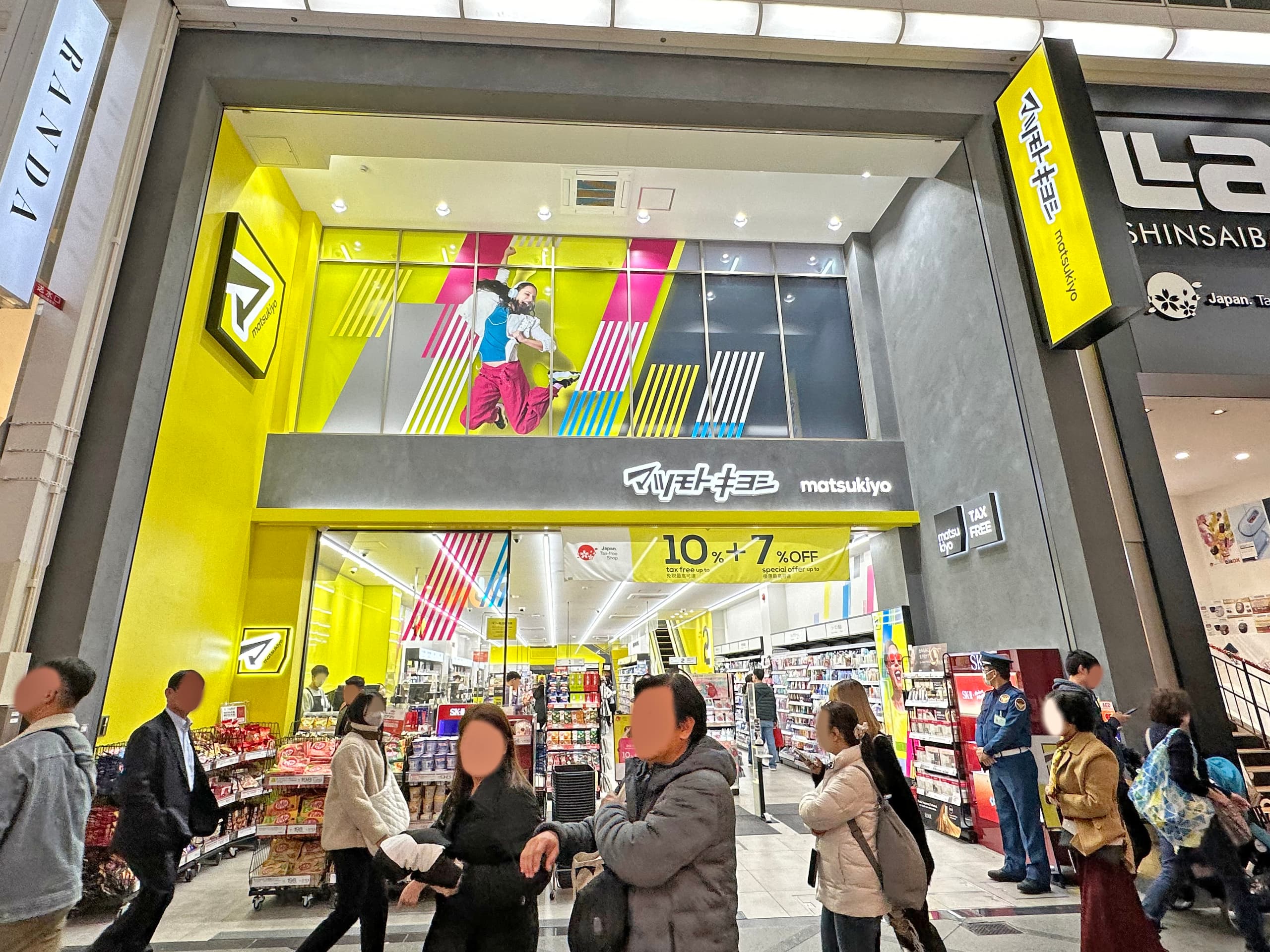
Don Quijote (ドン・キホーテ) is not a drugstore — it's a discount variety store — but it stocks a similar OTC medicine and skincare aisle alongside electronics and snacks, and it's often open 24 hours. Treat it as a backup, not a replacement, since selection is shallower than a dedicated drugstore.
What's Actually Worth Buying
Eye drops — Japanese eye drop formulas (Sante FX, Rohto) are noticeably stronger than most drugstore eye drops sold in the US or UK, with cooling menthol variants tourists specifically seek out. Look for the blue-and-white Sante FX Neo box.
Pain-relief patches — Salonpas and Hisamitsu's Sesamin/Airsalonpas lines are a cult favorite for sore muscles after a day of walking. Cheaper here than imported versions sold abroad.
Headache and cold medicine — Eve (headache), Pabron (cold), and Ryukakusan (throat lozenges) are the household names. Read the section below before buying cold medicine to take home — some formulas use ingredients that are restricted in other countries.
Itch and bug-bite cream — Muhi is the standard bug-bite cream, genuinely more effective than most Western equivalents and a common ask from Japan-based expats shipping it to relatives.
Skincare — Hada Labo (hyaluronic acid lotions), Bioré (cleansing), and Kao Curel (sensitive skin) are the big drugstore-tier skincare brands — a fraction of the price you'd pay for imported versions elsewhere.
Small electronics — Panasonic nose-hair trimmers and facial epilators show up in nearly every tourist's basket; they're cheaper here and not always sold in the same form factor abroad.
Before You Buy Cold or Allergy Medicine
Some Japanese OTC cold and allergy medicines contain pseudoephedrine or codeine-based ingredients that are restricted or require a permit in countries like the US, UK, and Australia. This cuts both ways — it's also the reason Japan has strict rules on what visitors can bring in; see bringing medicine into Japan if you're traveling with your own prescriptions. For buying here, check your home country's customs rules before stocking up on a whole box of cold medicine, or ask staff if a stimulant-free version exists — most cold medicine aisles carry both.
Tax-Free Shopping at Drugstores
Drugstore purchases follow the same tax-free rules as any other retailer: bring your passport, spend at least ¥5,000 before tax at the same store on the same day, and the process is handled at checkout (through late October 2026) or at the airport (starting November 1, 2026, under the new refund system). Full mechanics, including what changes on that date: Japan tax-free shopping guide.
Consumables like medicine and skincare used to require sealed, unopened packaging to stay tax-free until you left the country — a rule the November 2026 change removes entirely, which simplifies things if you want to actually use something before you fly home.
Where the Densest Drugstore Blocks Are
- Osaka: Shinsaibashi and Dotonbori — the single highest concentration in the country, with Daikoku Drug and Matsumoto Kiyoshi locations a few doors apart, many open until midnight or later.
- Tokyo: Shibuya, Shinjuku, and Akihabara — dense clusters near every major station exit.
- Airports — smaller drugstore counters exist past security at Narita and Kansai, useful for a last-minute buy, but selection and prices are worse than a city store.
If you don't read Japanese, Google Translate's camera mode handles ingredient lists and dosage instructions well enough to shop confidently — see the core Japan travel app stack if you haven't set that up yet.
FAQ
Do I need a prescription for medicine at a Japanese drugstore? No — everything on the open shelves is over-the-counter. Prescription medicine is handled at a separate pharmacy counter (調剤薬局), usually inside or next to larger drugstores, and requires a Japanese prescription.
Is Matsumoto Kiyoshi cheaper than Don Quijote? Roughly similar for the same items, though Don Quijote's constant tax-free promotions can undercut it on specific products. Drugstores generally have deeper, better-organized selection.
Can I bring Japanese cold medicine home? Usually yes in small personal quantities, but some formulas contain ingredients restricted in certain countries (the US and Australia are strictest). Check your destination's customs rules before buying in bulk.
What's the minimum purchase for tax-free at a drugstore? ¥5,000 before tax, at the same store, same day — identical to the rule for any other retailer in Japan.
Are drugstores open late? Many locations in Shinjuku, Shibuya, and Dotonbori stay open until midnight or later; a few are 24 hours. Neighborhood branches usually close by 9–10pm.
Is Don Quijote a real drugstore? Not exactly — it's a discount variety store with an OTC medicine and skincare section. Fine for a quick buy, but a dedicated drugstore has better selection.
Need Help with This?
Have questions about Japan Drugstore Guide: What to Buy at Matsumoto Kiyoshi and Daikoku Drug? We're here to help. Send us a message and we'll get back to you within 24-48 hours.

The Standard Japan
Editorial Team
The collective voice of The Standard Japan. Our team lives in Tokyo and writes with authority because we live it.
Founded in 2024. Our editors and contributors are based across Tokyo—from Shinjuku to Shimokitazawa.
Tokyo
Expertise
Japan culture, food, fashion, travel, living
The Standard Newsletter
Tokyo in your inbox. Weekly.
No algorithms curating your culture. No sponsored content disguised as journalism. Just the real Tokyo — the izakayas at 2am, the Harajuku kids who never made it to the algorithm, the ramen shop with no sign.
8K+
Subscribers
Weekly
Editions
Free
Always
Join the underground.
One email a week. Unsubscribe anytime.
No spam. No sharing your data. Tokyo only.
Related Stories
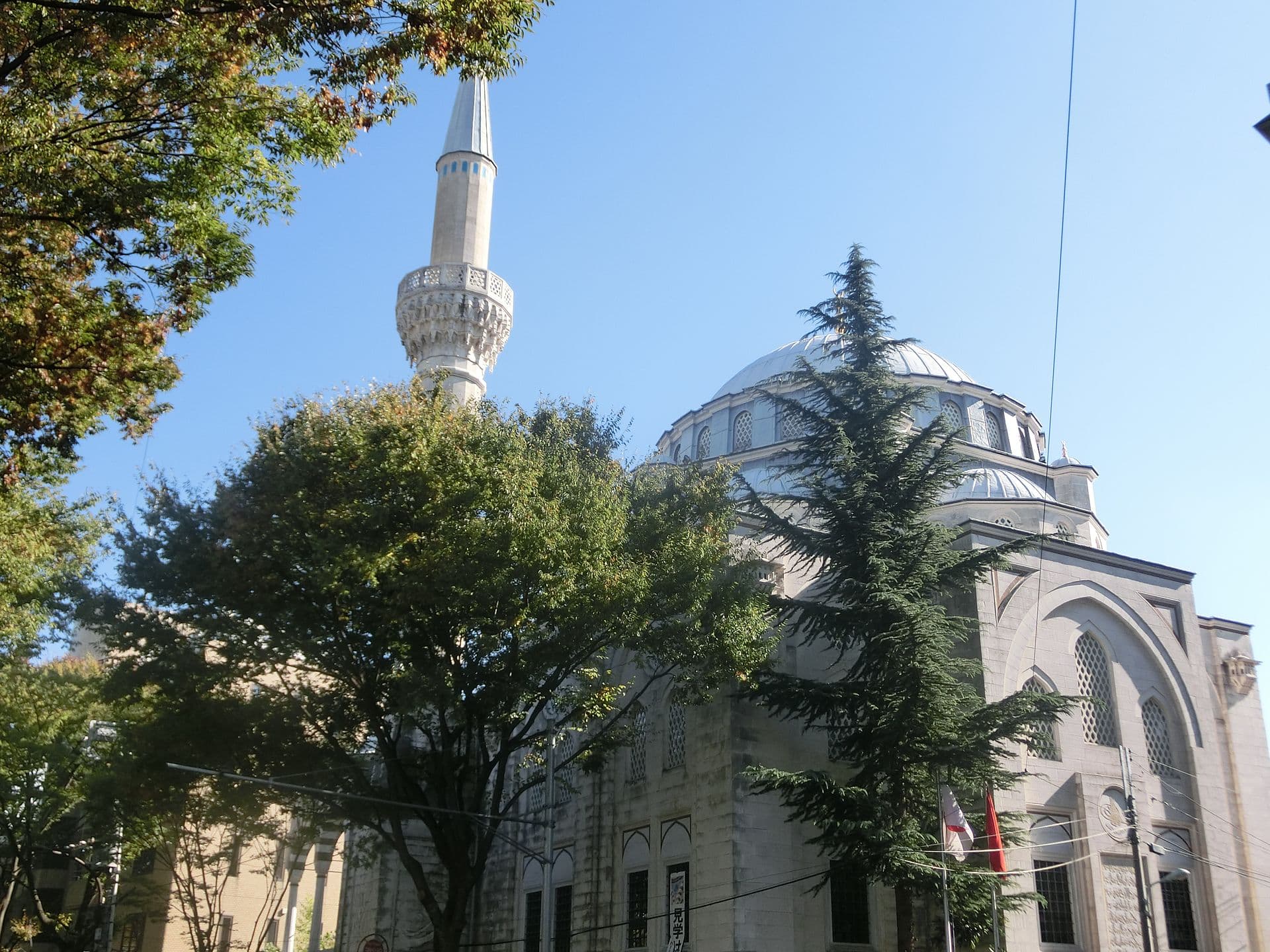
Tokyo Mosques and Prayer Rooms 2026: Camii, Okachimachi, Airports
Tokyo mosques map: Tokyo Camii (Yoyogi-Uehara), As-Salaam near Okachimachi, Asakusa, plus mall and airport prayer rooms. Hours change — verify before Jumu’ah.

Bringing Medicine to Japan: What’s Allowed, What’s Not (MHLW Rules)
Pseudoephedrine cold meds and ADHD stimulants like Adderall/Vyvanse are high-risk. Personal-use limits, Yunyu Kakunin-sho, MHLW contacts, and Japanese pharmacies.

Halal Japan Guide 2026: Food, Prayer Rooms, and Muslim-Friendly Travel
Halal and Muslim-friendly Japan: no single national certification, Tokyo Camii, airport prayer rooms, mirin/sake traps, Halal Gourmet Japan, and how to eat without guessing.