
Harajuku Street Fashion: The Underground Scene Nobody Shows You
The viral Harajuku you've seen on Instagram is a performance for tourists. Here's where the real style is happening — and why it matters.
Correction, 7 October 2026: an earlier version said Kinji sells clothes by weight (it doesn't), placed New York Joe Exchange in Harajuku (it is in Shimokitazawa), and listed shops we could not confirm. It also described interviews we did not conduct.
Every few years, someone abroad rediscovers Harajuku: a few photos of teenagers in elaborate outfits on Takeshita Street, and a story about how strange Japanese fashion is. The more interesting Harajuku is quieter. It is in the side streets, the secondhand shops and the designer stores, and it doesn't perform for the camera.
Takeshita Street, and what's behind it
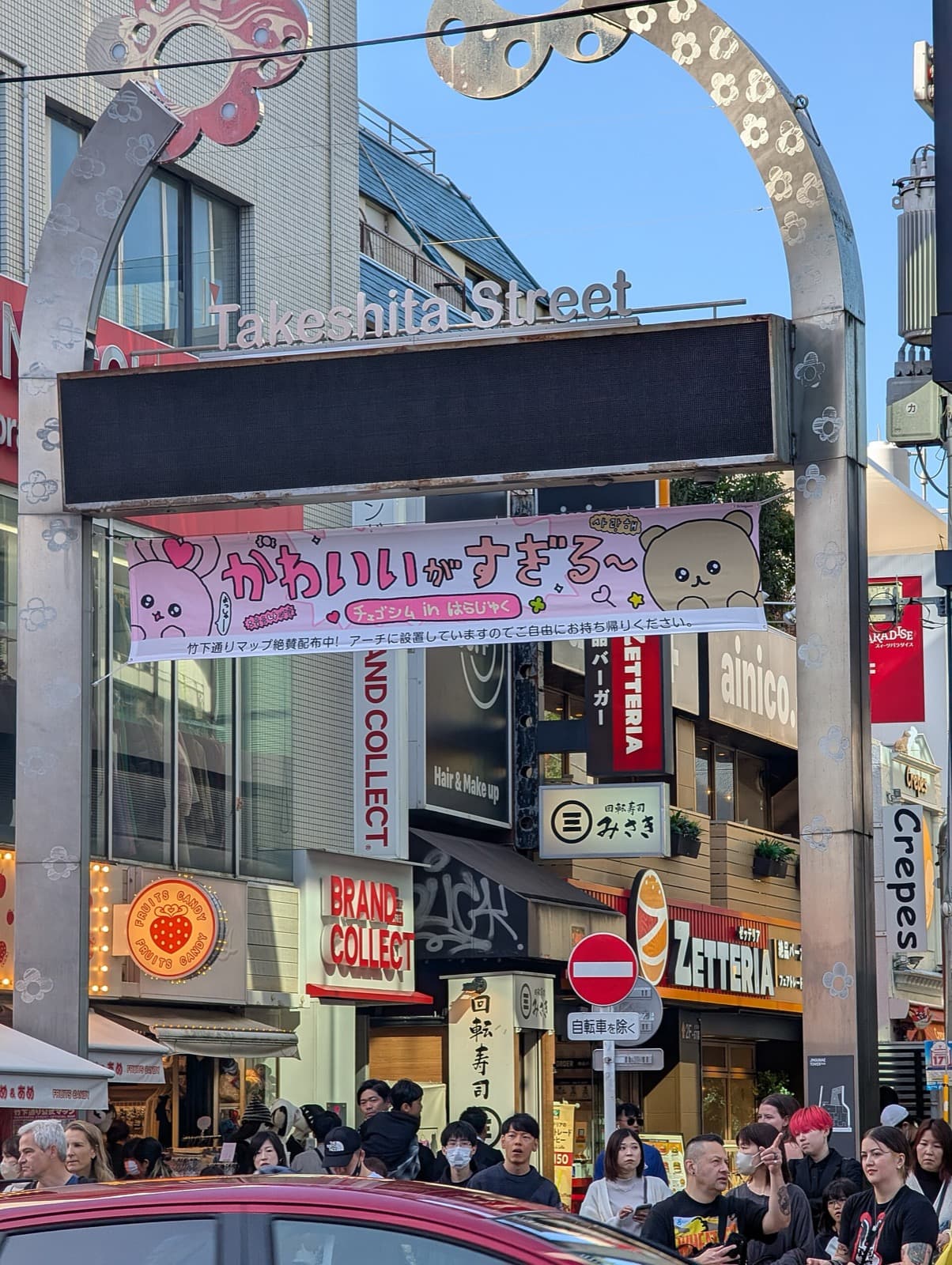
Takeshita Street, the narrow pedestrian lane opposite Harajuku Station, is the postcard: crêpe stands, pastel boutiques and the occasional Lolita outfit. It is real, but it is the part of the scene that has learned to perform for visitors.
The more interesting streets are behind it, in Ura-Harajuku ("back Harajuku"), the grid of lanes between Harajuku Station and Omotesando, and along Cat Street, the walking street that runs south toward Shibuya. That is where the secondhand shops and independent labels are.
Secondhand shops worth a look
Japanese secondhand clothing is unusually good, for practical reasons: clothes are well looked after, the resale trade is large and well organized, and decades of imported American workwear and denim are still circulating.
- Kinji, on the second floor of a building on Takeshita Street, is a big, affordable secondhand store with more than 20,000 items across every style, and a strong women's section.
- Ragtag, on Cat Street, specializes in secondhand Japanese and international designer labels, with a floor of luxury brands. Prices are well below retail.
- Flamingo, in Jingumae, sells curated American vintage from the 1940s to the 1990s.
For more shops across the city, see our Tokyo vintage shopping guide, and for Shimokitazawa's secondhand scene, our Shimokitazawa guide.
Designers to know
Harajuku's scene is tied up with Japanese designer fashion, especially the generation that followed Rei Kawakubo of Comme des Garçons and Yohji Yamamoto.
Chitose Abe (sacai). Sacai's hybrid garments, half blazer and half parka, or half dress and half skirt, have been widely influential. Abe trained as a pattern maker at Comme des Garçons. The flagship is in nearby Aoyama.
Jun Takahashi (Undercover). One of the most consistently interesting Japanese designers of the last three decades, showing in Paris but drawing on Japanese youth culture, punk and horror.
Nigo. Founder of A Bathing Ape and one of the people most responsible for making Japanese streetwear a global phenomenon. He has been artistic director of Kenzo since 2021. His early years in Harajuku are part of the area's founding story.
Kapital and LAD Musician. Two labels with devoted followings: Kapital, the denim and workwear brand from Kojima in Okayama (see our Japanese denim guide), and LAD Musician, founded in 1995, known for dark, music-inspired clothes. For more labels, see our guide to Japanese streetwear brands.
How the scene has changed
The pandemic emptied Harajuku of tourists for two years, and some of the more performative side of Takeshita Street faded. The secondhand shops and independent labels mostly held on. Much of the newest creative energy now shows up online and in resale as much as on the street, in the way young people cut up, combine and restyle what they find.
FAQ
When is the best time to visit Harajuku for shopping? Weekday mornings. At weekends the streets fill with visitors and teenagers from outside Tokyo, while on weekday mornings the shops are calmer and the stock is fresher.
Is Harajuku fashion still relevant? Yes, though not in the way photos suggest. The costume styles that get photographed are a small part of a much larger scene of secondhand shops, independent labels and designer stores.
How much should I budget? At Kinji you can come away with several pieces for under ¥10,000. Curated vintage and secondhand designer pieces at shops like Ragtag and Flamingo often cost ¥5,000–¥30,000 each, and new designer pieces cost far more.
Can I buy Japanese secondhand fashion online? Yes. Mercari and Yahoo! Auctions in Japan carry much of the same stock, often for less, though you will usually need a proxy service to buy from abroad.
Style Desk
The Standard Japan
Shopping and fashion in Japan: denim, vintage, streetwear, and where each scene actually lives.
Facts are taken from primary sources (operators, venues, official tourism and government pages) and dates and prices are checked on the day of writing. Pages are revised when those sources change.
Expertise
Japanese denim, vintage, streetwear, shopping districts
Have a question or a correction?
Ask us anything about Harajuku Street Fashion: The Underground Scene Nobody Shows You, or tell us what we got wrong. We reply within 24 to 48 hours.

Related Stories
Tokyo Vintage Shopping Guide: Shimokitazawa, Koenji, Harajuku (2026)
Tokyo vintage by area: Shimokitazawa's 100-plus shops, Koenji's Safari, Berberjin in Harajuku for denim, Ragtag and Kindal on Cat Street for designer.

Uniqlo in Japan: What's Actually Different From the Store Back Home
The Ginza flagship has 12 floors, a coffee stand, and a UT line you won't find abroad. Here's what's worth shopping for at Uniqlo in Japan specifically.
Tokyo's Art Scene: Galleries, Museums and Emerging Artists
Tokyo has one of the world's most dynamic art scenes and most of it stays invisible to visitors. Here's where the real work is happening.