
Shibuya Crossing: Best Viewing Spots and Times
Up to 3,000 people cross at once. Where to watch it from (free and paid), the busiest times, and whether the Scramble is worth building a day around.
Correction, 8 October 2026: an earlier version priced Shibuya Sky at ¥2,000 with last entry at 10pm (it is ¥2,700–¥3,700, last entry 9:20pm), placed Mag's Park in the QFRONT building (it is the rooftop of MAGNET by SHIBUYA109, now called MAG8), and recommended a L'Occitane café we could not confirm is still open.
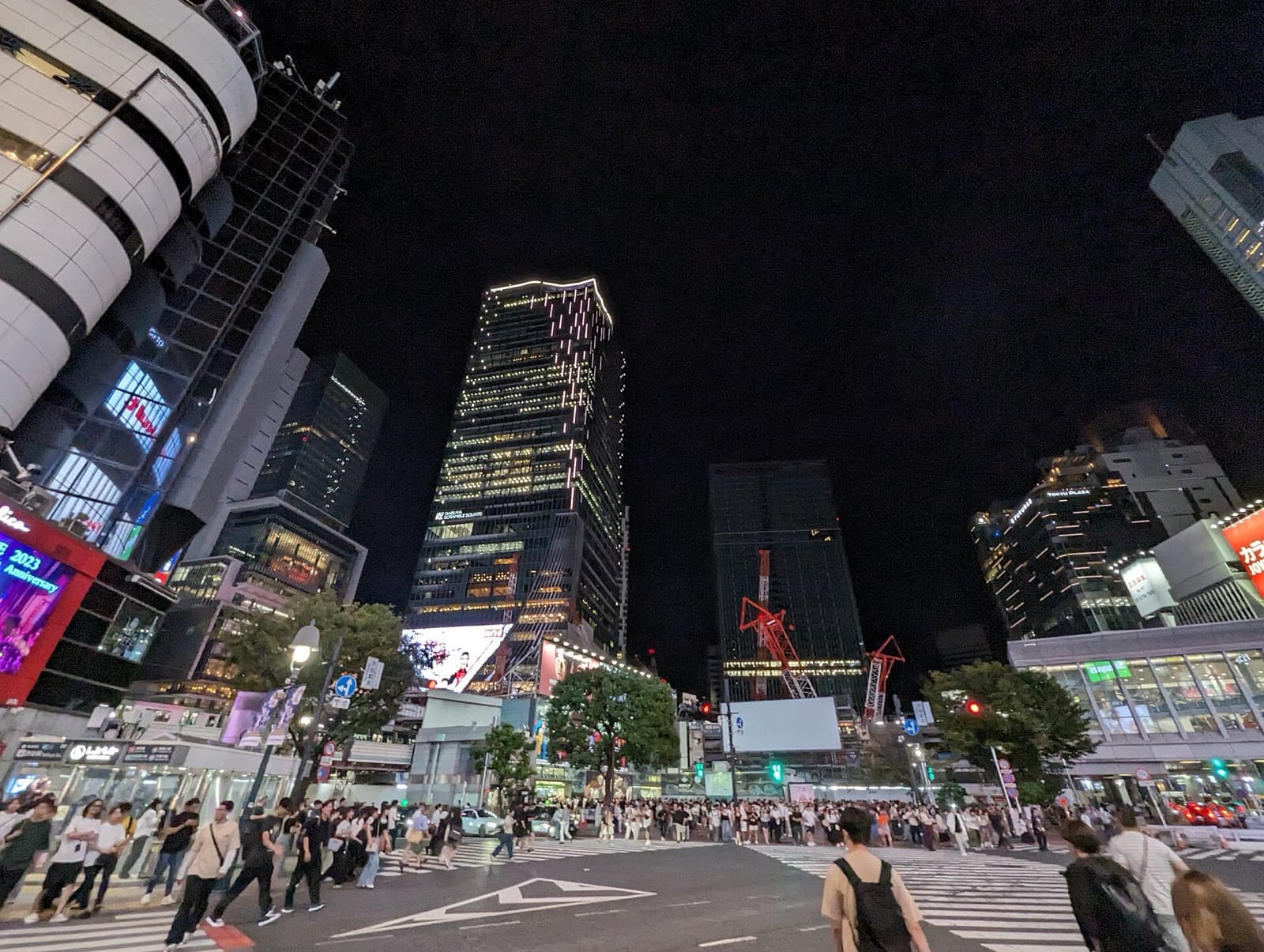
Shibuya Crossing is often called the busiest pedestrian crossing in the world. When the lights change, traffic stops in every direction and up to 3,000 people cross at once, including diagonally. It is free, it takes a minute, and it is one of the sights that most people remember from Tokyo.
What is Shibuya Crossing?
Shibuya Crossing (officially Shibuya Scramble Crossing, 渋谷スクランブル交差点) is the scramble crossing outside the Hachiko exit of Shibuya Station in Tokyo. A scramble crossing means all traffic stops simultaneously, and pedestrians can cross in any direction — including diagonally.
An estimated 500,000 people pass through the crossing on a busy day, and the scale is hard to grasp until you are standing in the middle of it.
When to Go
Peak hours: Rush hour (8–9:30am, 6–9pm) sees the most pedestrians. Weekend evenings (Friday and Saturday, 7–10pm) are particularly intense.
For photography: Golden hour (just before sunset) gives the best light. After dark, the neon signs illuminate the crossing beautifully — great for long-exposure photography.
Less impressive: the middle of a weekday. Still busy, but the crowds are smaller.
Best Places to Watch
Shibuya Sky. The open-air rooftop of Shibuya Scramble Square, about 229 meters up, looking almost straight down on the crossing. Adults pay ¥2,700 online before 3pm and ¥3,400 from 3pm, or ¥300 more at the counter. Open until 10:30pm, last entry 9:20pm. Book sunset slots ahead; see our Shibuya Sky guide.
MAG8, on the roof of MAGNET by SHIBUYA109. A rooftop viewing deck and lounge directly above the crossing, reopened in March 2026. Entry is ¥1,800 including a drink, card or electronic payment only, from 10am to 10pm (last entry 9:30pm). Closer to street level than Shibuya Sky, so you see the crowd in more detail.
SHIBUYA TSUTAYA (QFRONT). The building with the giant screens facing the station. It reopened in 2024 with a Starbucks and lounges inside, and its window seats over the crossing are popular; get there early.
The crossing itself. Walk across it a few times, at peak time. It's the real experience, and free. Don't stop in the middle to film; the lights change quickly.
What's Around Shibuya Crossing
Shibuya Crossing is in the heart of the Shibuya entertainment and shopping district. Within walking distance:
Hachiko statue. A bronze statue of the Akita dog who went to Shibuya Station to meet his owner every day for nearly ten years after the owner's death in 1925. It stands by the station exit, right beside the crossing, and is Tokyo's best-known meeting point. It is boarded off around Halloween.
Shibuya 109. The cylindrical fashion building that was the center of gyaru fashion in the 1990s and 2000s, still full of young women's fashion shops. A short walk west of the crossing, where Dogenzaka and Bunkamura-dori fork.
Shibuya Stream. Restaurants and a walkway along the restored Shibuya River, south of the station. Good for dinner.
Center Gai. The pedestrian shopping street leading off the crossing to the north-west: fast food, game centers and cheap fashion. Loud and busy.
Nonbei Yokocho. A narrow alley of tiny bars beside the JR tracks, on the other side of the station toward Miyashita Park. Old, cramped and the opposite of the crossing a few minutes away. A good place for a drink afterwards.
Practical Information
Getting there: Shibuya Station (JR Yamanote Line, Tokyo Metro multiple lines, Tokyu, Keio lines). Take the Hachiko exit, and the crossing is in front of you.
Access: The crossing is a public street — it's free to walk through at all times.
Photography: You can photograph freely from the crossing and public streets. Elevated venues have their own policies.
Crowds: It's always busy. On New Year's Eve and Halloween the crossing is packed and heavily policed, and street drinking around the station is banned every night from 6pm to 5am; see our Shibuya Halloween 2026 guide and Japan's 2026 tourist fines for the current rules before you go.
The Bigger Shibuya Context
The area around Shibuya Station has been rebuilt over the past decade, with new towers such as Shibuya Scramble Square, Shibuya Stream and Shibuya Fukuras, and work is still going on. The older Shibuya survives in places like Nonbei Yokocho and the side streets of Dogenzaka. After the crossing, walk on into the district; see our Shibuya guide.
FAQ
What makes Shibuya Crossing special? It's a scramble crossing — all traffic halts simultaneously, and pedestrians cross from all directions at once. The volume of people and the orchestrated chaos is unique at this scale. At peak times, up to 3,000 people cross in a single cycle.
Is Shibuya Crossing the busiest intersection in the world? It's consistently cited as the world's busiest pedestrian crossing. By some measures, Times Square in New York has more total foot traffic, but the scramble format makes Shibuya's single intersection distinctive.
What time is best to visit Shibuya Crossing? Friday and Saturday evenings between 7pm and 10pm. Rush hour (8–9:30am) is authentic but hectic. Late afternoon on weekdays gives reasonable crowds with better light.
Is Shibuya safe? Yes. Shibuya has the normal risks of any busy urban entertainment district — pickpocketing in dense crowds, the odd drunk on weekend nights. By global city standards, it's very safe.
How long should I spend at Shibuya Crossing? The crossing itself: 15–30 minutes. Watch a few light cycles from street level, walk through once. If you go to Shibuya Sky or a rooftop bar, add an hour. Then leave the crossing and explore the rest of Shibuya.
Travel Desk
The Standard Japan
Trip planning: seasons and crowds, getting around, airports, where to stay, and the practical steps before and after you land.
Facts are taken from primary sources (operators, venues, official tourism and government pages) and dates and prices are checked on the day of writing. Pages are revised when those sources change.
Expertise
Seasonal crowds, transport and airports, itineraries, lodging, pre-trip logistics
Have a question or a correction?
Ask us anything about Shibuya Crossing: Best Viewing Spots and Times, or tell us what we got wrong. We reply within 24 to 48 hours.
Related Stories
Cherry Blossom Japan 2027: Forecast, Best Spots and Booking
The 2027 sakura forecast won't exist until December — but the bookings that matter happen months earlier. Here's how to plan the season anyway.

Tokyo Last Train Times 2026: Miss Shuden? What Next
Tokyo last trains usually end ~midnight–1am — not all night. How to check shuden, 20% night taxi surcharge, manga café packs, and weekend myths.
Best Breakfast in Tokyo: 15 Spots From ¥500 to Buffets
Where to eat breakfast in Tokyo: Japanese breakfast near Tsukiji, pancakes, kissaten morning sets, ¥150 konbini onigiri and hotel buffets, by area.