
Cherry Blossom Japan 2027: Forecast Timing, Best Spots, and When to Book
The 2027 sakura forecast won't exist until December — but the bookings that matter happen months earlier. Here's how to plan the season anyway.
Here's the uncomfortable truth about planning a 2027 sakura trip: the dates you actually need won't exist until long after you've had to book. The first 2027 forecasts land around December 2026, and the genuinely reliable ones not until early March — by which point peak-week hotels in Kyoto have been gone for months.
So the real skill isn't reading the forecast. It's committing to a window using historical averages, then using the forecast to adjust the small stuff.
What the Forecast Actually Is (and When It Exists)
Japan's bloom forecasts come from a few competing sources, and they arrive on a predictable schedule:
- December 2026 — the Japan Meteorological Corporation (JMC) usually issues its first prediction. Treat this as a rough signal, not a plan.
- February 2027 — most of the English-language forecasts (japan-guide and similar) publish their first maps.
- Early March 2027 — forecasts get updated weekly and become genuinely reliable. This is the version worth acting on.
A forecast issued in December can shift by a week or more as winter temperatures and the spring warm-up play out. That's not sloppiness — bloom timing is driven by accumulated temperature, so a cold February followed by a warm mid-March compresses everything, and a mild winter followed by a cold snap stretches it.
Historical Peak Windows by Region
These are the averages to book against, since they're all you'll have when the decision has to be made:
| Region | Typical peak bloom | Notes |
|---|---|---|
| Okinawa | Late January – early February | Different species (kanhizakura), deeper pink, not the classic somei-yoshino |
| Kawazu (Izu Peninsula) | Early February – early March | ~850 early-blooming trees; a genuine option for a February trip |
| Kyushu (Fukuoka, Nagasaki) | Mid–late March | Front arrives here first on the mainland |
| Tokyo | March 28 – April 5 | The benchmark most planning is built around |
| Kyoto / Osaka | A few days after Tokyo | Often overlaps; Kyoto's later spots stretch into mid-April |
| Tohoku (Sendai, Hirosaki) | Mid–late April | Hirosaki Castle is worth structuring a trip around |
| Hokkaido (Sapporo) | Early May | Latest in the country; overlaps Golden Week |
The practical read: "peak bloom" is a 3–5 day window, and full bloom to petal-fall is roughly a week. Miss by four days and you're looking at either bare branches or green leaves with pink confetti on the ground. Build in slack.
The Booking Timeline That Actually Works
6 months out (now, for spring 2027): Book flights and lock lodging for a window centered on the historical average, not a forecast. For Tokyo that means targeting roughly March 26 – April 6. Refundable rates are worth the premium here specifically.
December 2026: First JMC forecast appears. If it points meaningfully early or late, and your booking is refundable, this is when to shift.
Early March 2027: Weekly forecasts get reliable. Adjust day trips, reserve restaurants, and decide whether to chase the front north or south.
Waiting until the forecast is trustworthy before booking anything is the single most common way people end up paying triple for a business hotel in Ueno.
Tokyo: Where to Actually Go
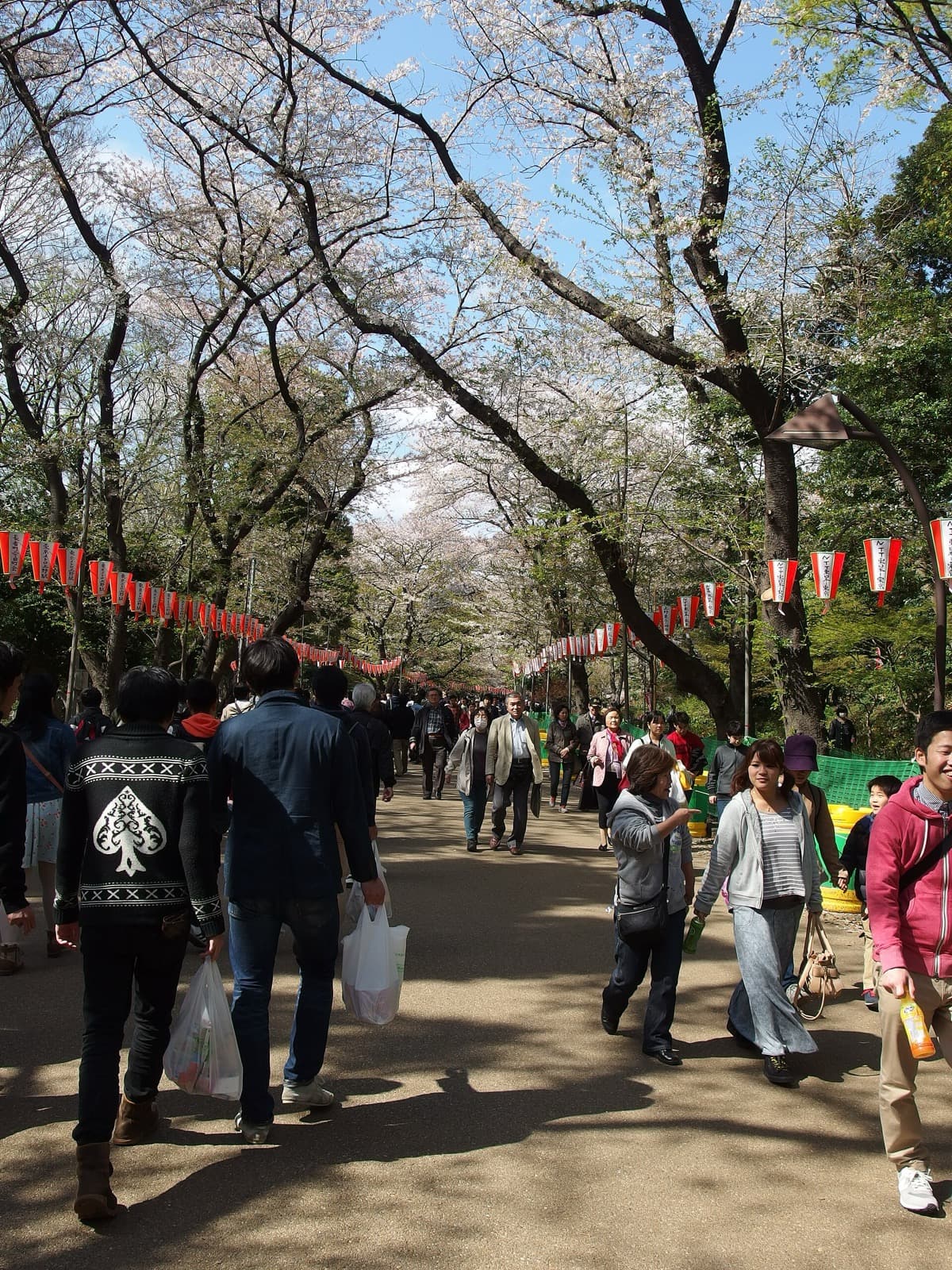
Ueno Park is the famous one — over a thousand trees, tarps down by dawn, genuinely festive and genuinely packed. Go for the atmosphere, not for photographs without strangers in them.
Meguro River (Nakameguro) is the one that photographs best — blossoms arching over a narrow canal, lit at night, food and drink stalls along the banks. It's also shoulder-to-shoulder after work hours. Morning is a different, much quieter place.
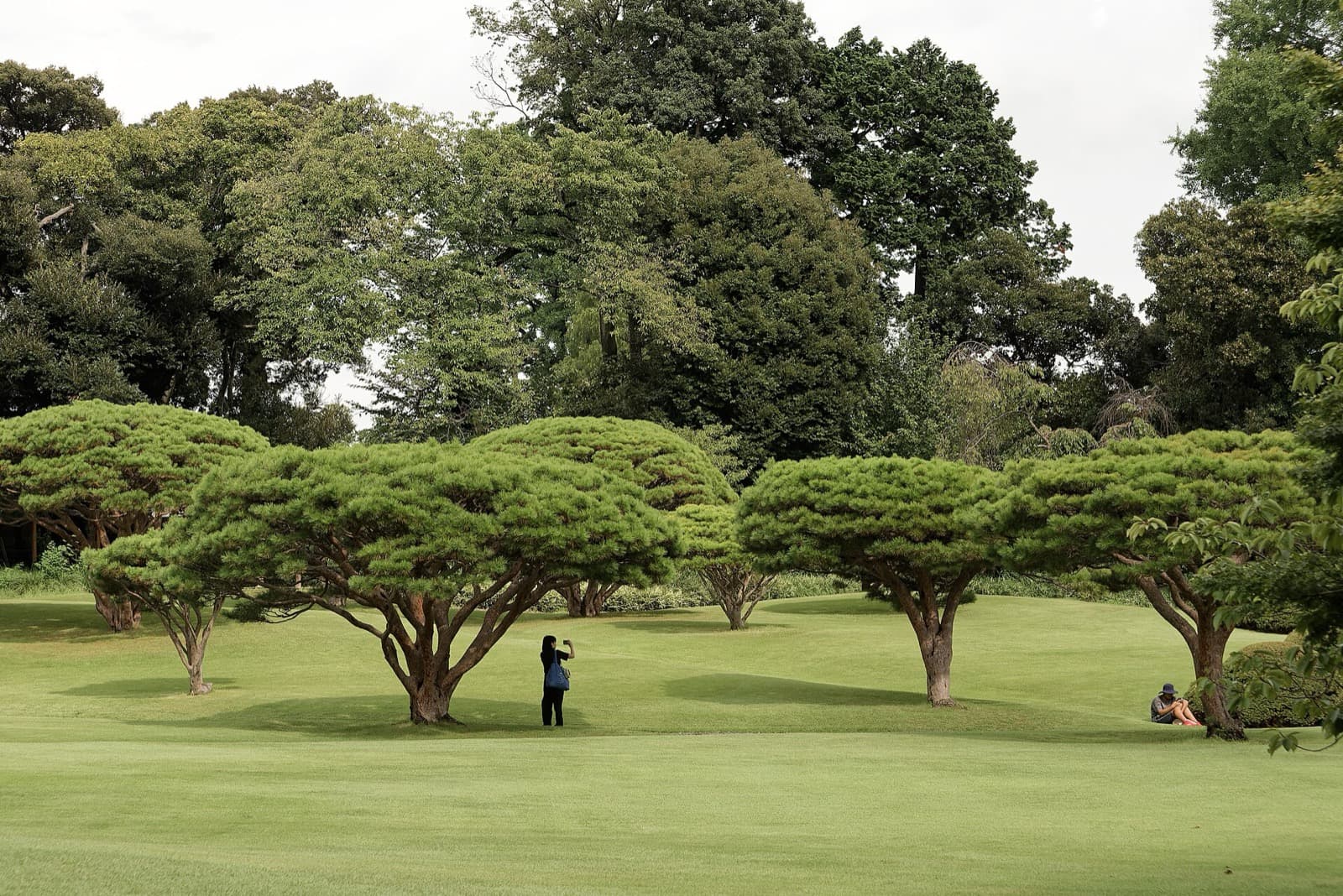
Shinjuku Gyoen charges admission (a few hundred yen), bans alcohol, and closes in the evening — which is exactly why it's the calmest of the major spots and the one to pick if crowds are the thing you're trying to escape. It also holds a mix of early and late-blooming varieties, which widens your margin for error if your dates are slightly off.
Chidorigafuchi, the moat beside the Imperial Palace, runs rowboats under overhanging branches. Boat queues on a peak weekend run hours; go on a weekday morning or skip the boat and walk the path.
Kyoto: Where to Actually Go
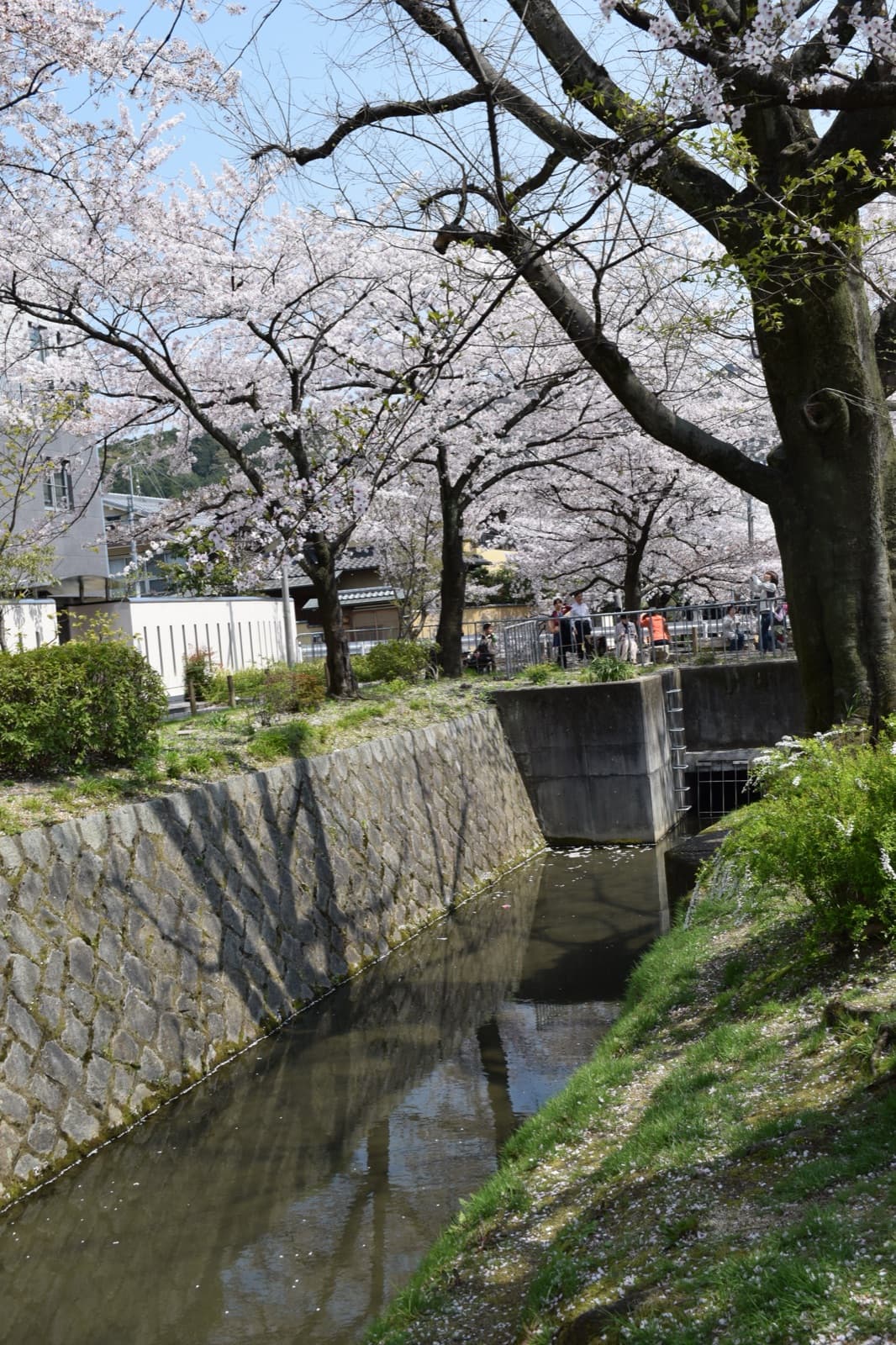
The Philosopher's Path — a canal-side walk of roughly two kilometers lined with several hundred trees, connecting Ginkaku-ji toward Nanzen-ji. Early morning is genuinely peaceful. Midday in peak week is a procession.
Maruyama Park is Kyoto's hanami-party equivalent of Ueno, anchored by a large weeping cherry that gets lit at night.
Arashiyama combines blossoms with the bamboo grove and river — which means it absorbs the entire city's day-trip traffic during peak week. Arrive before 8am or don't bother.
A Kyoto-specific note: the city's later-blooming varieties (yaezakura, weeping cherries) run a week or more past the somei-yoshino peak. If you miss the main window, Kyoto is the best place in Japan to still salvage the trip.
Crowd Strategy That Isn't Just "Go Early"
Going early works, but it's not the only lever:
- Chase the front vertically, not just horizontally. Blossoms at higher elevation open days later than the same city's valley floor. A short train ride uphill can buy you a second peak.
- Weekday over weekend, always. The difference at Meguro River between a Tuesday morning and a Saturday afternoon is not subtle.
- Use the tail, not the peak. Petal-fall (hanafubuki) — blossoms coming down like snow — is arguably more striking than full bloom, and the crowds have already thinned.
- Book one flexible day. If you have a single unscheduled day, you can spend it wherever the forecast says is peaking.
If Your Dates Are Fixed and They Miss
Not every trip can move. If you're locked into dates outside the mainland window:
- Too early (February): Kawazu on the Izu Peninsula, or Okinawa. Both are real bloom seasons, just different species and a different mood.
- Too late (late April / early May): Head north. Hirosaki Castle in Aomori and Hokkaido's early-May bloom are legitimately spectacular and far less overrun than Kyoto in peak week — and the timing overlaps Golden Week 2027, which is its own planning problem.
For year-round timing context, see best time to visit Japan. For the opposite season, autumn foliage. For what else April brings, Japan in April 2027.
FAQ
When will the 2027 cherry blossom forecast be released? The Japan Meteorological Corporation typically issues a first prediction around December 2026. English-language forecasts generally follow in February, with weekly updates from early March — those March updates are the reliable ones.
How far ahead should I book for cherry blossom season? Four to six months for peak-week Tokyo and Kyoto. That means booking before any trustworthy forecast exists, which is why targeting the historical average window with refundable rates is the standard approach.
How long do cherry blossoms actually last? Peak bloom is roughly 3–5 days, and full bloom to petal-fall is about a week — assuming no heavy rain or wind, which can cut it short.
Where can I see cherry blossoms outside the late-March window? Okinawa blooms late January, Kawazu on the Izu Peninsula from early February, and Tohoku and Hokkaido in mid-April through early May. The bloom front moves across the country over roughly four months.
Is Kyoto or Tokyo better for sakura? Kyoto for setting — temples, canals, and later-blooming varieties that extend the season. Tokyo for variety and sheer number of options, plus easier last-minute moves between spots. Kyoto is more crowded per square meter during peak week.
Does peak bloom overlap with Golden Week? On the mainland, no — Golden Week 2027 runs April 29 to May 5, well after Tokyo and Kyoto have finished. In Hokkaido, yes, which is part of why northern Japan gets busy that week.
Need Help with This?
Have questions about Cherry Blossom Japan 2027: Forecast Timing, Best Spots, and When to Book? We're here to help. Send us a message and we'll get back to you within 24-48 hours.

Alex Rivera
Travel & Living Editor
Expat guide. Helps people actually move to and navigate Japan.
Moved from London to Tokyo in 2018. Went through the full gaijin experience—visa, housing, banking, the works. Now writes the guide he wished he had.
Tokyo
Expertise
Moving to Tokyo, expat life, travel, Kyoto vs Tokyo, onsen
The Standard Newsletter
Tokyo in your inbox. Weekly.
No algorithms curating your culture. No sponsored content disguised as journalism. Just the real Tokyo — the izakayas at 2am, the Harajuku kids who never made it to the algorithm, the ramen shop with no sign.
8K+
Subscribers
Weekly
Editions
Free
Always
Join the underground.
One email a week. Unsubscribe anytime.
No spam. No sharing your data. Tokyo only.
Related Stories
Golden Week 2027: Why This One Is Worse Than Usual (April 29 – May 5)
Golden Week 2027 has a calendar quirk that turns one day of leave into a seven-day holiday for most of Japan. That's great for locals and bad for your hotel rate.
Japan in April 2027: Peak Sakura, the Golden Week Runup, and the Quiet Middle
April 2027 has two expensive bookends and an underrated middle. Weeks two and three are the best-value spring travel in Japan — and almost nobody books them.
Japan in March 2027: Weather, Sakura Timing, and the Shoulder-Season Window
March 2027 splits into two different trips: a cheap, quiet first half, and the most expensive week of the Japanese travel year at the end. Here's how to pick.