
Yuru-Kyara: Japan's Cutest Mascot Characters, Ranked
Kumamon, Funassyi, Hikonyan, and the rest of Japan's obsessive mascot economy — who they are, why they exist, and which ones are actually worth knowing.

Correction, 2 October 2026: an earlier version placed Nyango Star in Chiba (it is from Kuroishi, Aomori), described Izunyan as the mascot of the Izumiya supermarket chain (it is the official character of Izumiya Shopping Center, run by H2O Shopping Center Development), and gave its Yurubaasu 2025 rank as 23rd (it was 17th of 299).
Japan has more mascot characters than most countries have cities. The umbrella term is yuru-kyara (ゆるキャラ) — "loose" or "laid-back" character — and it covers everything from serious prefectural tourism ambassadors to a screaming pear that has sued people for copyright infringement. It's one of the clearest real-world applications of kawaii culture as deliberate economic policy. As of recent counts there are well over 1,700 registered yuru-kyara in Japan, and that's before you get into the unofficial ones nobody bothered to register.
This isn't a fringe hobby. Kumamon alone is credited with unlocking tens of billions of yen a year in merchandise and tourism spending for Kumamoto Prefecture. Local governments now treat mascot design as a legitimate economic development strategy. Here's who actually matters, and why.
What Is a Yuru-Kyara, Exactly?
A yuru-kyara is a costumed mascot character created to promote a place, product, event, or organization — usually a prefecture, city, train line, police department, or local business. The defining rules, informally set by mascot researcher Jun Miura who coined the term in the 2000s, are that the character should have a strong connection to its home region, an unusual or lovable appearance, and an unsteady, amateur charm rather than slick corporate polish.
The genre exploded after Hikonyan, a samurai-helmeted cat created in 2007 for the 400th anniversary of Hikone Castle in Shiga Prefecture, became a runaway hit and proved a mascot could single-handedly drive tourism numbers. Every prefecture, city ward, and railway line in Japan has been trying to replicate that success ever since.
From 2010 to 2020, the Yuru-Chara Grand Prix was the industry's biggest event — a nationwide popularity contest where mascots campaigned for votes like political candidates, complete with rallies and merchandise pushes. It was discontinued, and a successor competition called Yurubaasu (ゆるバース) now runs in its place.
The Ranking
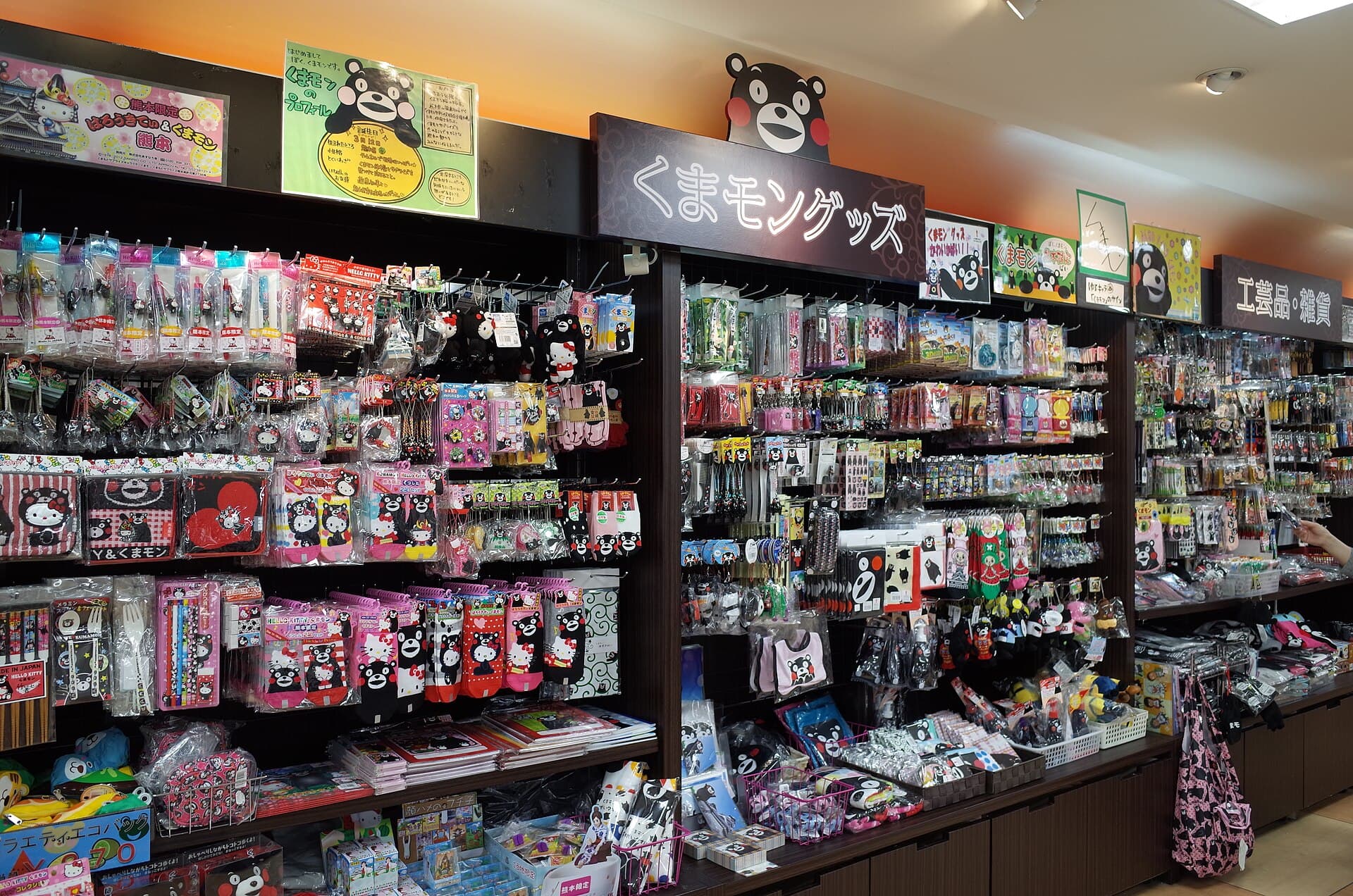
1. Kumamon (くまモン) — Kumamoto Prefecture
Official profile: yurugp.jp
The reigning champion, and it isn't close. Kumamon is a black bear with round white cheeks, permanently flushed red, created in 2010 by Kumamoto Prefecture to promote the region ahead of the Kyushu Shinkansen extension. He won the first major Yuru-Chara Grand Prix in 2011 and never really left the spotlight after that.
The real innovation wasn't the design — it was the licensing. Kumamoto Prefecture made Kumamon's image essentially free to use: any business can put his face on a product after a simple registration, with no royalty fee, as long as it's made or sold in Kumamoto and doesn't damage the character's image. That single decision turned Kumamon into one of the most reproduced characters in Japan, appearing on everything from instant ramen to bank passbooks, and the prefecture has credited the character with generating well over ¥100 billion in cumulative economic impact.
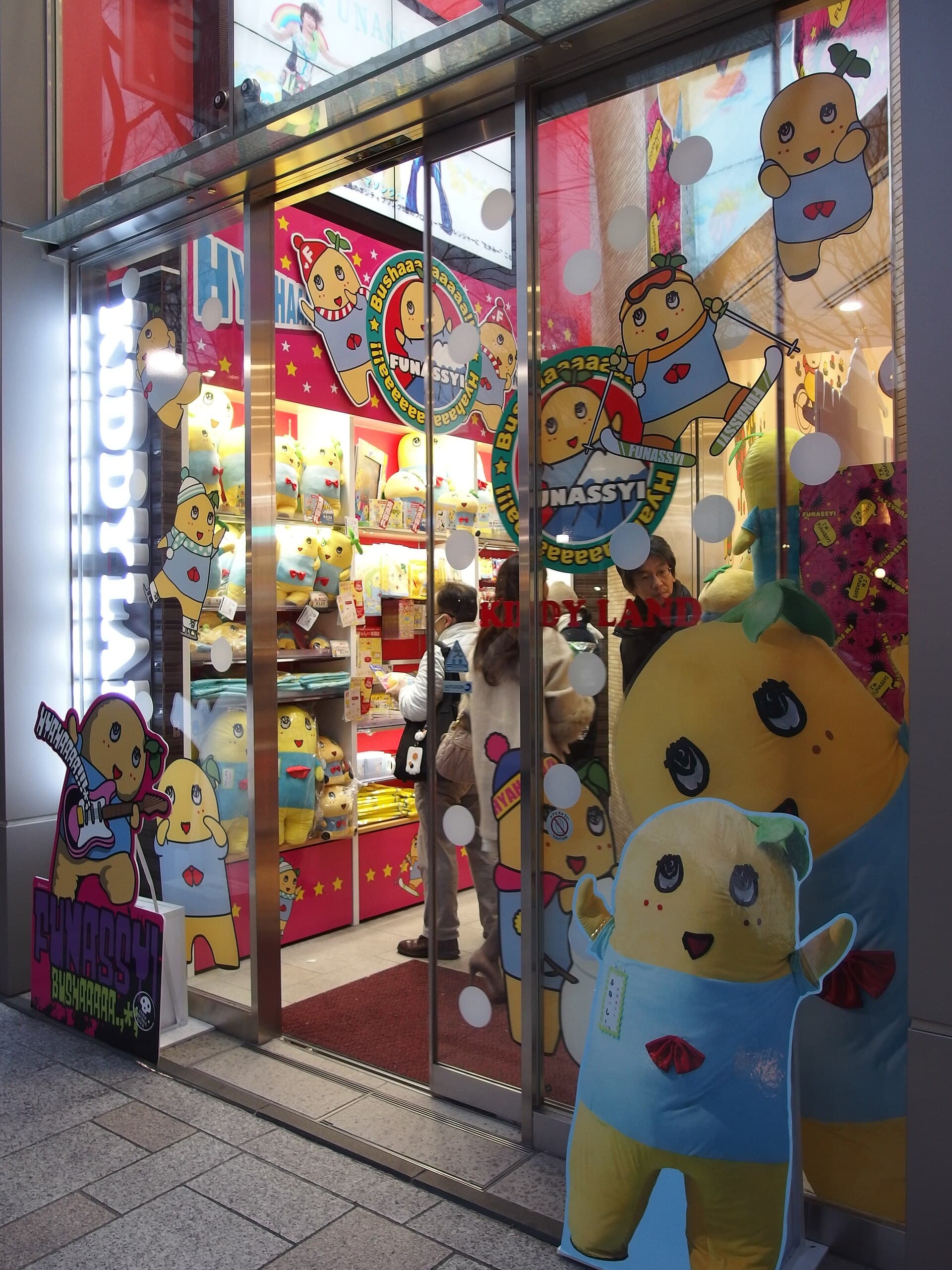
2. Funassyi (ふなっしー) — Funabashi, Chiba
Official profile: yurugp.jp
A yellow pear fairy from Funabashi, Chiba, and the loudest thing in the entire yuru-kyara ecosystem — literally. Funassyi debuted in 2011 with a screeching, high-energy voice, does backflips at public appearances, and behaves nothing like the calm, wave-and-pose mascots around it.
The key detail: Funassyi is explicitly unofficial. Funabashi City has never endorsed the character, which sounds like a disadvantage but is actually the entire point — an official municipal mascot has to behave, and Funassyi's independent management doesn't. That independence also means Funassyi's team is unusually aggressive about protecting the character commercially, and has pursued legal action against unauthorized merchandise. It's a genuinely different business model from the free-for-all Kumamon approach, and it's made Funassyi one of the most recognizable "unofficial" mascots in the country.
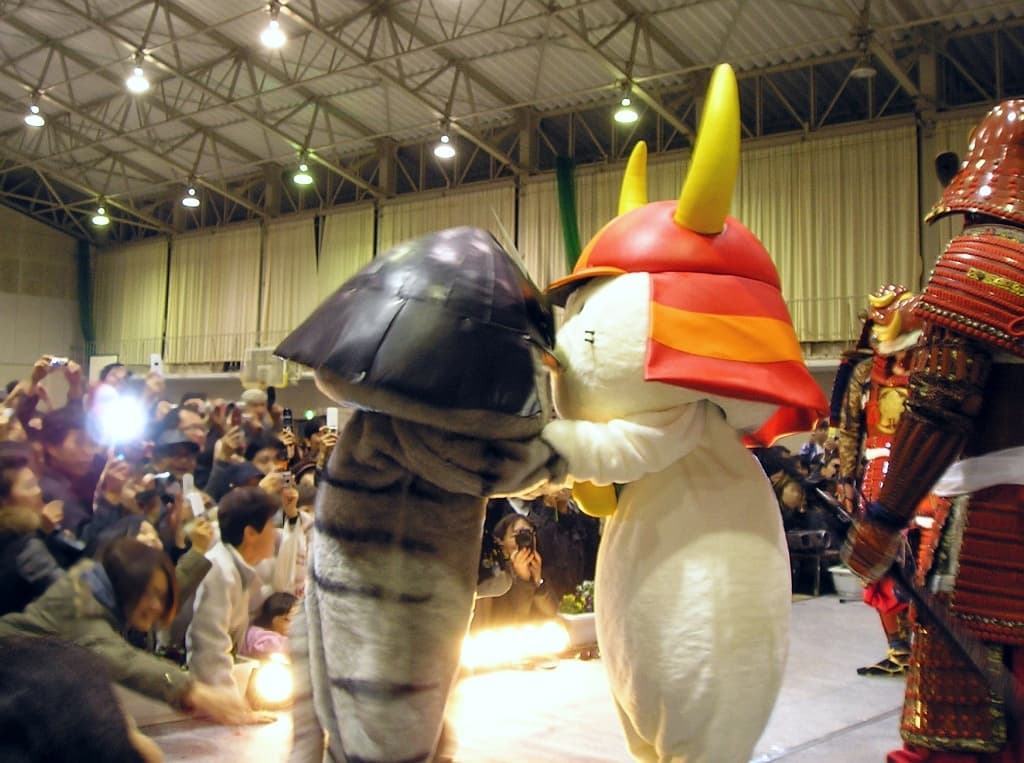
3. Hikonyan (ひこにゃん) — Hikone, Shiga
Official profile: Hikone City
The mascot that started it all. Hikonyan is a white cat wearing a red samurai kabuto helmet with gold horns, designed in 2007 to mark Hikone Castle's 400th anniversary. He's based on a local legend about a cat that lured a feudal lord to shelter under a tree just before it was struck by lightning, saving his life.
Hikonyan's popularity — and the tourism bump it brought Hikone — is what convinced local governments across Japan that a good mascot was worth investing in. Almost every character on this list exists because Hikonyan proved the model works first.
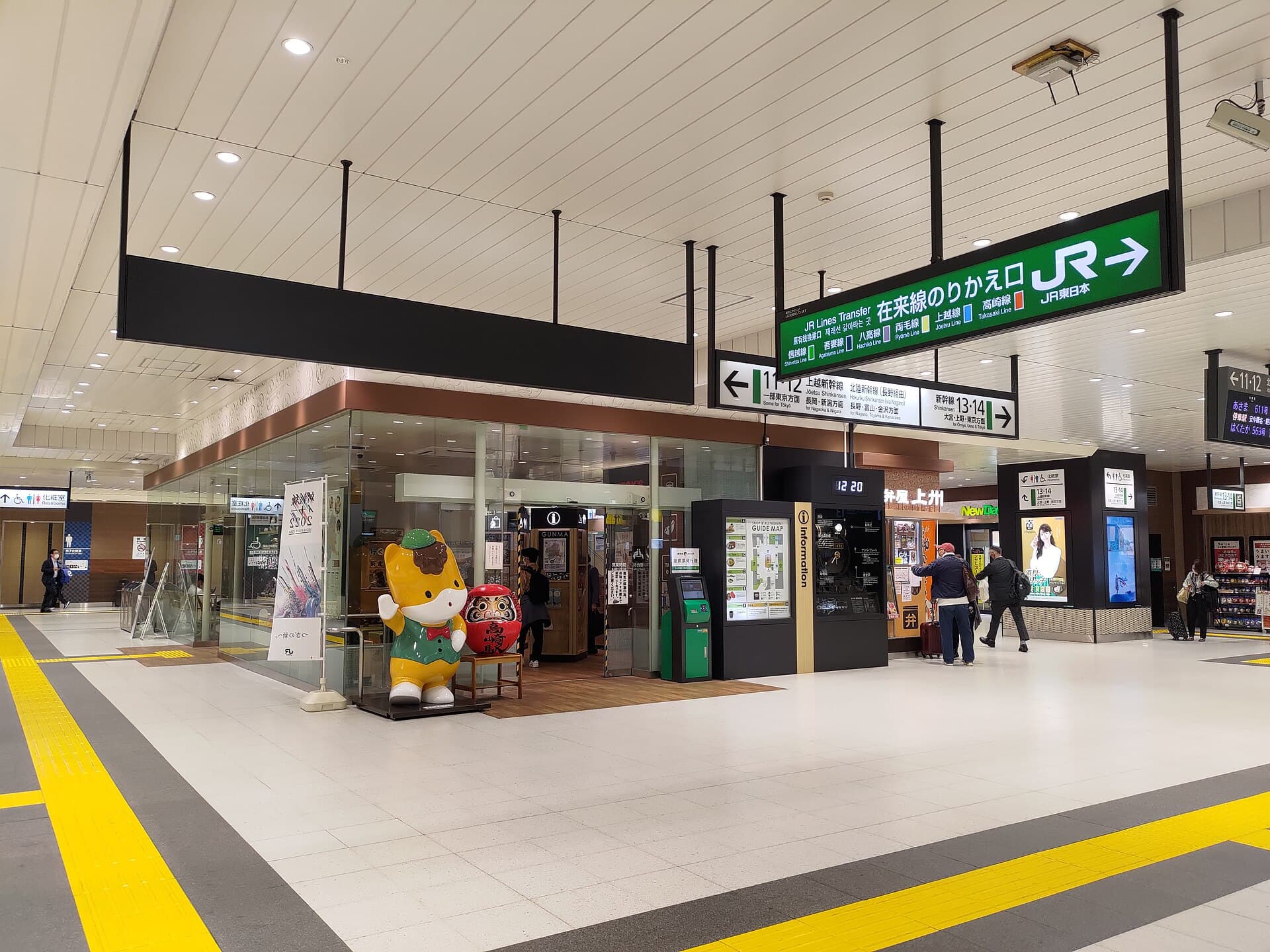
4. Gunma-chan (ぐんまちゃん) — Gunma Prefecture
Official profile: yurugp.jp
A white pony-eared character who's been around since 1994, originally created for a national disability sports event before being adopted as Gunma Prefecture's full-time mascot in 2008. Gunma-chan placed third in the Yuru-Chara Grand Prix in both 2012 and 2013 before finally winning outright in 2014 — a slow-burn rise that makes the character something like the prefectural mascot equivalent of a veteran finally winning the championship.
Gunma-chan also runs one of the more active mascot social media accounts in Japan, which matters more than it sounds: a huge amount of a yuru-kyara's long-term popularity now comes down to how well its handlers manage its online personality between public appearances.
5. Sento-kun (せんとくん) — Nara Prefecture
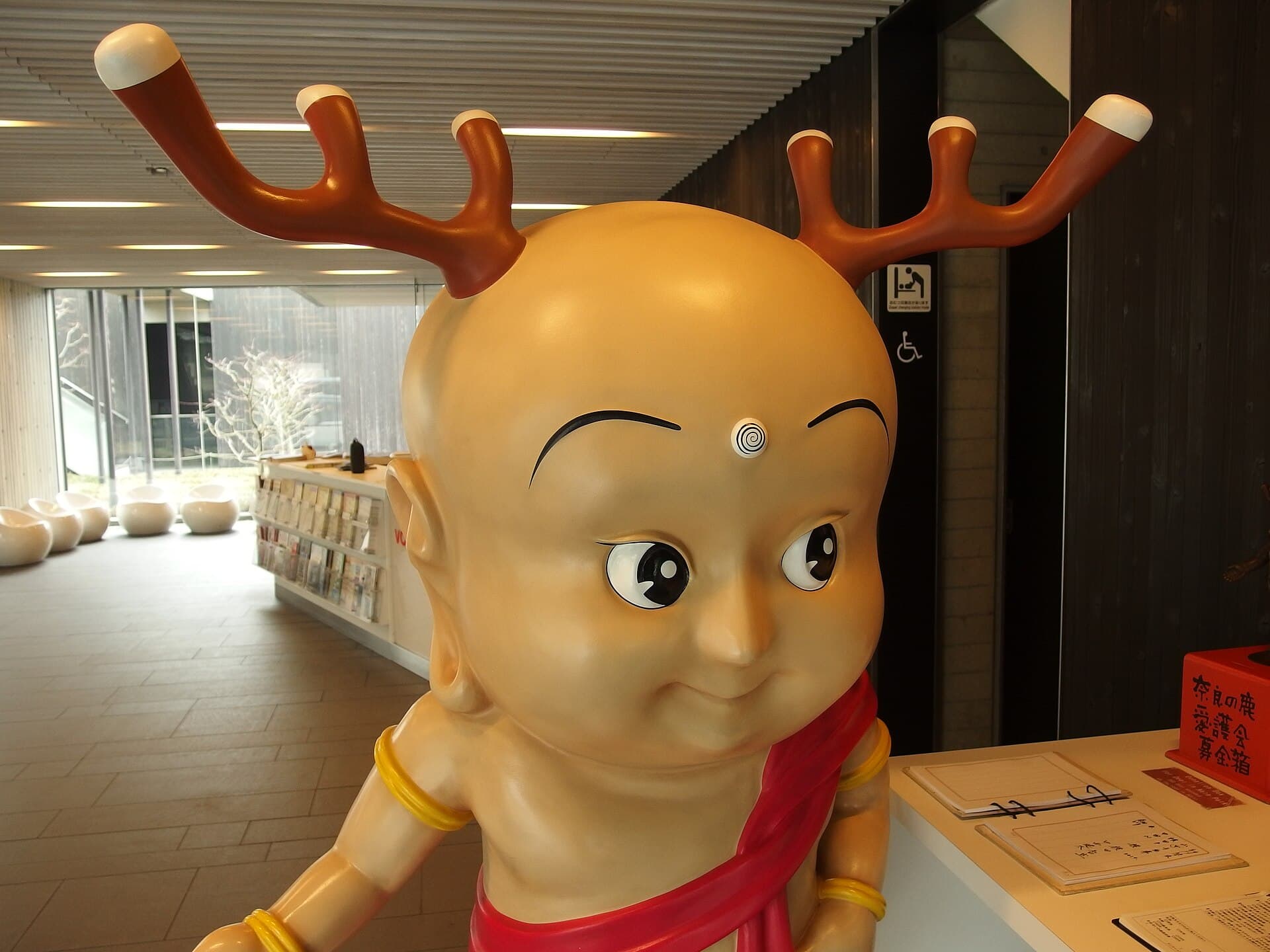
Official profile: Nara Prefecture
Genuinely one of the strangest origin stories in the genre. Sento-kun was unveiled in 2008 to promote Nara's 1300th anniversary celebrations — a bald child monk with a full set of deer antlers growing out of his head, referencing both Nara's Buddhist temples and its famous free-roaming deer. Buddhist groups and much of the public hated it immediately, calling it disrespectful and unsettling, and an online petition demanding it be scrapped gathered over a thousand members within days of the reveal.
Nara kept him anyway. Over time, the initial backlash faded and Sento-kun became a genuinely beloved fixture of the city — a rare case of a mascot surviving a hostile launch to become an institution. It's a useful reminder that yuru-kyara design is far more contested and political than the finished, cheerful mascot suggests.
6. Nyango Star (にゃんごすたー) — Kuroishi, Aomori
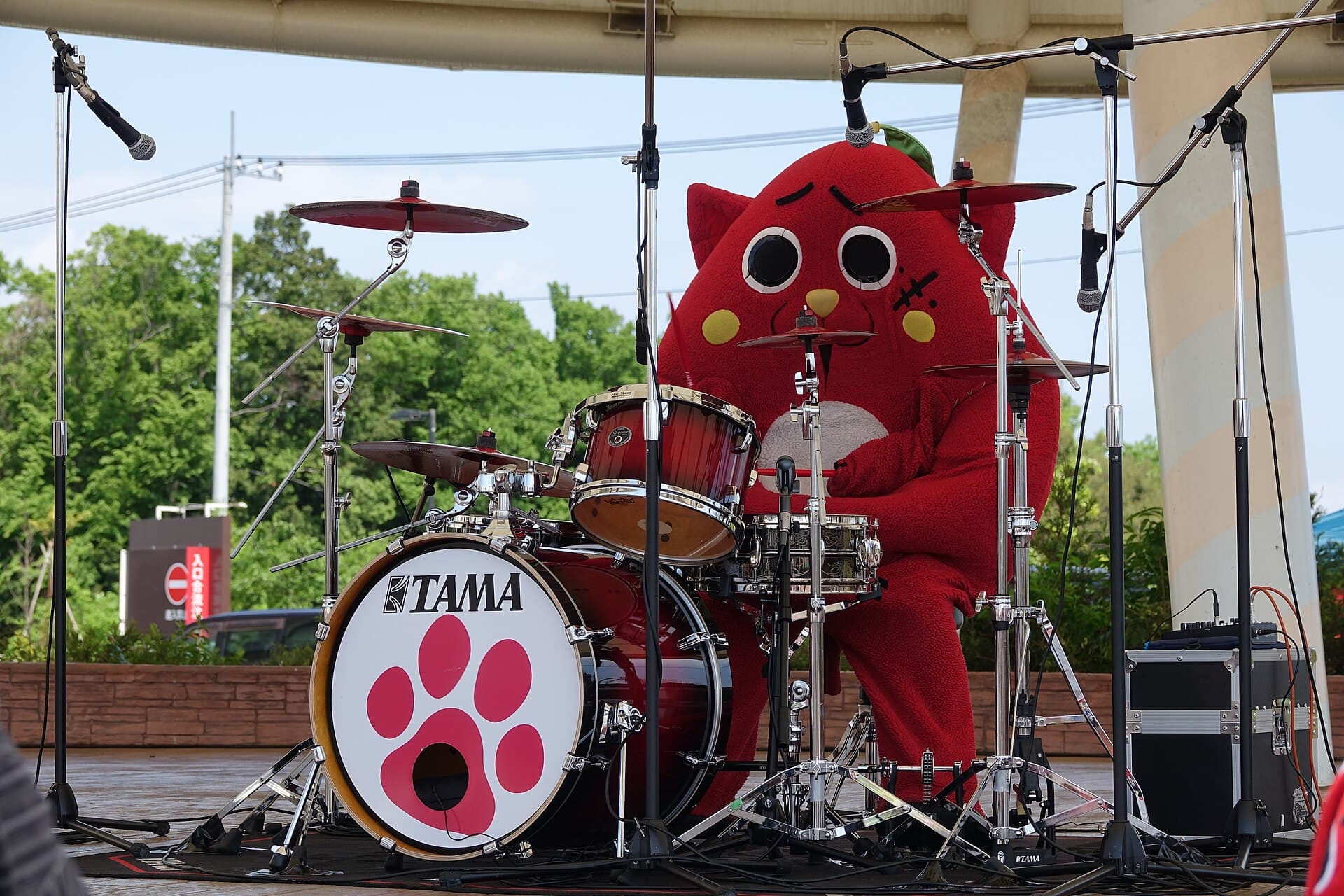
Official profile: yurugp.jp
An apple-headed red cat from the apple orchards of Kuroishi, Aomori, best known internationally for one specific thing: playing full drum solos, in costume, with real technical skill. Videos of Nyango Star headbanging behind a drum kit have gone viral repeatedly outside Japan, making it one of the more unlikely global ambassadors for the entire yuru-kyara genre — most people who've seen the drumming clips have no idea it's part of a much larger mascot ecosystem.
7. Shimanekko (しまねっこ) — Shimane Prefecture
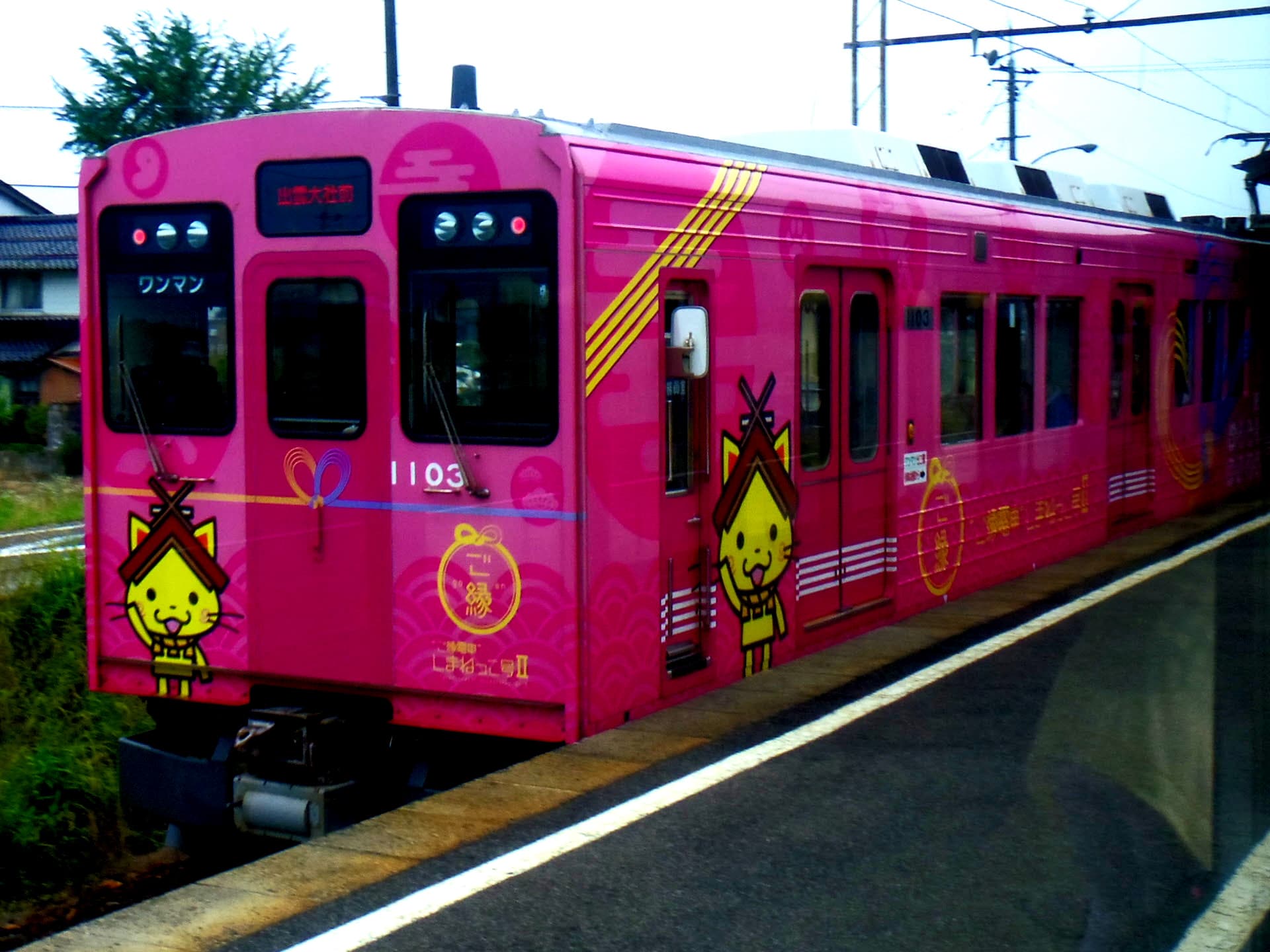
Official profile: yurugp.jp
Shimane Prefecture's cat mascot, designed around 2007–2008 to tie into tourism campaigns for Izumo Taisha, one of Japan's oldest and most important Shinto shrines. The design nods to the shrine's rope and bell motifs, and the character has been wrapped onto local trains, buses, and station signage across the prefecture — a good example of how a mascot gets woven into everyday regional infrastructure rather than staying confined to costume appearances.
8. Izunyan (いずにゃん) — Izumiya Shopping Center, Osaka
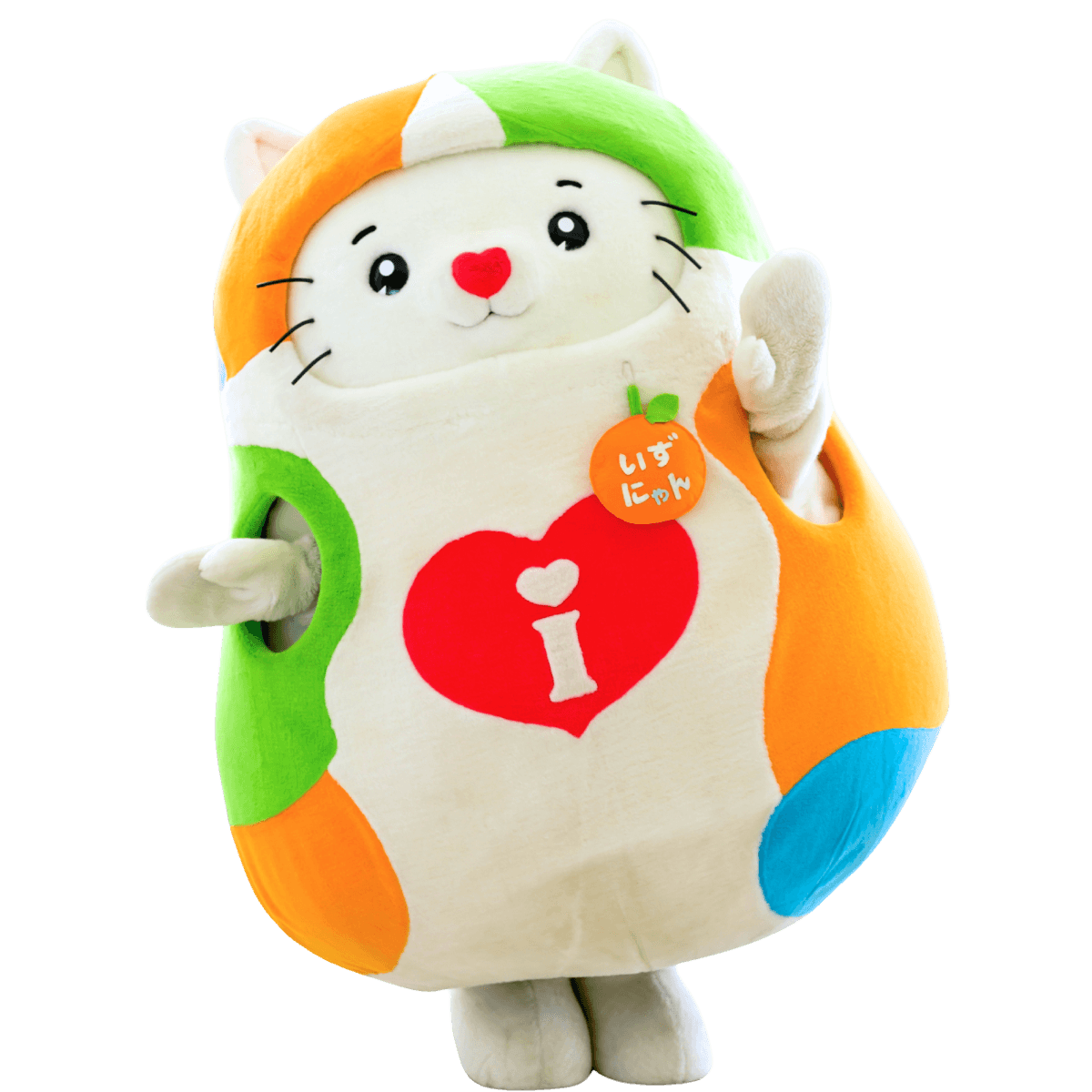
Official profile: yurugp.jp
Voting is open for Yurubaasu 2026 (until 3 October)
Online voting runs until Saturday 3 October 2026. Register for a free account on Yuru Navi (yurugp.jp) and you can give one point a day to the character you support, using the vote button on its page. The final vote is held on 3–4 October at Keyaki Hiroba, GMO Arena Saitama, in Saitama-Shintoshin, and the results are announced after the awards ceremony on the 4th.
→ Vote for Izunyan on Yuru Navi
The newest name on this list, and a different kind of yuru-kyara entirely: a corporate mascot rather than a government one. Izunyan is the official character of Izumiya Shopping Center (イズミヤSC), the chain of shopping centres run by H2O Shopping Center Development (エイチ・ツー・オー商業開発), a wholly owned subsidiary of H2O Retailing. That company exists because the original Izumiya was split into three in April 2020, and it took over the shopping-centre business; the Izumiya supermarkets are a separate company. Izunyan was born in November 2024, and its name was picked by a vote among 1,026 suggestions from customers and staff across every Izumiya SC. In its first Yurubaasu, the 2025 edition of the contest that replaced the old Yuru-Chara Grand Prix, it placed 17th of 299 characters and 1st in Osaka Prefecture, and it is competing again in 2026. It's early days, but it's a useful sign that the yuru-kyara format is still actively expanding into new corporate territory rather than staying frozen as a 2010s fad. You can find current appearances on the character's official Instagram, @izunyan.official.
Why This Became Such a Big Industry
Three things make yuru-kyara different from ordinary corporate mascots elsewhere in the world.
Local governments run them like startups. Prefectures and cities treat mascot design, merchandising, and public appearance schedules as genuine economic development work, not just marketing decoration. Kumamon has his own "job title" (Sales Manager) and reports directly to the governor's tourism strategy.
Permissive licensing multiplies reach. It's a similar dynamic to how franchises like Pokemon Center treat merchandise as core to the brand experience rather than an afterthought — though prefectural mascots go further by making the licensing itself nearly free. Kumamon's free-to-use policy is the clearest example: instead of tightly controlling the IP, Kumamoto Prefecture let it spread as widely as possible, which drove the character into far more products and far more consumer contact than a tightly licensed character ever could.
Competition keeps them relevant. The Yuru-Chara Grand Prix, and now Yurubaasu, gives every mascot — from Kumamon down to a brand-new supermarket character like Izunyan — a recurring, public reason to campaign for attention. That competitive structure is a big part of why new yuru-kyara keep appearing instead of the genre being permanently dominated by the handful of characters that got famous first.
FAQ
What does yuru-kyara mean? "Loose character" or "laid-back character" — a term coined by mascot researcher Jun Miura for the wave of amateurish, regionally-tied mascots that became popular in Japan starting in the mid-2000s.
Which yuru-kyara is the most popular? Kumamon, by a wide margin. He's the most commercially successful and most widely recognized mascot in the country, and remains the benchmark every new character is compared against.
Is Funassyi an official mascot? No — that's deliberate. Funassyi is unofficial and independently managed, which is exactly what allows the character's wild, high-energy public persona that an official municipal mascot couldn't get away with.
Where can I meet these mascots in person? Kumamon has a dedicated square (Kumamon Square) in Kumamoto City with regular appearances. Hikonyan appears at Hikone Castle. Many mascots also show up at regional tourism events, train station openings, and the annual Yurubaasu contest promotions — check each prefecture's tourism site for schedules before a trip.
Is the Yuru-Chara Grand Prix still happening? Not under that name. It ran from 2010 to 2020 before being discontinued; the character-voting format continues today as Yurubaasu.
Can I buy Kumamon merchandise outside Japan? Limited amounts show up through import shops and resellers, but the widest selection by far is in Kumamoto Prefecture itself and at general Japanese souvenir retailers like Don Quijote in other regions. Tokyo character-goods stores covered in our kawaii shopping guide, like Kiddy Land, also regularly stock regional mascot merchandise.
Culture Desk
The Standard Japan
Customs, festivals, pop culture and everyday Japan, explained for people who want to understand what they are looking at.
Facts are taken from primary sources (operators, venues, official tourism and government pages) and dates and prices are checked on the day of writing. Pages are revised when those sources change.
Expertise
Festivals, etiquette, pop culture, mascots, convenience-store culture
Have a question or a correction?
Ask us anything about Yuru-Kyara: Japan's Cutest Mascot Characters, Ranked, or tell us what we got wrong. We reply within 24 to 48 hours.
The Standard Newsletter
Tokyo in your inbox. Weekly.
No algorithms curating your culture. No sponsored content disguised as journalism. Just the real Tokyo — the izakayas at 2am, the Harajuku kids who never made it to the algorithm, the ramen shop with no sign.
280+
Guides
Weekly
Editions
Free
Always
Join the underground.
One email a week. Unsubscribe anytime.
No spam. No sharing your data. Tokyo only.
Related Stories
Kimono Experience in Japan: Worth It, Where to Book, What to Expect
Kimono rental and dressing experiences in Tokyo and Kyoto — prices, how long it takes, photo etiquette, and when a booked studio beats a street rental.
Samurai in Japan: History, Myths, and Where to Experience It (2026)
Samurai history without the Hollywood myths — bushido, the Meiji end of the class, and the best Tokyo and Kyoto experiences if you want armor, sword work, or theater.

Temple and Shrine Etiquette in Japan: Torii, Temizu, Bowing, Photos
Shrine vs temple basics, torii, temizu purification, bowing, money offering, shoes, hats, and photo rules — do this and you will not be that tourist.