
Japanese Eyewear Brands: Frames, Fit and Where to Buy
Compare MASUNAGA, MATSUDA, EYEVAN, KANEKO OPTICAL and JINS, with frame materials, sizing, Tokyo shops, lens lead times and after-sales checks.
Some travel links on The Standard Japan are affiliate links. If you book through one, we may earn a commission at no extra cost to you.
Buy the fit and the complete pair, not just the name on the temple. A frame can look right in a photograph but sit badly on your nose, need lenses with a different delivery schedule, or be difficult to service once you go home.
MASUNAGA, MATSUDA, EYEVAN, KANEKO OPTICAL and JINS give you different places to begin researching Japanese eyewear. This guide compares their official descriptions and the buying questions that matter, checked on 16 November 2026. It is not a clinical assessment or a hands-on test of the frames.
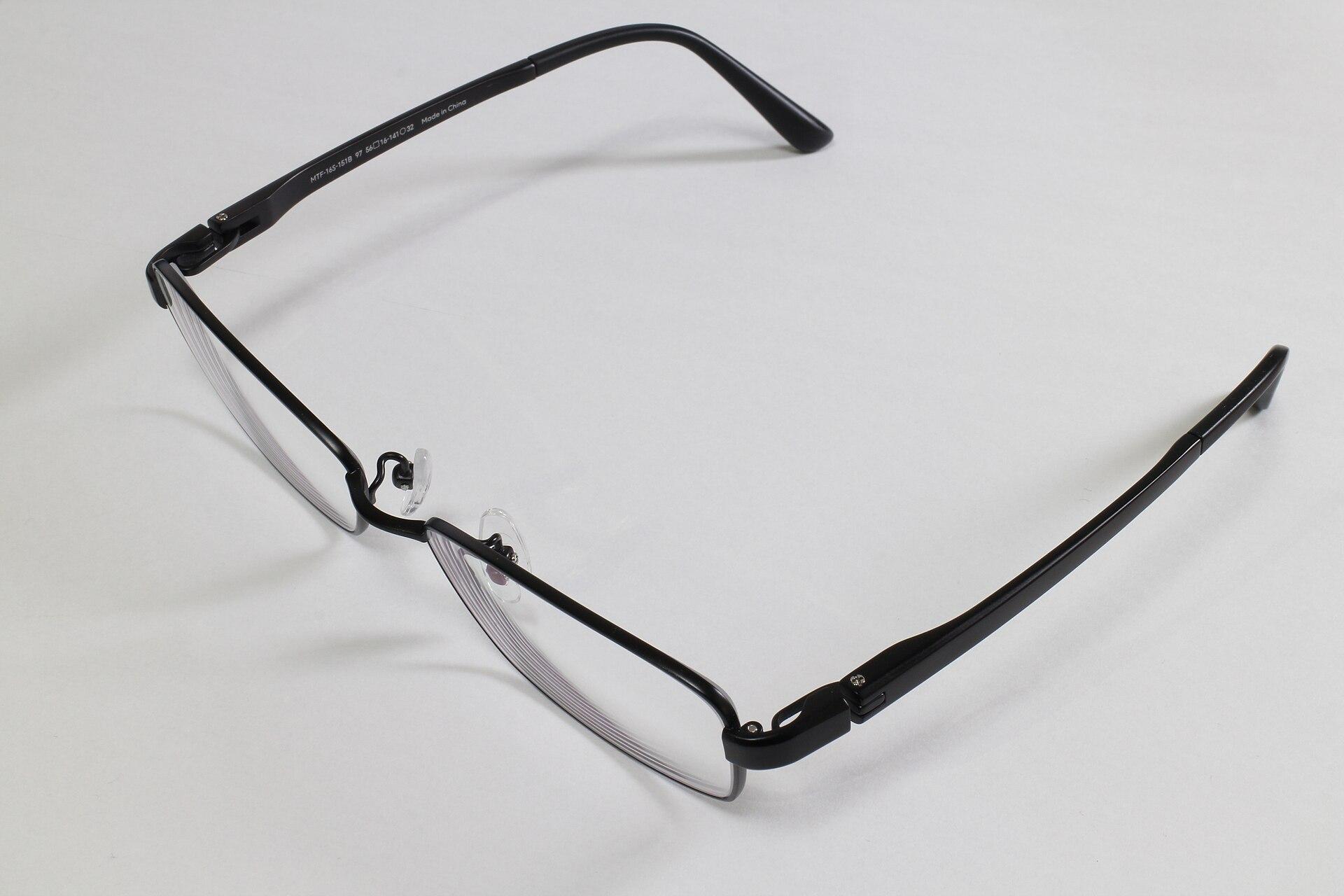
The cover shows a JINS MTF-16S-151B frame as a material and construction reference. It is not a current-stock recommendation or a photograph of a MASUNAGA, MATSUDA, EYEVAN or KANEKO model. The visible inside-temple marking says “Made in China”: a useful example of why brand nationality and manufacturing origin must be checked separately.
Which Japanese eyewear brand should you investigate?
Use design direction to make a shortlist, then have a retailer check the actual frame and lens combination. None of these brand descriptions establishes the right prescription or guarantees a comfortable fit.
| Brand | What to investigate | Why it is on this shortlist | Resolve before buying |
|---|---|---|---|
| MASUNAGA | The specific collection and model | Its official site distinguishes MASUNAGA since 1905, MASUNAGA K3 and MOC | Model, material, size, lens quote and service |
| MATSUDA | Decorative metalwork and frame details | The brand describes handmade production in Sabae workshops | Which details and materials belong to your model |
| EYEVAN | Vintage references and combination-frame designs | Official products specify distinct materials for fronts and temples | Exact size, bridge fit and compatible lenses |
| KANEKO OPTICAL | Own-brand and craftsman-series frames | The company combines design, manufacture and direct retail | Which line you are trying and where it can be serviced |
| JINS | A clearly specified complete-pair quote | It publishes fitting, prescription and lens-option guidance | Included lenses, upgrades, origin and collection date |
Source: MASUNAGA official brand site, MATSUDA Craftsmanship, EYEVAN About and product pages, KANEKO OPTICAL company information, and JINS fitting/lens guides, checked 16 November 2026. Selection guidance is editorial, not a quality ranking.
Make a shortlist of models, not just logos. Two designs from the same brand can feel very different on the same person.
MASUNAGA: identify the collection before comparing prices
MASUNAGA's official brand site distinguishes its MASUNAGA since 1905 collection, the MASUNAGA K3 collaboration and MOC. A price attached to one collection is not a useful estimate for every pair carrying the company's name.
Start with the product reference and the physical frame. Ask which material is used for the front, bridge and temples, rather than reading a single metal name as a description of every component. Inspect the colour and finish in person if that is a main reason for choosing the model.
The Aoyama official store is at 2-12-34 Kita-Aoyama, with listed hours of 11:00–20:00 and closure on the first, third and fifth Tuesdays. Its official store directory includes other Tokyo and regional locations. Confirm the model and service you need before choosing a branch.
MATSUDA: decide how much detail you want to wear
MATSUDA describes its frames as made by hand in Sabae workshops, with materials that can include titanium, stainless steel, sterling silver and gold. These are statements about its approach and range, not a declaration that every model contains every listed metal.
If the attraction is intricate detailing, look at the frame from the side and in an ordinary mirror as well as close up. Decide whether the detail matters to you when worn, and whether the frame suits the clothes you use most often.
Ask the authorised retailer about the exact reference, finish, replacement parts and repair process. A precious-metal description does not establish the weight of your complete pair, the lens specification or what an overseas repair will cost. Keep the model and finish information with the receipt so you can identify the frame later.
EYEVAN: read the front and temple specifications separately
EYEVAN's brand history places fashion at the centre of its eyewear approach. Its product pages are particularly useful for seeing how different components can use different materials.
For example, the official Glint page lists an acetate front and titanium/acetate temples, with a size marking of 50□22–145. That is one model specification, not a universal EYEVAN fit. Official Glint details
The Tokyo stockist directory lists EYEVAN Tokyo Gallery at 1F, 5-13-2 Minami-Aoyama, open 11:00–20:00 and closed Tuesdays. Use the directory for the relevant line and model; an EYEVAN company or showroom address is not automatically a walk-in retail destination.
If you are comparing several references, note the exact size and colour code of each. A similar frame shape can conceal a different bridge or overall width.
KANEKO OPTICAL: know which line you are trying
KANEKO OPTICAL's official information describes a business spanning planning, manufacturing, distribution and retail. Its brand site also distinguishes KANEKO OPTICAL, SPIVVY and craftsman-series offerings. Those names are worth recording rather than describing every pair simply as “Kaneko.” Official brand site
Use the Tokyo shop directory to choose an appropriate branch. Ask whether it carries the line, size and colour you want, and whether the required lens work is available there.
A direct-store network can be useful for enquiries, but do not infer a universal international warranty from its existence. Ask where the frame can be adjusted, which repairs require it to be sent away, and what proof of purchase is needed after you return home.
JINS: compare the total package and the actual origin label
JINS is useful in a comparison because it publishes information about prescriptions, lens options and fit. Its Japanese prescription-order guide explains the information used to order lenses, while its lens FAQ distinguishes ordinary clear lenses and options.
Ask what the displayed price includes for your selected frame and lenses. A basic package and a frame-only designer quote are not comparable until you put the same requirements on both.
Do not substitute “Japanese brand” for the product's manufacturing label. The photographed JINS reference is visibly marked “Made in China.” Read the actual label on the pair you are buying if manufacturing origin is important to the purchase.
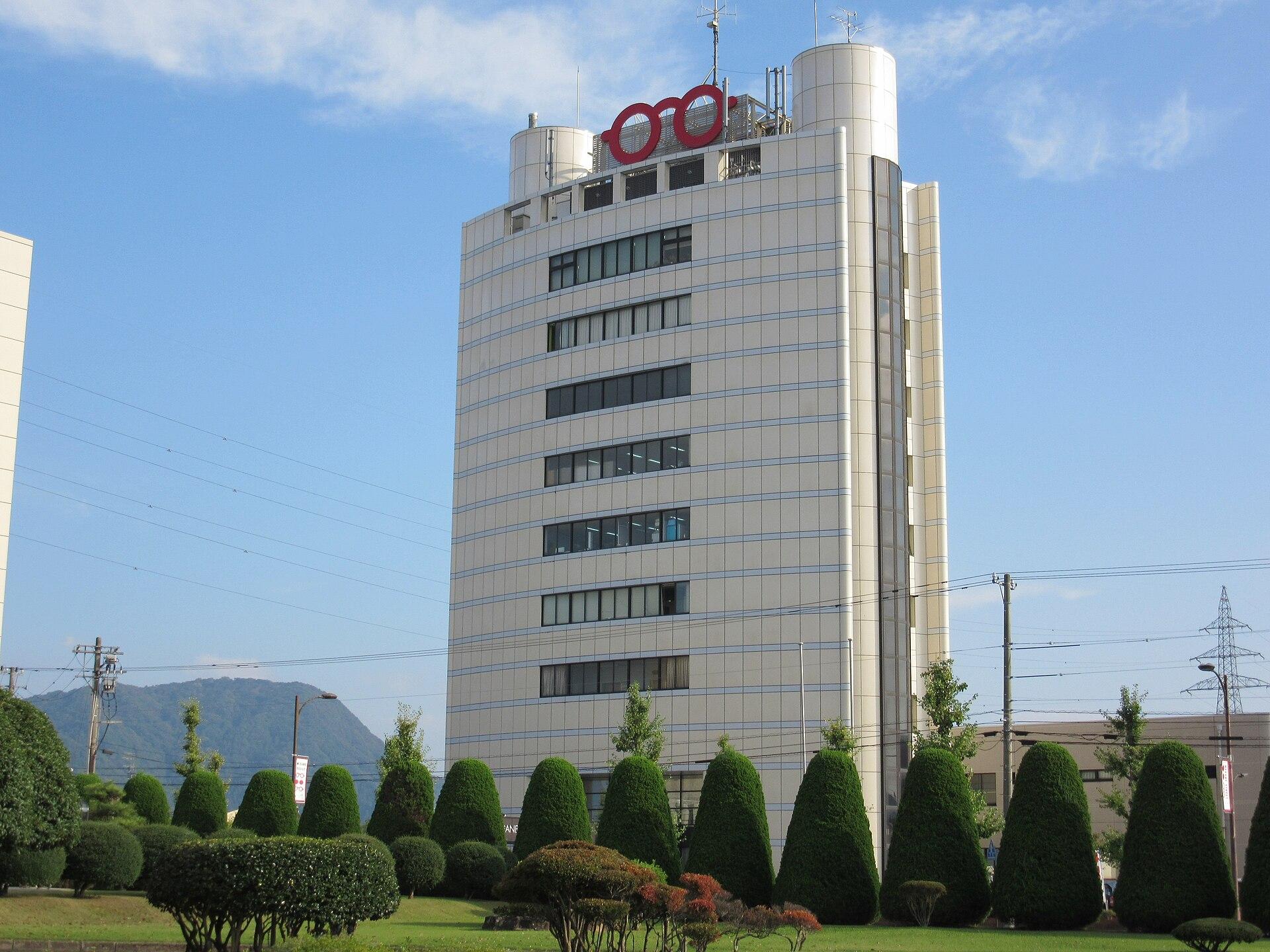
The Megane Museum building in Sabae, Fukui. The region appears in several makers' manufacturing histories; this photograph does not establish the origin of every frame sold by a Japanese brand.
What do the frame-size numbers mean?
Frame measurements are a starting point for comparison, not a guarantee of fit. JINS' measurement guide explains lens width, bridge width and temple length in millimetres, and distinguishes the overall frame width.
Using EYEVAN Glint's published 50□22–145 as an example: 50 is the lens width, 22 the bridge width and 145 the temple length. It does not mean that the complete frame is 50 millimetres wide.
Compare those dimensions with a comfortable pair you own, then ask the optician to assess the new frame. Bridge shape, nose pads and the complete frame geometry still matter. JINS' fit guide distinguishes standard, low-bridge and adjustable-pad approaches; those fit descriptions are more useful than assuming one shape suits everyone of a particular nationality.
A fitting and quotation checklist
Keep frame, lens and service questions on the same written quote.
| Item | Ask the retailer to confirm | Why it matters |
|---|---|---|
| Frame | Brand, line, reference, colour, size and manufacturing origin | Identifies the exact pair and supports later enquiries |
| Fit | Nose contact, temple position and adjustment options | A flattering shape can still be uncomfortable |
| Prescription | What documentation is accepted and what measurements are needed | Do not assume every shop accepts the same information |
| Lenses | Product, options and complete price | Frame-only and lens-inclusive prices can differ substantially |
| Timing | A confirmed collection date for your exact order | Optional or special-order lenses may have another schedule |
| Support | Adjustment, warranty and repair arrangements after departure | A local purchase needs a practical service plan at home |
Source: The Standard Japan editorial buying checklist; size terminology from JINS, with lens-option distinctions checked against JINS Japan's official guidance.
Bring your current glasses and available prescription information, and contact the shop in advance if you need a particular service or language. Let the optician establish what is needed for the order rather than choosing lenses from a fashion guide.
Can glasses be ready during a short trip?
Ask before the purchase, not on your last afternoon. JINS' official lens FAQ describes roughly 10 days for some optional lenses, including colour and photochromic options. That is a JINS reference for specified options, not a turnaround promise for every lens, branch or other brand. Official lens FAQ
A frame-only purchase may be an alternative, but first ask your home optician whether it can supply the lenses you need for that frame. Do not assume any frame and lens combination will be accepted.
Before collection, confirm how the finished pair will be checked and adjusted, what happens if work is delayed, and how a later issue can be handled from overseas. Save the itemised receipt and written service information.
For other purchases around the same districts, see our Ginza and Aoyama shopping guide and Japanese watch-buying guide.
Questions readers ask
Which Japanese eyewear brand is best?
There is no single winner independent of the frame, lenses, fit and service you need. Use the design shortlist to choose models, then compare complete quotes and have an optician check the fit.
Are all Japanese eyewear brands made in Japan?
Check the specific model. A company's nationality and a frame's manufacturing country are different facts. The JINS reference photographed here is marked “Made in China”; it should not be used as evidence about another model's origin.
Are glasses always cheaper in Japan?
Compare the same frame, lenses, options and support. A lower frame price does not establish a cheaper complete pair, especially once shipping, import obligations or future service are included.
Can I buy frames without lenses?
Ask the seller whether it offers frame-only sales, and confirm lens compatibility with the optician who will do the work. Store policies and individual frame requirements can differ.
Can I rely on the size printed on my current pair?
Use it as a reference, not a complete fit prescription. Record overall width and how the bridge and temples sit as well as the printed dimensions. Two similarly numbered frames need not feel the same.
Style Desk
The Standard Japan
Shopping and fashion in Japan: denim, vintage, streetwear, and where each scene actually lives.
Facts are taken from primary sources (operators, venues, official tourism and government pages) and dates and prices are checked on the day of writing. Pages are revised when those sources change.
Expertise
Japanese denim, vintage, streetwear, shopping districts
Have a question or a correction?
Ask us anything about Japanese Eyewear Brands: Frames, Fit and Where to Buy, or tell us what we got wrong. We reply within 24 to 48 hours.
Related Stories
Japanese Workwear Brands: What to Buy and Where
Compare Sugar Cane, Buzz Rickson's, WAREHOUSE and orSlow by garment and style, then use official stockists to plan a Japanese workwear shopping trip.
Japanese Denim Jackets: Type I, II, III and Fit
Choose a Japanese denim jacket by fit, wash state and useful details. Compare Type I, II and III references without assuming every brand uses the same cut.
Japanese Denim Sizing: Raw, One-Wash and Hemming
Choose Japanese jeans by measurements, wash state and shrinkage. What to check before hemming, plus care advice grounded in manufacturers' instructions.