
Japan Chain Restaurants: Where to Go for What You Want
16 Japanese chains matched to what you want to eat, from a ¥480 beef bowl to solo yakiniku and a free-toast breakfast. How to order at each one.
Some travel links on The Standard Japan are affiliate links. If you book through one, we may earn a commission at no extra cost to you.
You don't need a reservation, a food tour or any Japanese to eat well in Japan. You need to know which chain to walk into. The big chains are on every station street, most have picture menus or an order screen with an English button, and each one does one kind of meal well. This is the cheat sheet we use: say what you want, and it tells you where to go.
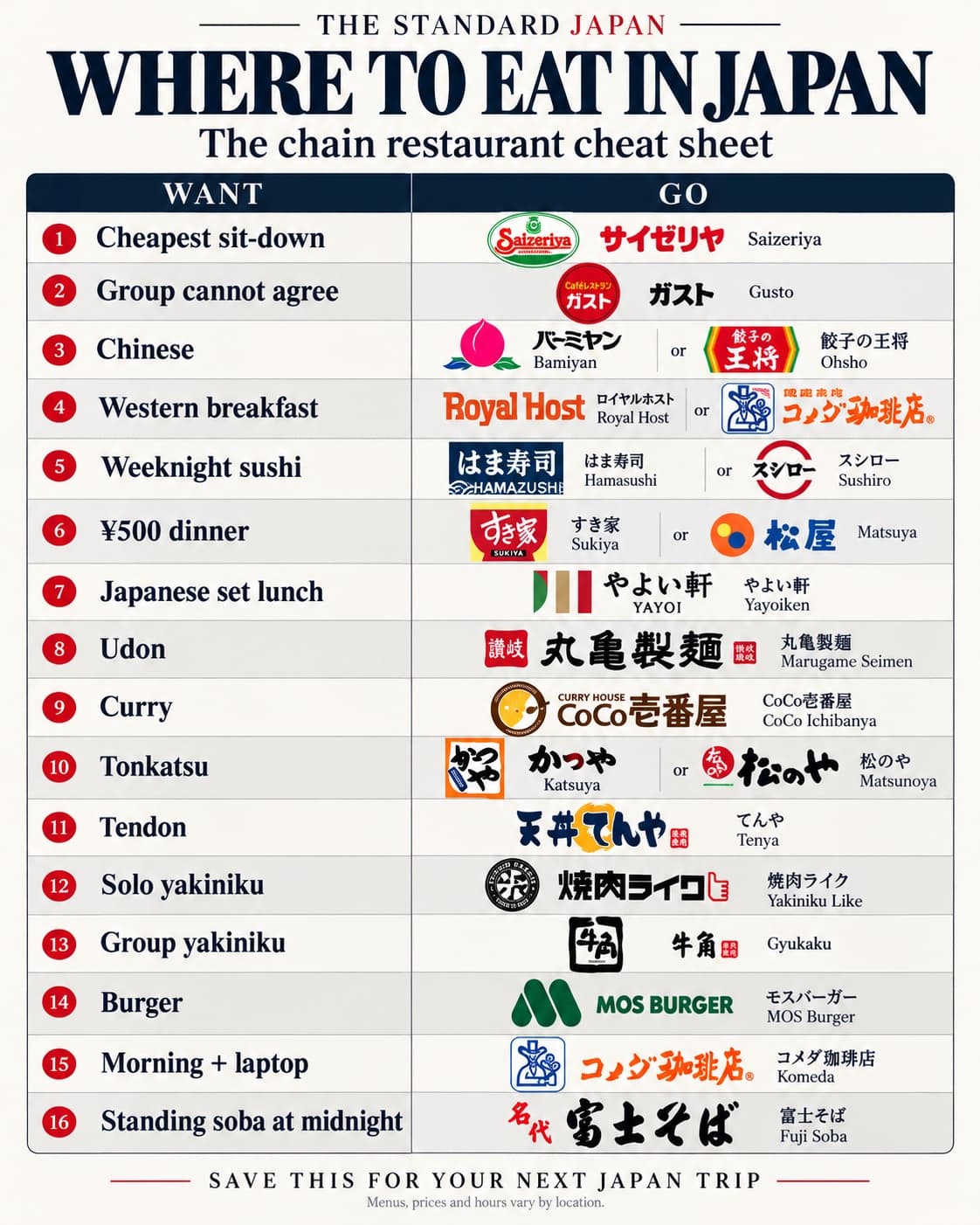
The logos are there for a reason. Branch signs are often only in Japanese, so match the logo, not the name.
How ordering works
There are three systems, and you'll meet all of them in a week:
- Ticket machine at the door. Beef bowl, soba and tonkatsu chains often have you order and pay at a touchscreen before you sit down. Hand the ticket over (or it prints straight to the kitchen) and wait. Many have an English button.
- Tablet at the table. Sushi chains and family restaurants put a tablet on the table. Order, then pay at the register on the way out.
- Counter order. Udon and burger chains work like a cafeteria or a fast-food counter.
Water and tea are free, and there's no tipping (see tipping in Japan). Menus, prices and opening hours change from branch to branch, so treat every price here as a guide to the cheapest branches, not a promise.
Cheap and fast
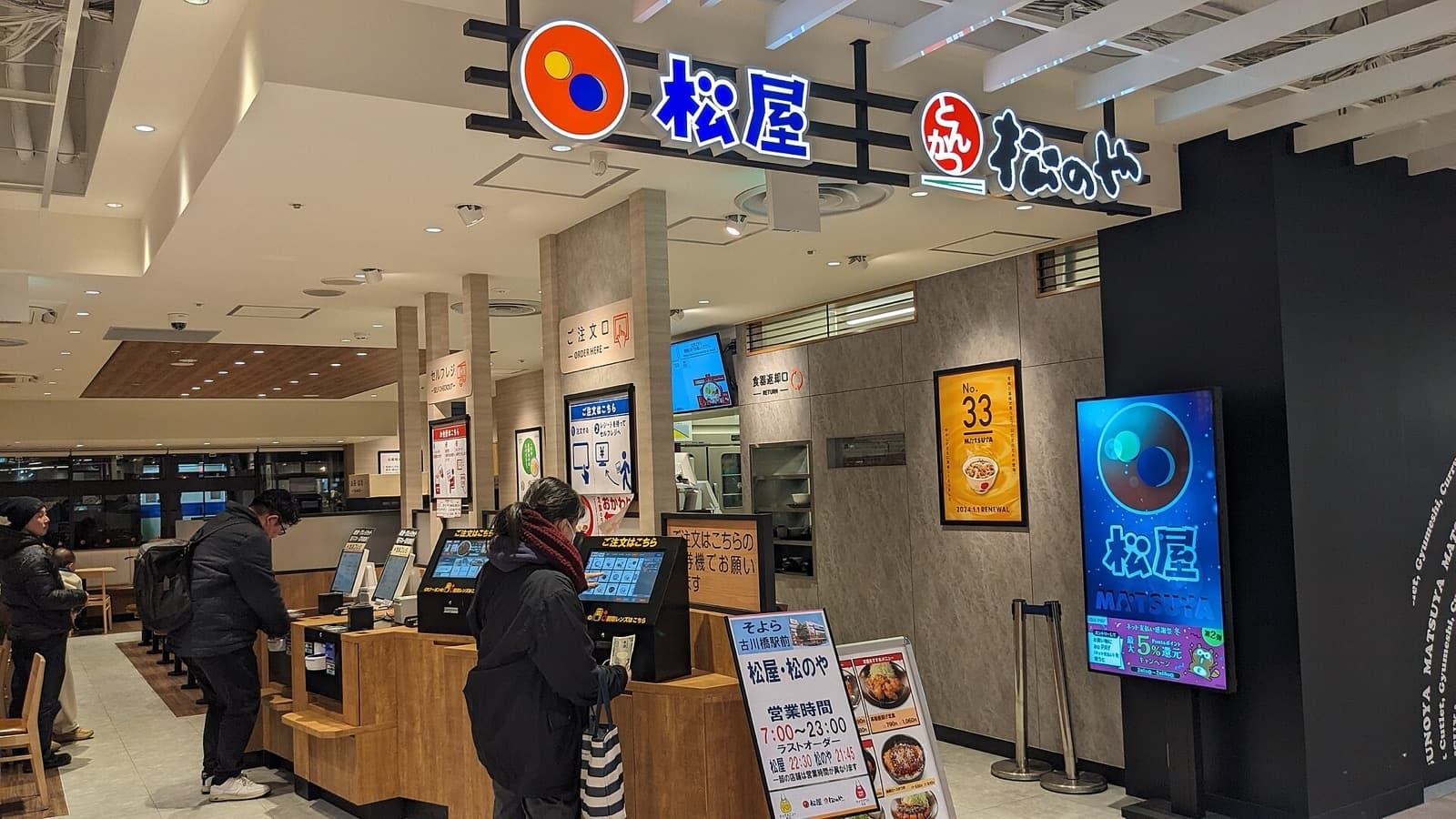
Sukiya or Matsuya — a ¥500 dinner. The beef bowl (gyudon) chains are the cheapest hot meal in the country. Matsuya's regular gyumeshi is ¥480 on its official menu. Some Matsuya branches share a room with Matsunoya, the same company's tonkatsu brand, as in the photo at the top of this page. Sukiya serves a breakfast menu from 4:00 to 11:00 and a late menu from 17:00 to 4:00, so it's the one to look for when everything else is shut.
Fuji Soba — standing soba at midnight. A Tokyo soba chain with stools or a standing counter, ordered from a ticket machine. Some branches are open 24 hours; the store list on its site marks which ones, along with the IC cards and QR payments each branch takes.
Marugame Seimen — udon. Noodles made in the shop, served cafeteria-style. You take a tray, order the udon, add tempura from the counter and pay at the end. Our udon guide explains the bowls.
CoCo Ichibanya — curry. Japanese curry where you choose the topping, rice amount and spice level. It's the easy order for anyone travelling with children or a picky eater.
Tenya — tendon. Tempura on rice with a sweet sauce, at fast-food speed.
Sit-down meals
Saizeriya — the cheapest sit-down. An Italian-style family restaurant: pasta, pizza, doria and wine for less than almost anywhere else with table service. Good when you want to sit for an hour without spending much.
Gusto — when the group can't agree. A family restaurant (famiresu) with a very long menu: Japanese, Western, desserts, and a drink bar. Everyone finds something.
Bamiyan or Gyoza no Ohsho — Chinese. Bamiyan is the family-restaurant version, from the same group as Gusto. Ohsho is the gyoza counter, faster and louder.
Yayoiken — a Japanese set meal. The teishoku chain: a main dish with rice, miso soup and pickles. The ginger pork set (shogayaki teishoku) is ¥890 on its site.
Katsuya or Matsunoya — tonkatsu. Breaded pork cutlet, as a set meal or on rice as katsudon. Both are cheaper than a specialist tonkatsu restaurant and a good first try.
Sushi without a booking
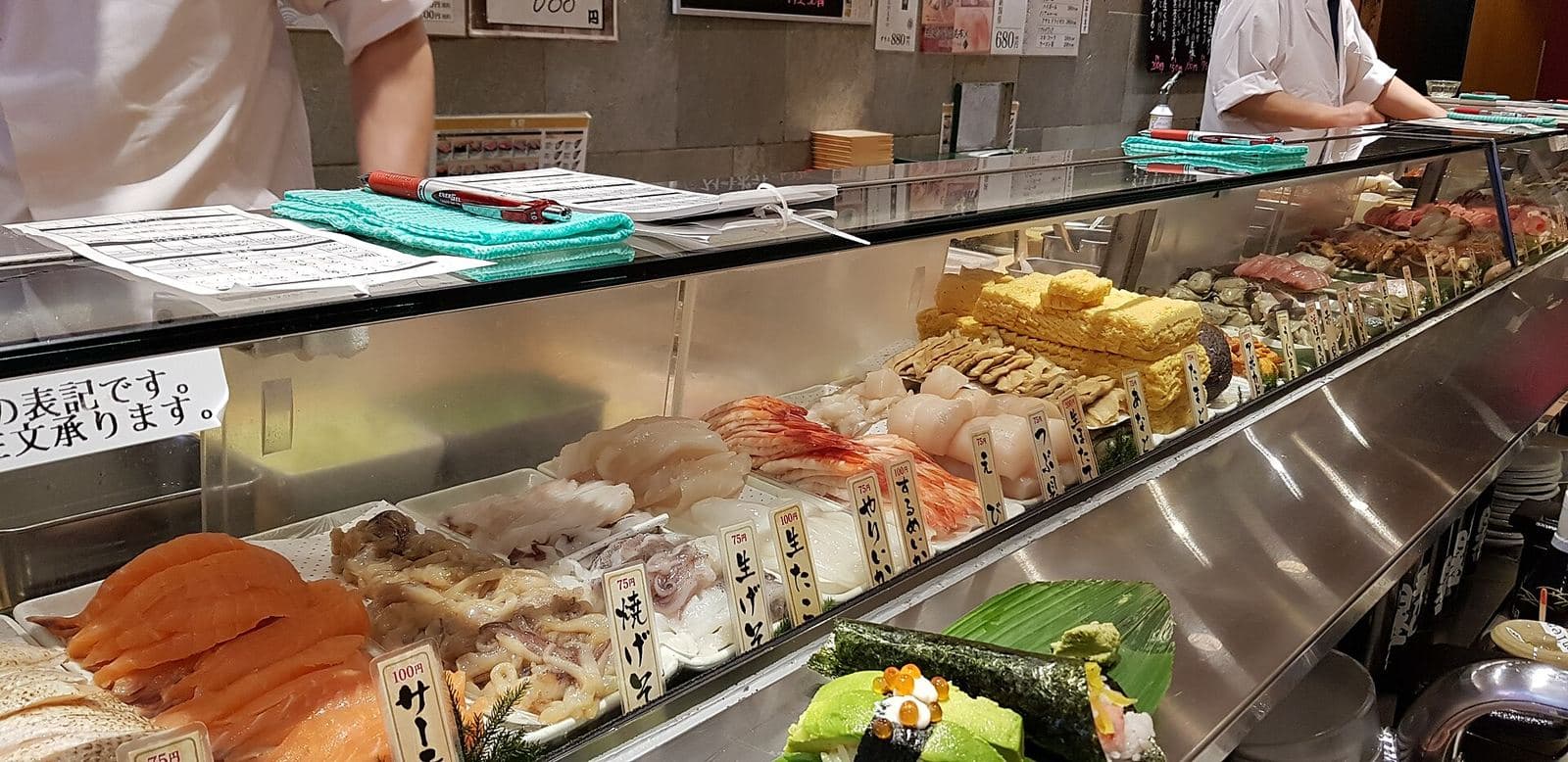
Hamasushi or Sushiro — weeknight sushi. Conveyor-belt sushi where you order on a tablet and the plate comes to your seat. Hamasushi's cheapest plates are ¥110 including tax; city-centre branches use a separate menu. Weekend evenings are the busiest time, so a weeknight is easier. For the counter-sushi end of the scale, see best sushi in Tokyo.
Yakiniku
Yakiniku Like — on your own. Every seat has its own smokeless grill, so one person can order a yakiniku set and cook it at the counter. Built for a quick solo meal.
Gyukaku — with a group. A grill in the middle of the table and plates of meat to share. Go with friends; it's not designed for one.
Breakfast, coffee and burgers
Royal Host or Komeda — a Western breakfast. Royal Host is a step up from the other family restaurants. Its breakfast menu includes the Royal Host Morning (with corn potage and salad) and a Japanese breakfast set, though some branches don't serve breakfast at all.
Komeda — morning with a laptop. From opening until 11:00, any drink comes with a free thick-cut toast or bread roll, with a boiled egg, egg spread or sweet bean paste. The booths are roomy and nobody rushes you. More on how it works in our morning service guide.
MOS Burger — burgers. Japan's own burger chain. Burgers are made to order, so it's slower than McDonald's, and worth it.
The cheat sheet as a table
| Want | Go |
|---|---|
| Cheapest sit-down | Saizeriya |
| Group can't agree | Gusto |
| Chinese | Bamiyan or Gyoza no Ohsho |
| Western breakfast | Royal Host or Komeda |
| Weeknight sushi | Hamasushi or Sushiro |
| ¥500 dinner | Sukiya or Matsuya |
| Japanese set lunch | Yayoiken |
| Udon | Marugame Seimen |
| Curry | CoCo Ichibanya |
| Tonkatsu | Katsuya or Matsunoya |
| Tendon | Tenya |
| Solo yakiniku | Yakiniku Like |
| Group yakiniku | Gyukaku |
| Burger | MOS Burger |
| Morning + laptop | Komeda |
| Standing soba at midnight | Fuji Soba |
Chains are the floor, not the ceiling. When you have one meal to plan properly, start with our Japanese food guide. If you're watching costs, Japan on a budget shows where chain meals fit in a daily budget.
FAQ
Are chain restaurants in Japan good? Yes, for what they are. The big chains are consistent, clean and cheap, and many Japanese people eat at them every week. They aren't where you go for a special meal, but they're a reliable everyday meal.
What is the cheapest restaurant meal in Japan? A beef bowl at a gyudon chain. Matsuya's regular gyumeshi is ¥480 on its official menu.
Do Japanese chain restaurants have English menus? Most of the big ones have picture menus, and many ticket machines and tablets have an English option. Where they don't, the pictures are enough to point at.
Which chains are open late? Sukiya's late menu runs 17:00 to 4:00, and some Fuji Soba branches are open 24 hours. Hours vary by branch, so check the store page before a late trip.
Can I eat alone at these chains? Yes. Beef bowl, soba, udon, curry and tonkatsu chains are mostly counter seats built for one, and Yakiniku Like gives each person their own grill.
Food Desk
The Standard Japan
Where and how to eat in Japan, from konbini and kissaten to izakaya, ramen and department-store food halls.
Facts are taken from primary sources (operators, venues, official tourism and government pages) and dates and prices are checked on the day of writing. Pages are revised when those sources change.
Expertise
Restaurants, izakaya, ramen, food halls, ordering and etiquette
Have a question or a correction?
Ask us anything about Japan Chain Restaurants: Where to Go for What You Want, or tell us what we got wrong. We reply within 24 to 48 hours.
Related Stories

Tokyo's Most Talked-About New Restaurants in 2026
New in Tokyo in 2026: Smith & Wollensky in Ginza, Oxomoco at Roppongi Hills, Lenox House in Sangubashi, and the latest Michelin stars, Myojaku to Manoir.
Japanese Food Guide: What to Eat in Japan (2026)
What to eat in Japan in 2026: ramen, sushi, yakitori, tempura, tonkatsu, izakaya, depachika, and regional specialties — from konbini onigiri to kaiseki.
Best Food in Kyoto: Where to Eat Beyond the Temple Circuit
Best food in Kyoto: Nishiki Market strategy, kaiseki vs casual, tofu and matcha, where to book, and how to eat well without wasting temple mornings.