
Yuru-Kyara and the 2026 Yuruverse Ranking
Sakai Sander won Yuruverse 2026 with 208,326 points. Izunyan was second. The official ranking, and the mascots the vote does not measure.

Some travel links on The Standard Japan are affiliate links. If you book through one, we may earn a commission at no extra cost to you.
Correction, 2 October 2026: an earlier version placed Nyango Star in Chiba (it is from Kuroishi, Aomori), described Izunyan as the mascot of the Izumiya supermarket chain (it is the official character of Izumiya Shopping Center, run by H2O Shopping Center Development), and gave its Yuruverse 2025 rank as 23rd (it was 17th of 299).
Sakai Sander won. The Yuru-Chara Grand Prix Executive Committee named the panda from Kazu Channel, Sakai City, Fukui, Grand Prix of Yuruverse (ゆるバース) 2026 on 4 October, after online voting and a two-day final at Keyaki Hiroba, GMO Arena Saitama, in Saitama-Shintoshin. Izunyan, the Izumiya Shopping Center cat that this page was still asking people to vote for last week, finished second. That vote is this year's story. It is not the whole industry.
Japan has more mascot characters than most countries have cities. The umbrella term is yuru-kyara (ゆるキャラ) — "loose" or "laid-back" character — and it covers prefectural tourism ambassadors, a screaming unofficial pear, and now a YouTube panda that can beat a shopping-centre cat in a public ballot. It is one of the clearer uses of kawaii culture as economic policy. Recent counts put registered yuru-kyara well over 1,700, before anyone counts the unofficial ones.
Kumamon is still credited with tens of billions of yen a year in merchandise and tourism for Kumamoto Prefecture. Local governments still treat mascot design as economic development. The contest is what changed.
What is a yuru-kyara
A yuru-kyara is a costumed mascot created to promote a place, product, event, or organisation — usually a prefecture, city, railway, police department, or local business. The informal rules, set by mascot researcher Jun Miura who coined the term in the 2000s, are a strong tie to home, an unusual or lovable look, and an unsteady amateur charm rather than corporate polish.
The genre took off after Hikonyan, a samurai-helmeted cat created in 2007 for the 400th anniversary of Hikone Castle in Shiga, proved a mascot could move tourism numbers. Prefectures, wards and railway lines have been trying to copy that ever since.
From 2010 to 2020 the Yuru-Chara Grand Prix was the industry event: a nationwide popularity contest where mascots campaigned for votes. It stopped. Yuruverse now runs in its place, on the same committee's Yuru Navi site (yurugp.jp).
Yuruverse 2026
The final vote was Saturday 3 and Sunday 4 October 2026 at Keyaki Hiroba (JR Saitama-Shintoshin, west exit). Online voting had already run through the 3rd. Rankings add Yuru Navi votes, hometown-support votes, and the on-site final.
The committee also recorded 135 characters in the final. Those figures are theirs, published 4 October 2026.
Points combine Yuru Navi votes, hometown-support votes, and the 3–4 October final.
| Rank | Character | Who entered | Points |
|---|---|---|---|
| 1 | Sakai Sander (さかいさんだー) | Kazu Channel, Sakai City, Fukui | 208,326 |
| 2 | Izunyan (いずにゃん) | Izumiya Shopping Center, Osaka | 187,107 |
| 3 | Tsunagaryu Nu (つなが竜ヌゥ) | Saitama City | 109,586 |
| 4 | Hotto-inu (ホット犬) | Hot Staff, Aichi | 77,287 |
| 5 | Ai-chan & Gran-kun | Ai Gran Group, Hiroshima | 74,767 |
Source: Yuru-Chara Grand Prix Executive Committee / Yuru Navi (4 Oct 2026)
Kumamon, Funassyi and Hikonyan are not on that board. The vote is now a mix of YouTube characters, shopping-centre cats, staffing-agency dogs and a host-city dragon. That is the point of reading it, and the reason not to treat it as a greatest-hits list.
Sakai Sander — Grand Prix
Official profile: Yuru Navi · Sakai City
A girl panda from Kazu Channel, entered for Fukui Prefecture / Sakai City. The Yuru Navi page puts her birthday on 5 July and calls her forever three; overalls are the trademark, and the name "Sander" is tied to a thunder-god grandfather in the character's own write-up. Sakai City appointed her a Sakai Excite Ambassador in 2026 (the city's page was updated 10 July). On the same page the city says she finished 2nd nationwide on debut in Yuruverse 2025, campaigning with Sakai Hoyamaru, and that she has been filming around Tojinbo and the city's Green Center.
The committee's 4 October announcement is the win: more than 200,000 points, from the online round through the final. Izunyan stayed close enough that the committee described a race for first. A YouTube-channel mascot taking the Grand Prix is a different winner than the prefectural bears and castle cats the old Grand Prix was built around.
Izunyan — 2nd
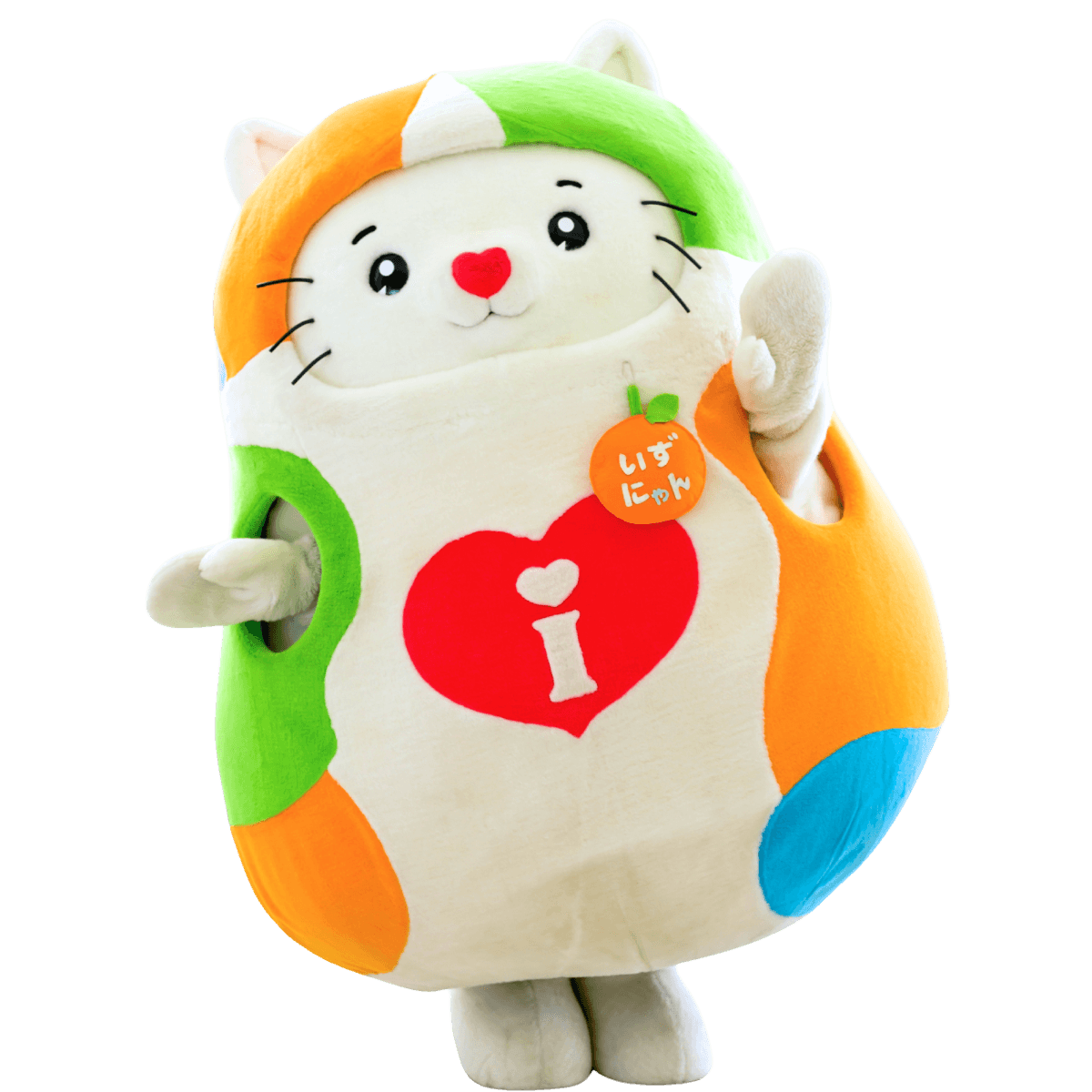
Official profile: Yuru Navi
Izunyan is the official character of Izumiya Shopping Center (イズミヤSC), run by H2O Shopping Center Development, a wholly owned subsidiary of H2O Retailing — not the Izumiya supermarket company. The shopping-centre firm exists because Izumiya was split into three in April 2020. Izunyan was born in November 2024; the name came from a vote on 1,026 suggestions from customers and staff. In Yuruverse 2025, its first contest, it placed 17th of 299 and 1st in Osaka Prefecture. In 2026 it was 2nd overall, 187,107 points, the character the committee said stayed in the fight for first until the end. Appearances: @izunyan.official.
Tsunagaryu Nu — 3rd, host city
Official profile: Yuru Navi · Saitama City
Saitama City's PR character, a dragon from the Minuma rice fields, born 1 May (Saitama Citizens' Day on the Yuru Navi page). The name is written つなが竜(りゅう)ヌゥ: "tsunagari" as in connection, plus the Minuma "Nu." The city used Nu as a host ambassador for the Saitama-Shintoshin final and posted the same 109,586-point, 3rd-place result as the committee. On the city's own character page, Nu's 2025 result is given as 100th. The jump is the host-city story: a municipal dragon, not a YouTube account, on a board otherwise led by companies and a channel.
Who the vote does not measure
These are the characters a visitor still hits in stations, souvenir aisles and tourism campaigns. None of them needed this year's ballot to stay famous.
Kumamon (くまモン) — Kumamoto Prefecture
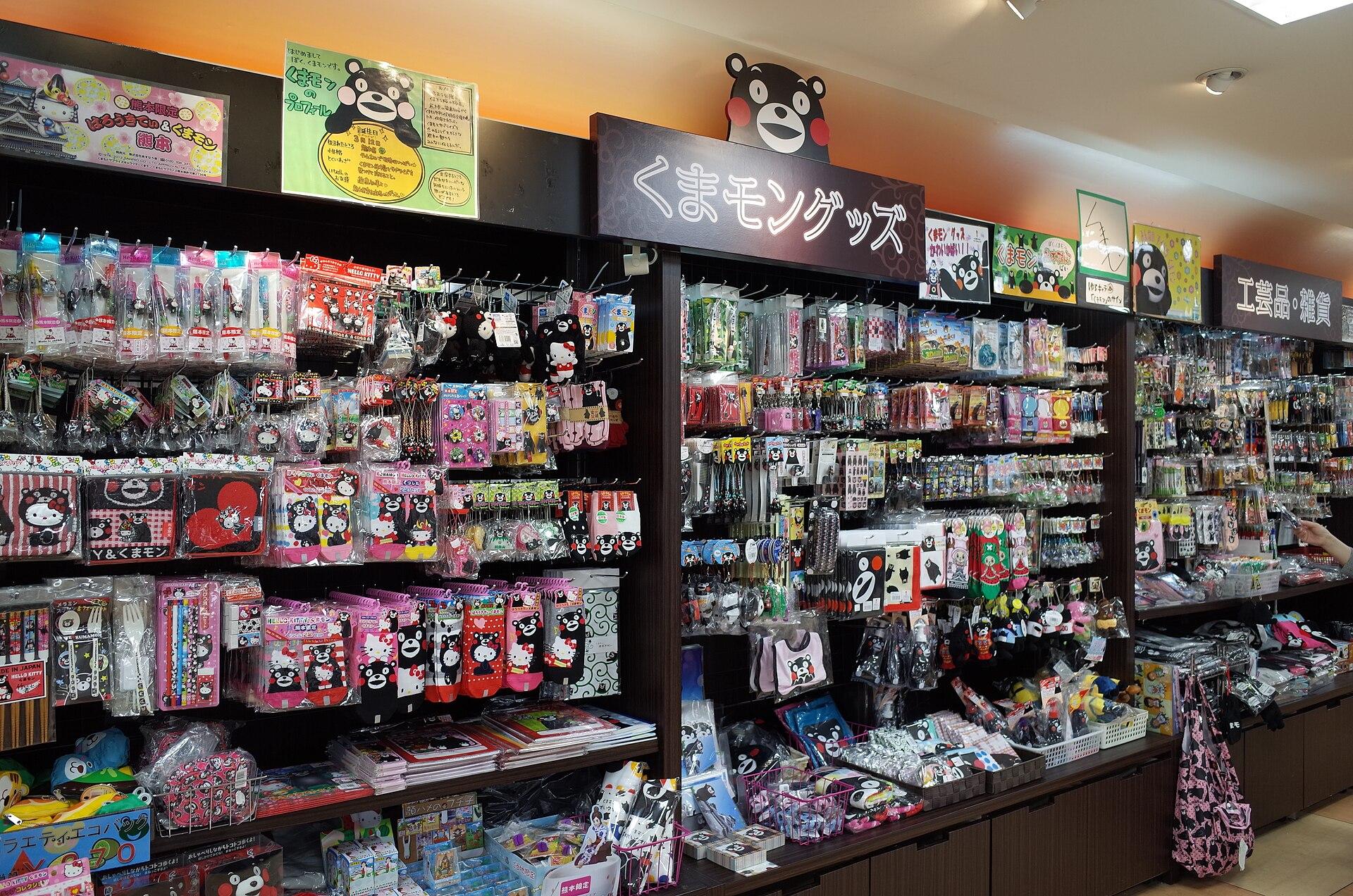
Official profile: Yuru Navi
The commercial heavyweight. A black bear with round white cheeks, flushed red, created in 2010 by Kumamoto Prefecture ahead of the Kyushu Shinkansen extension. He won the first major Yuru-Chara Grand Prix in 2011.
The design was not the innovation. The license was. Kumamoto made Kumamon's image essentially free to use: register, use it on goods made or sold in Kumamoto, pay no royalty, don't damage the character. That put his face on instant ramen and bank passbooks. The prefecture has credited the character with well over ¥100 billion in cumulative economic impact.
Funassyi (ふなっしー) — Funabashi, Chiba
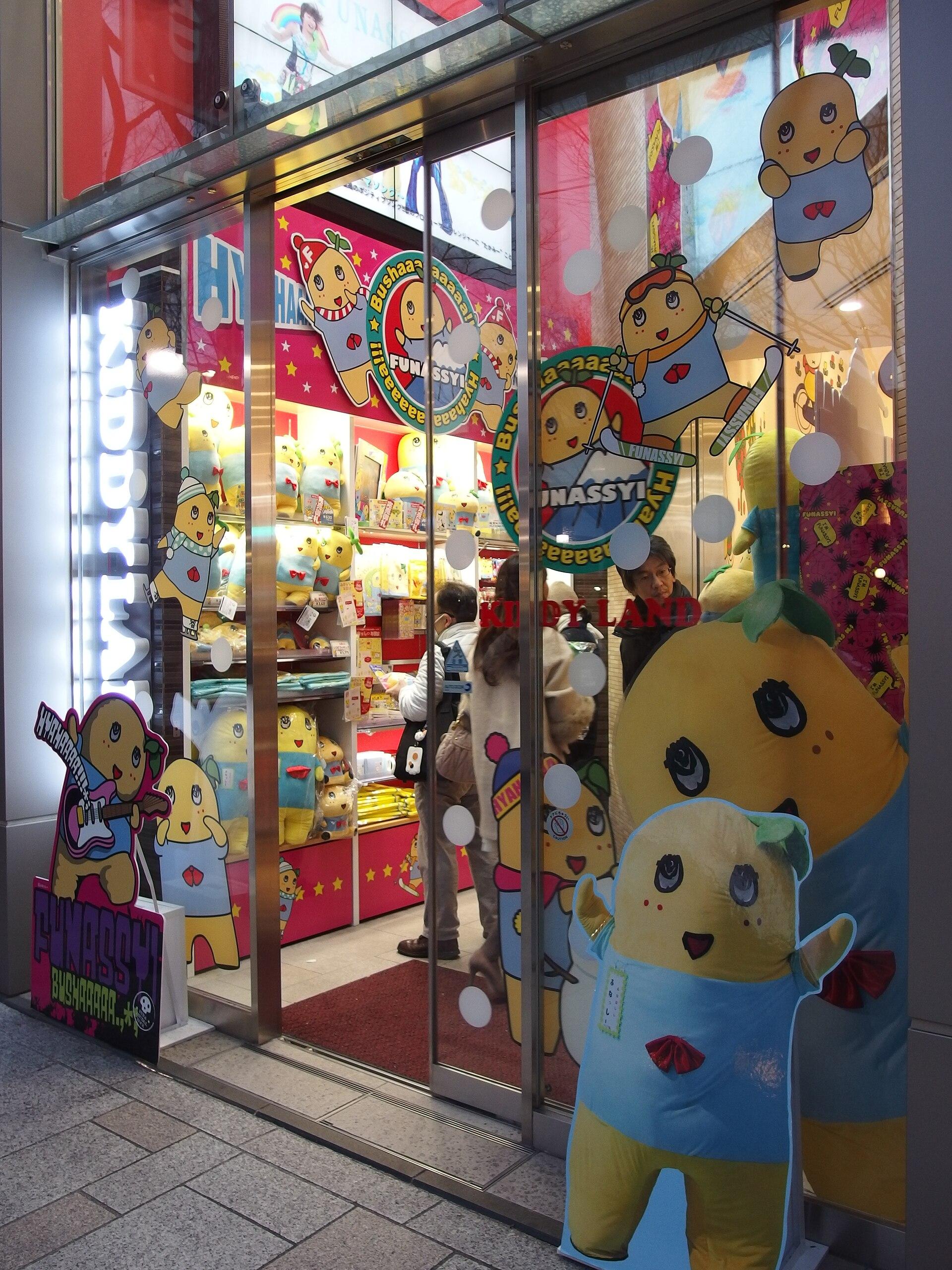
Official profile: Yuru Navi
A yellow pear fairy from Funabashi, and the loudest thing in the ecosystem — literally. Debuted in 2011, screeches, backflips, and does not wave-and-pose.
Funassyi is explicitly unofficial. Funabashi City has never endorsed the character. An official municipal mascot has to behave; independent management does not. The same independence shows up in how aggressively the team polices unauthorized merch. It is a different model from Kumamon's free-for-all, and it is why Funassyi is one of the most recognized unofficial mascots in the country.
Hikonyan (ひこにゃん) — Hikone, Shiga
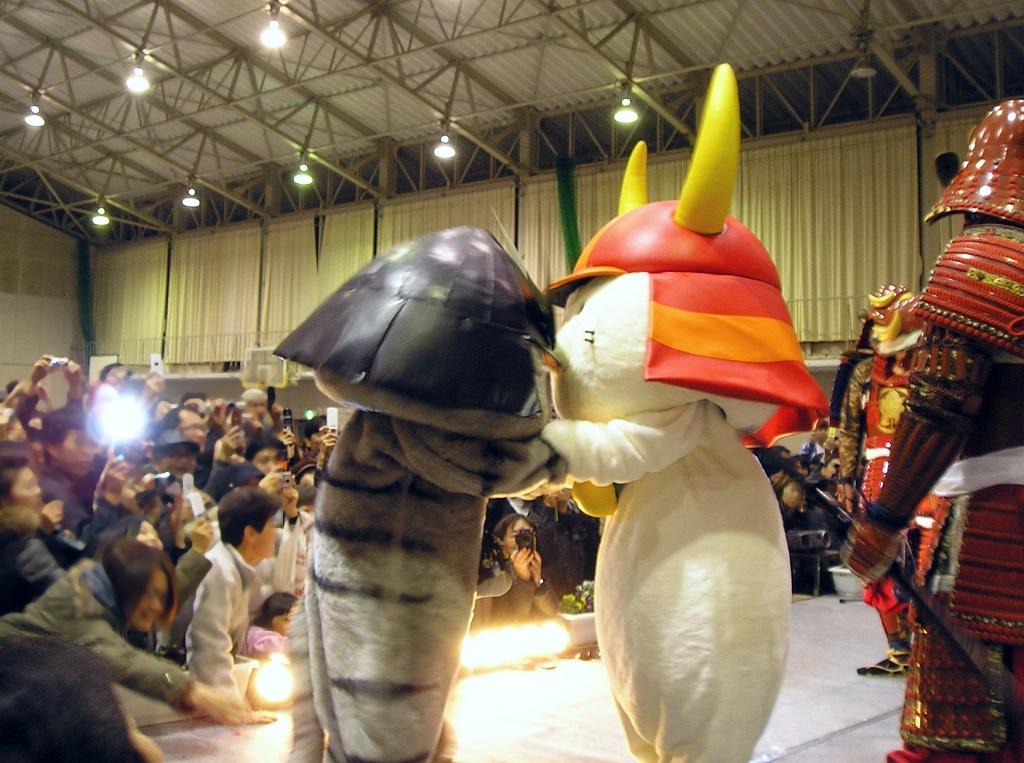
Official profile: Hikone City
The mascot that started the copycats. A white cat in a red samurai kabuto with gold horns, designed in 2007 for Hikone Castle's 400th anniversary, from a local legend about a cat that pulled a lord under a tree just before lightning hit it.
Hikonyan's tourism bump is what convinced local governments a mascot was worth the budget. Almost every character below exists because this one proved the model.
Gunma-chan (ぐんまちゃん) — Gunma Prefecture
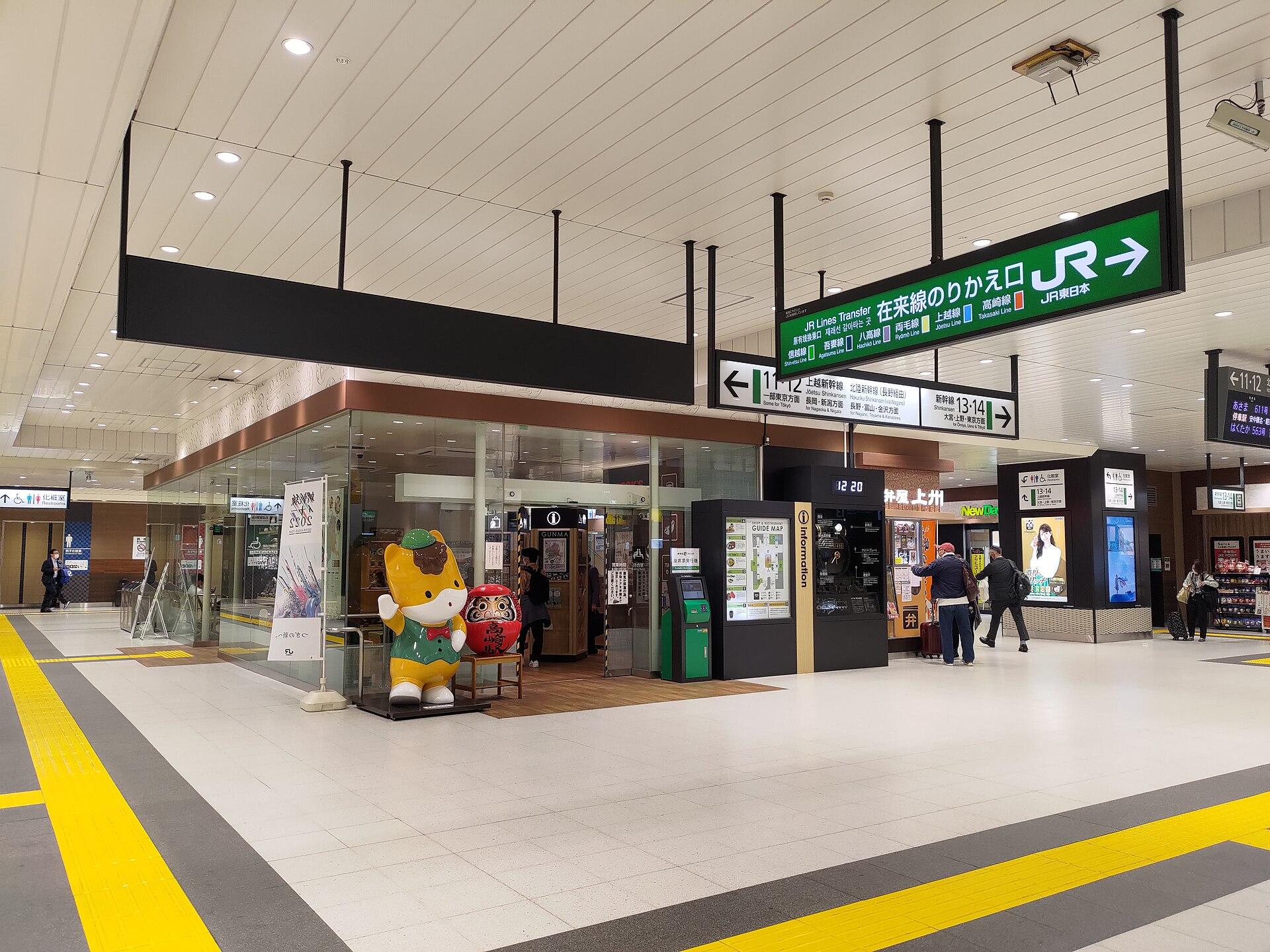
Official profile: Yuru Navi
A white pony-eared character from 1994, first made for a national disability sports event, adopted as Gunma's full-time mascot in 2008. Third in the Grand Prix in 2012 and 2013, winner in 2014. Gunma-chan also runs one of the more active mascot social accounts in Japan — a large part of long-term popularity now sits in how the handlers talk between appearances.
Sento-kun (せんとくん) — Nara Prefecture
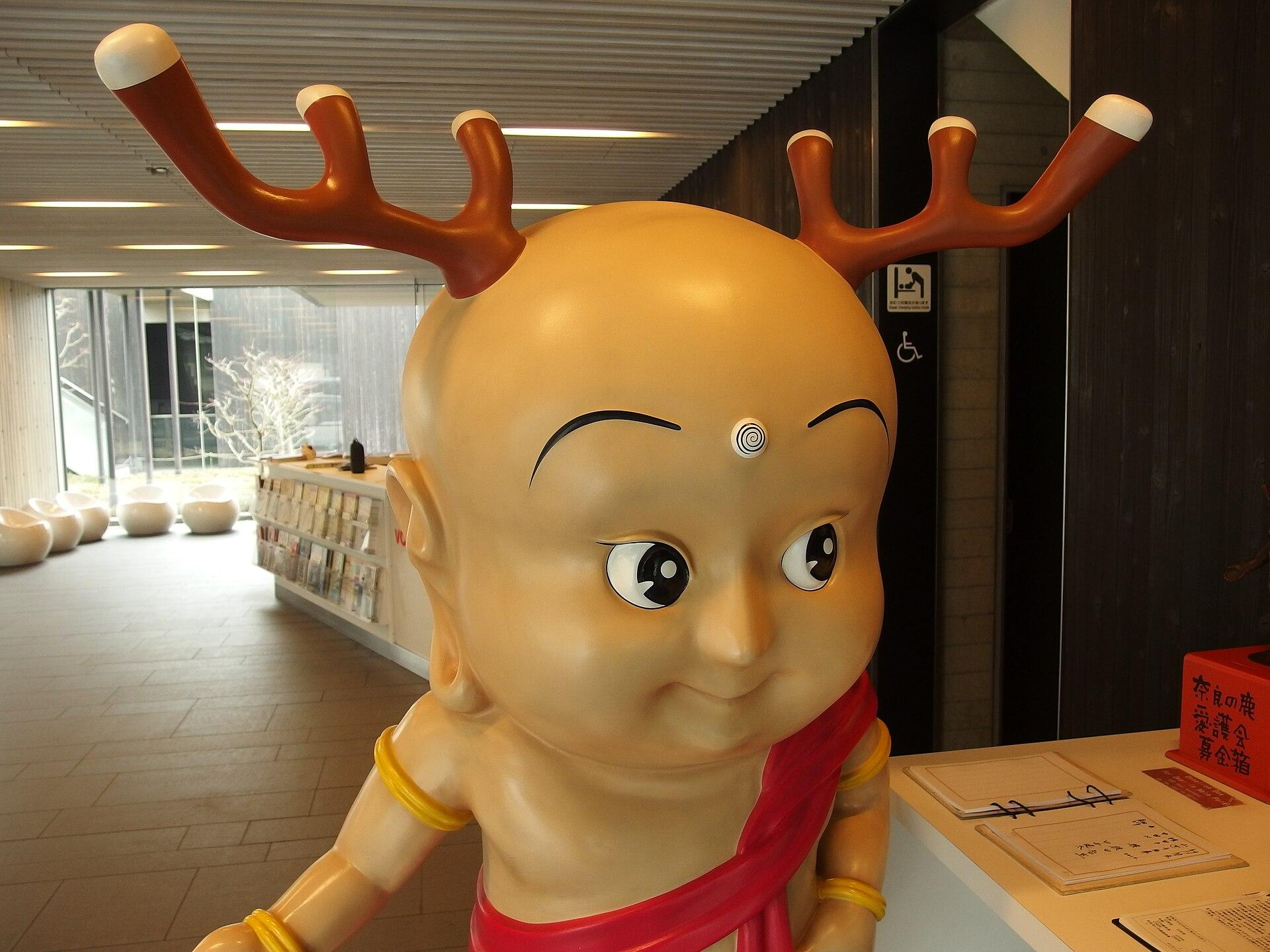
Official profile: Nara Prefecture
Unveiled in 2008 for Nara's 1300th-anniversary celebrations: a bald child monk with deer antlers, temples plus the free-roaming deer. Buddhist groups and much of the public hated it on sight. An online petition to scrap it passed a thousand members within days.
Nara kept him. The backlash faded. Sento-kun is now a fixture. Mascot design is more political than the finished, cheerful costume suggests.
Nyango Star (にゃんごすたー) — Kuroishi, Aomori
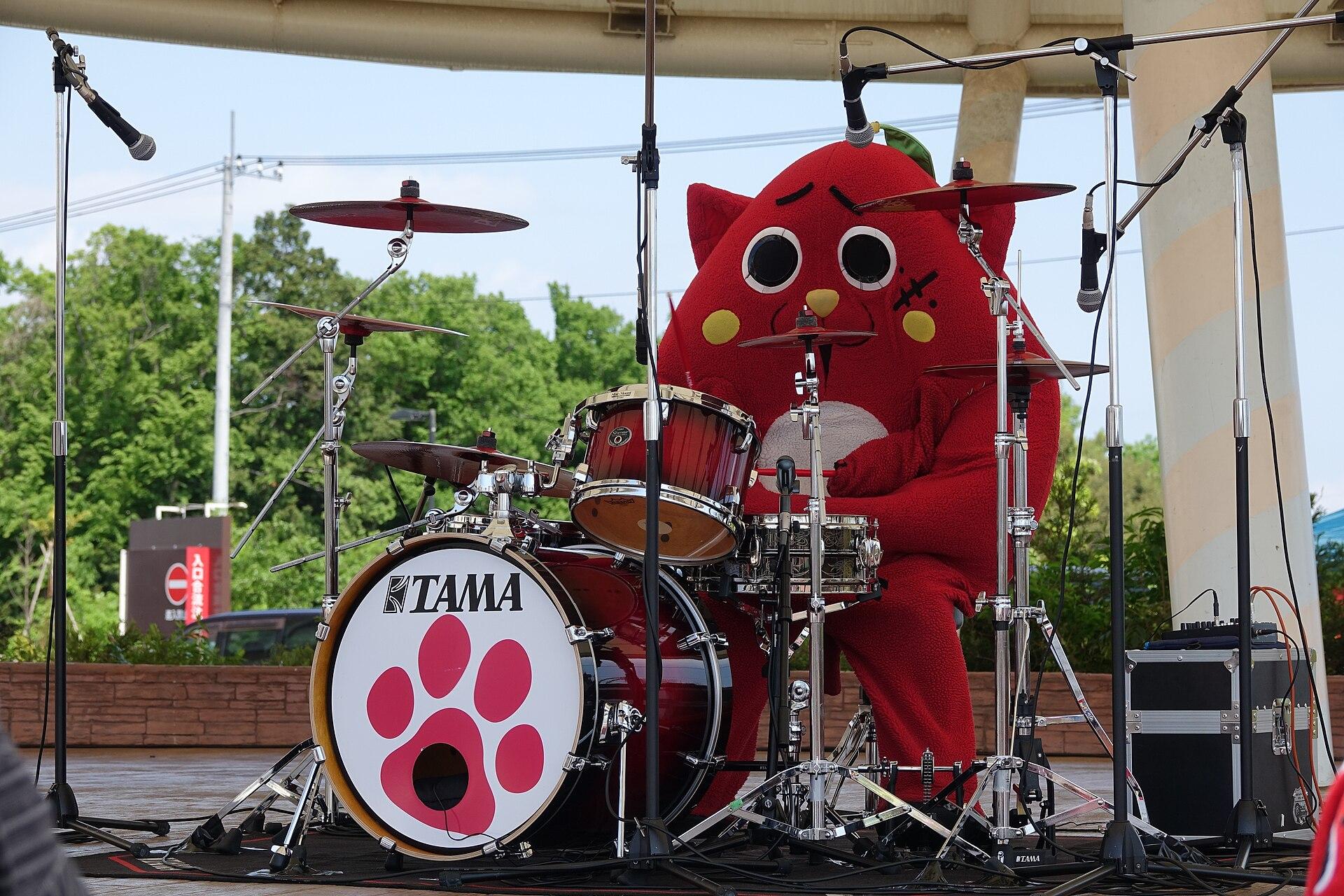
Official profile: Yuru Navi
An apple-headed red cat from Kuroishi's orchards. The clip that travels is the drum solo, in costume, with actual technique. Most people who have seen the headbanging have no idea it belongs to a much larger mascot system.
Shimanekko (しまねっこ) — Shimane Prefecture
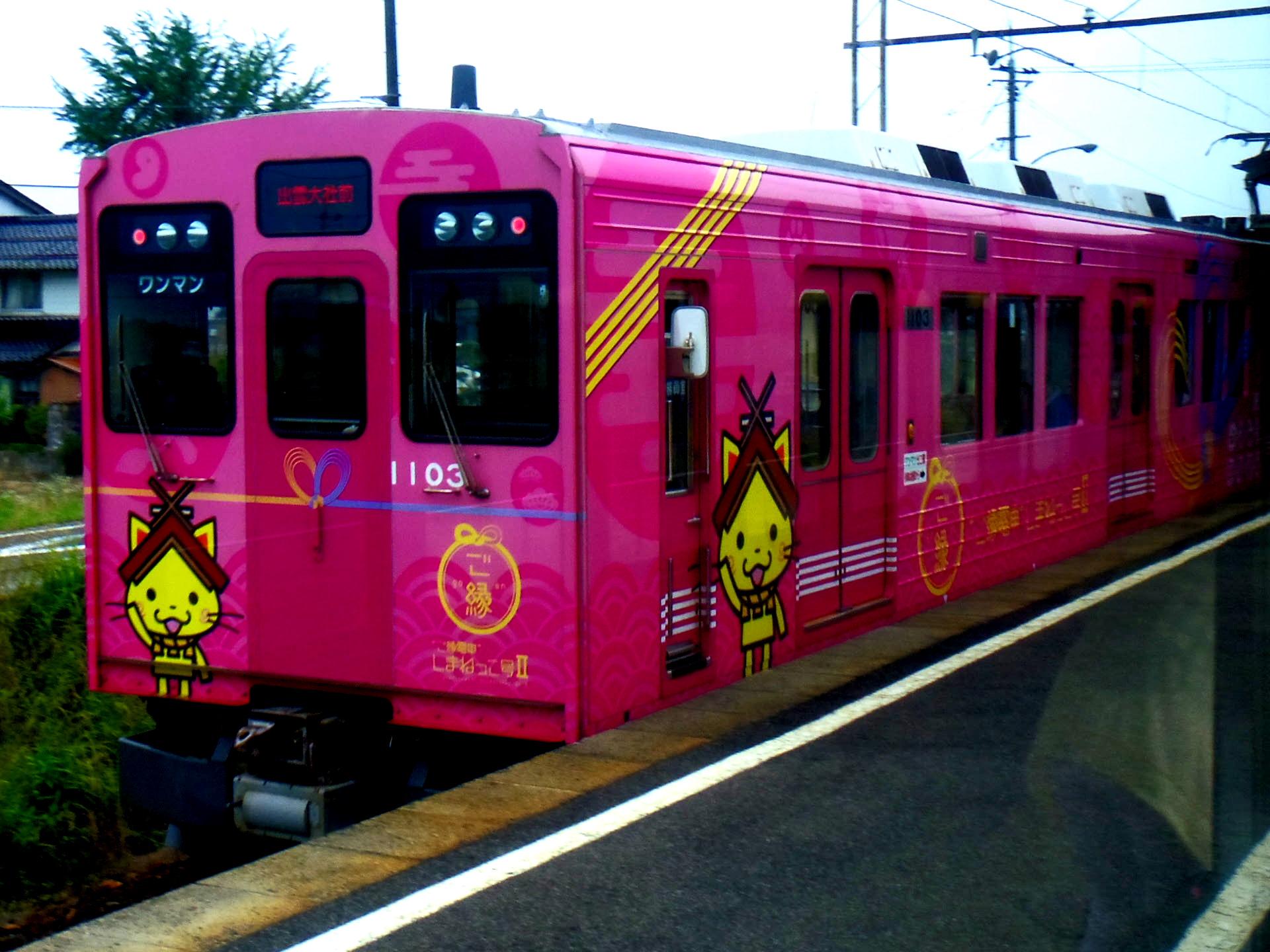
Official profile: Yuru Navi
Shimane's cat, designed around 2007–2008 for Izumo Taisha tourism campaigns, with shrine rope and bell in the design. Wrapped onto trains, buses and station signs — a mascot as regional infrastructure, not only a costume at events.
Why the industry is this large
Local governments run them like startups. Prefectures treat design, merch and appearance calendars as economic development. Kumamon has a job title (Sales Manager) tied to the governor's tourism work.
Permissive licensing multiplies reach. Similar to how Pokemon Center treats merch as the brand, except prefectural mascots often go further and make the license nearly free. Kumamon is the clear case.
The contest keeps new names in circulation. The old Grand Prix, and now Yuruverse, give every mascot a public reason to campaign. That is why a 2024 shopping-centre cat and a YouTube panda can take the top of the 2026 board without replacing Kumamon in the souvenir aisle.
FAQ
What does yuru-kyara mean? "Loose character" or "laid-back character" — Jun Miura's term for the amateurish, regionally tied mascots that took off in Japan from the mid-2000s.
Who won Yuruverse 2026? Sakai Sander, announced 4 October 2026, with 208,326 points. Izunyan was second (187,107), Tsunagaryu Nu third (109,586). Source: Yuru-Chara Grand Prix Executive Committee.
Which yuru-kyara is the most popular? Depends what you mean. This year's vote went to Sakai Sander. The most commercially successful, and the name other characters are still compared with, is Kumamon.
Is Funassyi an official mascot? No — on purpose. Independent management is what allows the screeching, high-energy public persona a city mascot could not get away with.
Where can I meet these mascots? Kumamon Square in Kumamoto City has regular appearances. Hikonyan appears at Hikone Castle. Sakai Sander's city page puts the character at Tojinbo and the Sakai Green Center. Tsunagaryu Nu is Saitama City's; check the city's character pages. The 2026 Yuruverse final is over. For other schedules, use each prefecture or organiser's site, not last year's flyer.
Is the Yuru-Chara Grand Prix still happening? Not under that name. It ran 2010–2020. The vote continues as Yuruverse. The 2026 results are on Yuru Navi.
Can I buy Kumamon merchandise outside Japan? Some import shops carry a little. The real range is in Kumamoto and at general souvenir retailers such as Don Quijote. Tokyo character shops in our kawaii shopping guide, including Kiddy Land, also stock regional mascots.

Culture Desk
The Standard Japan
Customs, festivals, pop culture and everyday Japan, explained for people who want to understand what they are looking at.
Facts are taken from primary sources (operators, venues, official tourism and government pages) and dates and prices are checked on the day of writing. Pages are revised when those sources change.
Expertise
Festivals, etiquette, pop culture, mascots, convenience-store culture
Have a question or a correction?
Ask us anything about Yuru-Kyara and the 2026 Yuruverse Ranking, or tell us what we got wrong. We reply within 24 to 48 hours.
Related Stories
Where to Play Pickleball in Osaka: ¥500 at Nanko
Nanko has four outdoor courts at ¥500 on a weekday. Book at noon, one month ahead. The phone line will not take it.

Sanrio Characters: Names and the 2026 Popularity Ranking
Hello Kitty hasn't won Sanrio's own popularity poll since 2019. Here's the current roster — Cinnamoroll, Kuromi, Pompompurin — and where to meet them.
Best Ramen in Tokyo 2026 (Local Favorites by Style)
Tokyo ramen by style: shoyu at Tsuta, clam shio at Konjiki Hototogisu, tsukemen at Fuunji, niboshi at Nagi in Golden Gai, tonkotsu at Ichiran.