
Osaka Food Guide: What to Eat and Where (2026)
Osaka is Japan's most food-obsessed city. Here is what to eat, where to find it, and why kuidaore is a way of life.
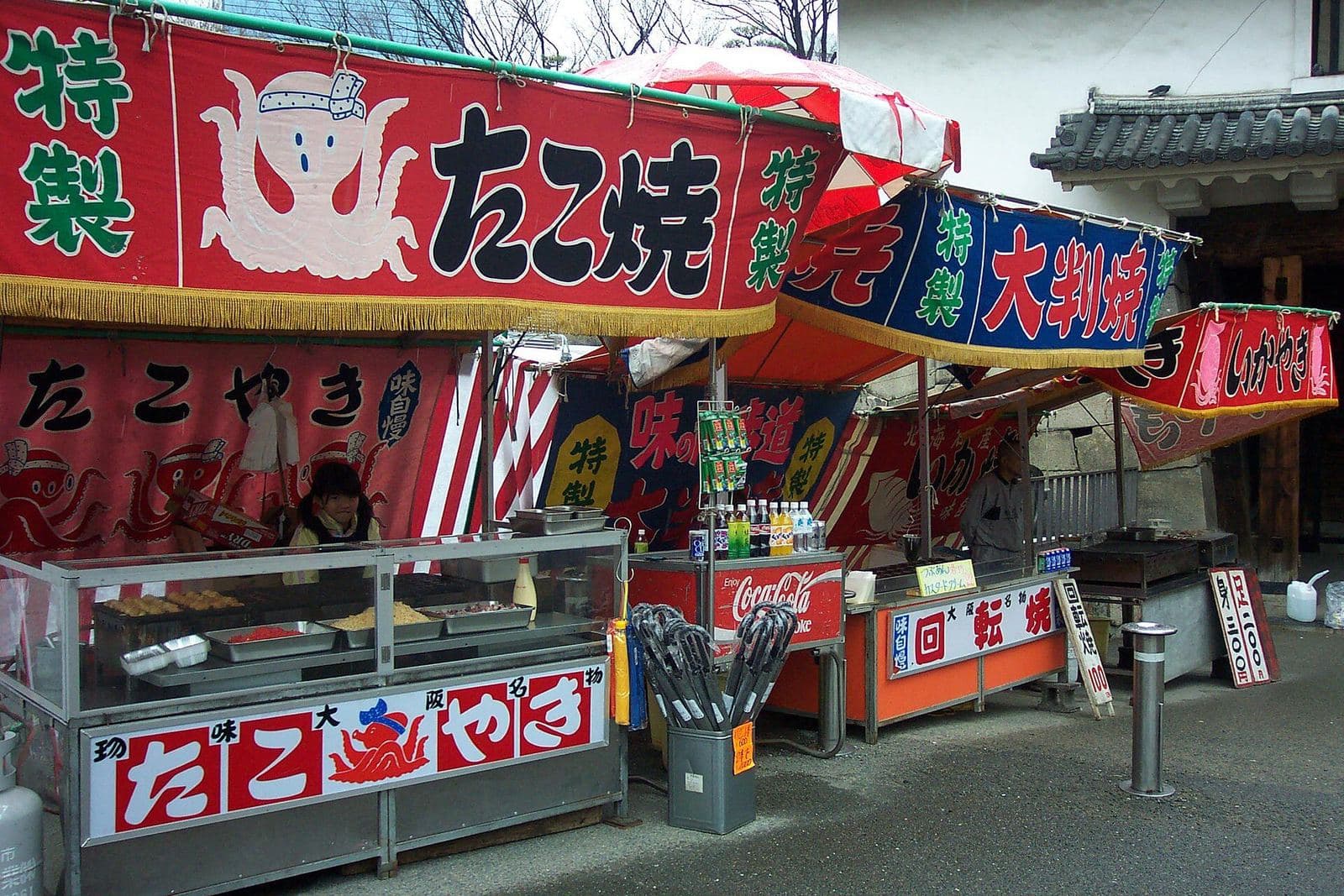
Osaka's reputation as Japan's food city is deserved, and its food culture runs much deeper than the tourist strip on Dotonbori. Locals like to say they eat better on an ordinary weeknight than Tokyo does on a special occasion, and they have a point.
This is not a comprehensive directory. It is what you should understand and eat.
The Philosophy: Kuidaore
Kuidaore (食い倒れ) literally means "ruin yourself by eating." It is Osaka's unofficial civic motto and its residents take it seriously. The historical logic: Osaka was the commercial capital of Edo-period Japan, a merchant city where money was made and spent on food rather than on status display. The result is a city that respects the act of eating across all price ranges — outstanding street food and world-class kaiseki operate under the same cultural framework.
The Essential Osaka Dishes
Takoyaki
Takoyaki (たこ焼き) are Osaka's signature food and Japan's most successful street food export. Small spherical balls of batter cooked in a cast-iron mold, each containing a piece of octopus, green onion, and pickled ginger. Topped with okonomiyaki sauce, Japanese mayonnaise, dried bonito flakes, and green seaweed powder.
The ideal takoyaki: crisp exterior, liquid interior, hot enough that you burn your tongue on the first one. Eaten from a paper tray on the street, immediately.
Where to eat it:
- Wanaka (Dotonbori) — One of the oldest, busiest, consistently good
- Aizuya (several branches) — Says it created takoyaki in the 1930s; its batter is seasoned, so it is eaten without sauce
- Takoya Dotonbori Kukuru (main shop on Dotonbori) — Known for large pieces of octopus; tourist-facing but reliable
Avoid takoyaki from convenience stores. The difference between good and mediocre is pronounced.
Okonomiyaki
Okonomiyaki (お好み焼き) is a savory batter pancake — the name translates roughly as "grill what you like." The Osaka-style mixes batter, shredded cabbage, egg, and your choice of additions (pork belly, shrimp, mochi, cheese) then cooks as a single mass on a teppan griddle. Topped with sauce, mayonnaise, and the same bonito-seaweed combination as takoyaki.
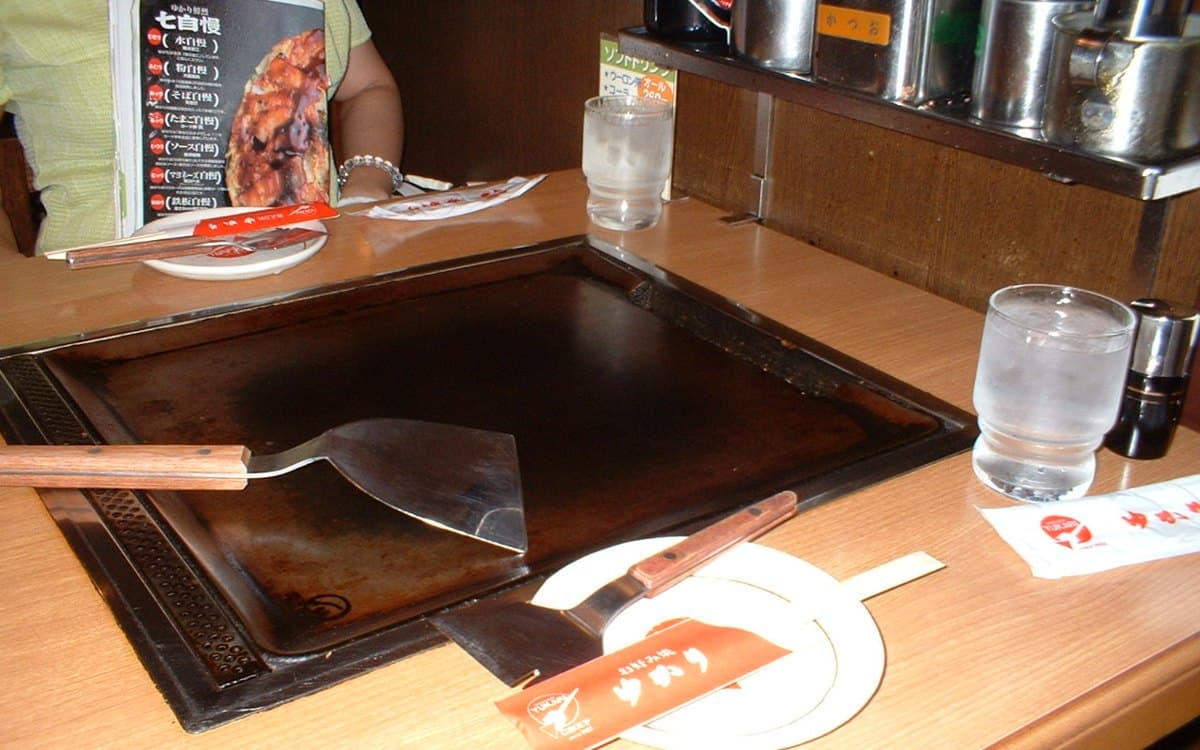
Hiroshima-style (layered, not mixed) is a different dish. Do not confuse them in front of Osaka locals.
Where to eat it:
- Chibo (Dotonbori) — Classic sit-down teppan okonomiyaki; cook your own or let the staff
- Mizuno (Dotonbori) — Traditional-style with different regional variations available
Kushikatsu
Kushikatsu (串カツ) are skewers of meat, seafood, and vegetables coated in panko breadcrumbs and deep-fried. The Shinsekai district is where this dish originated and is still where it tastes best — a working-class neighborhood that retained the original no-frills kushikatsu culture while tourist areas commoditized it.
The rule: the shared sauce pot is communal. No double-dipping. Once a skewer has been bitten, it does not re-enter the sauce. This is enforced seriously at traditional restaurants.
Where to eat it:
- Daruma (Shinsekai) — The most famous original location; expect queues
- Yaekatsu (Shinsekai) — Slightly less known, often better and faster
- Avoid the tourist-facing kushikatsu places in Dotonbori — the quality-to-price ratio is poor
Fugu (Blowfish)
Osaka is often said to eat more fugu than any other city in Japan, even though most of the fish is landed elsewhere, around Shimonoseki in the far west of Honshu. Fugu contains tetrodotoxin, a lethal poison, and only licensed chefs may prepare it.
The taste is delicate, almost neutral. The appeal is partly cultural — fugu sashimi sliced paper-thin (tessa) and arranged in chrysanthemum patterns, fugu hot pot (tecchiri), fugu skin salad. Autumn and winter are the best seasons.
This is not cheap food; a proper fugu course at a licensed restaurant costs ¥8,000–20,000 per person.
Kitsune Udon
Kitsune udon (きつねうどん), udon noodles in a mild dashi broth topped with a large piece of sweet simmered fried tofu (aburaage), is Osaka's comfort food. Usami-tei Matsubaya, a small udon shop in central Osaka, is credited with creating it in the 1890s. The broth is lighter and sweeter than Tokyo-style udon; the tofu absorbs the soup and becomes impossibly soft. For the chewier, Kagawa-style noodle a short trip further west, see our udon guide.
Try it at Dotonbori Imai, an udon restaurant on Dotonbori since 1946, known for its dashi, or at Usami-tei Matsubaya itself.
Osaka-style Sushi (Hakozushi / Oshizushi)
Osaka's traditional sushi style is oshizushi (pressed sushi) — fish pressed with vinegared rice into wooden molds and cut into rectangles. This predates nigiri sushi and was the Osaka merchant city's preservation method for fish traded along the inland sea.
Battera (mackerel pressed sushi) is the most common version. Try it at the Kuromon Ichiba market stalls or traditional sushi restaurants in Honmachi.
Where to Eat by Neighborhood
Dotonbori / Namba
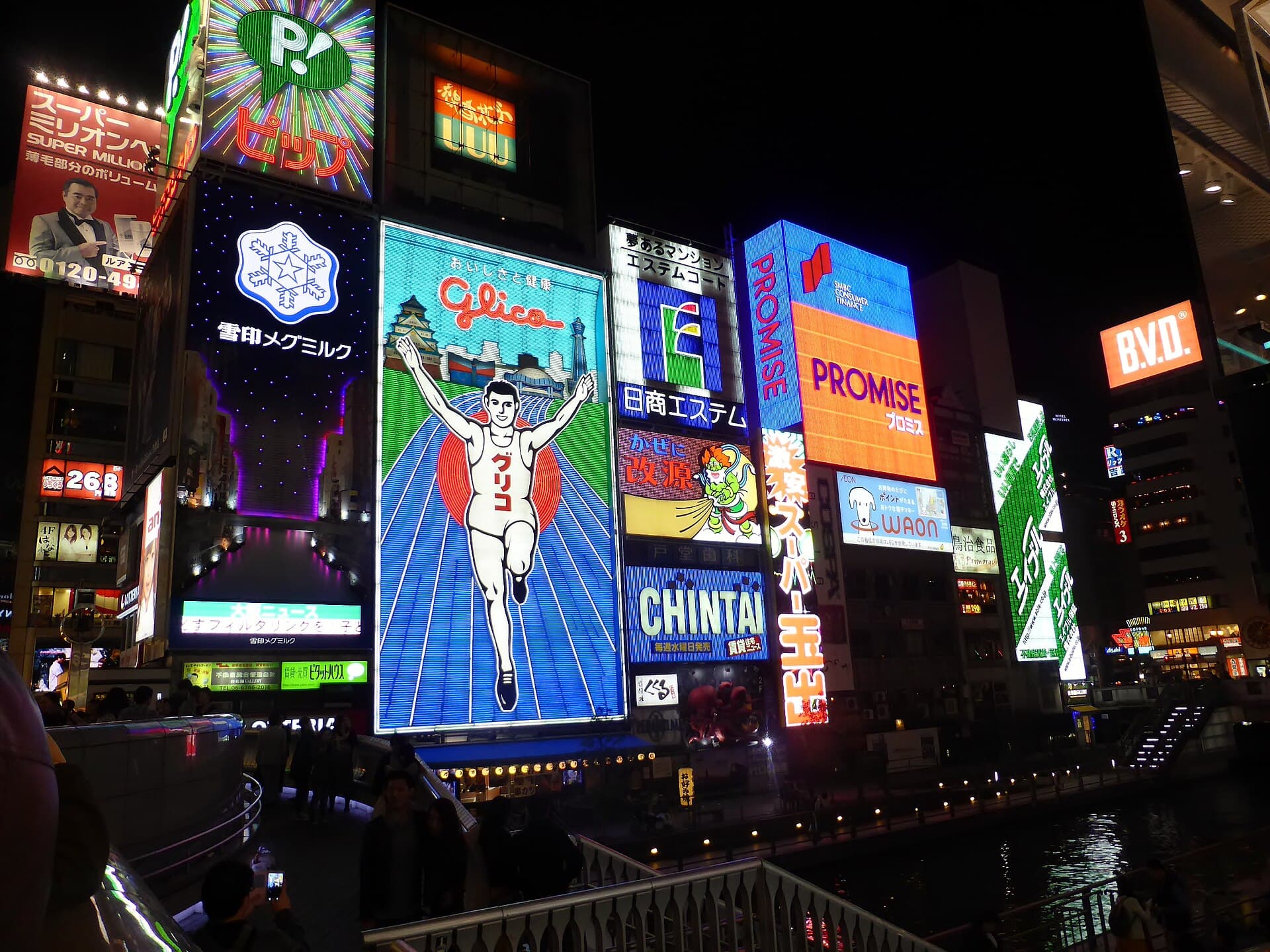
The tourist core — crowded, loud, mostly overpriced, but contains some genuine institutions. Best for takoyaki, okonomiyaki, and the experience of Osaka's food spectacle. Avoid any restaurant with photo menus outside and an English-speaking barker.
Kuromon Ichiba Market
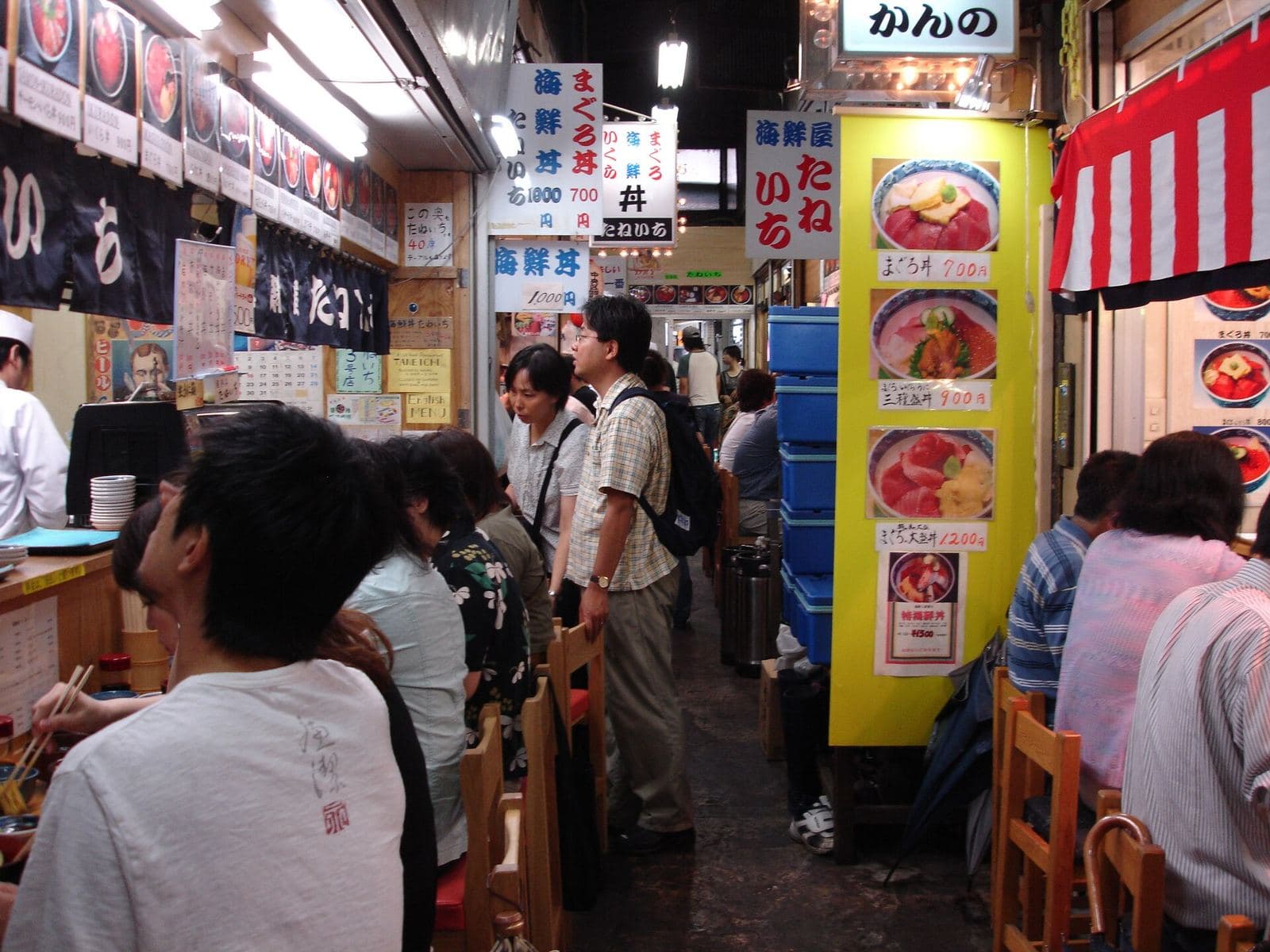
For fresh seafood, produce, and street-food snacks, Kuromon Ichiba is the right place. Vendors have supplied Osaka's cooks since the early 19th century. Prices are now aimed at visitors, so compare stalls before you buy.
Best visited mid-morning before tourist crowds; early closing times (many vendors close by 2–3pm) are important to know.
Shinsekai
The home of kushikatsu and the most atmospherically intact old-Osaka neighborhood. No Instagram aesthetics — just narrow streets, pachinko parlors, and some of the best value fried food in Japan.
Honmachi / Kitahama
The financial district by day; where Osaka's serious food culture lives at night. Traditional kappo-style restaurants and high-end sushi in a less tourist-saturated environment. Higher average prices but commensurate quality.
Fukushima Food Street
West of Umeda, Fukushima has a concentration of small bars and restaurants popular with Osaka residents. Less curated than Namba, more likely to seat you next to a local office worker. Good for izakaya-style eating and finding places with no English menus.
Drinking in Osaka
Osaka's drinking culture is izakaya-based — order food and drinks together, stay for hours. The izakaya culture is somewhat less formal than Tokyo's; you are more likely to end up in conversation with strangers.
Highball (whisky and soda) is the dominant drink culture. Suntory Kakubin in a proper highball glass, cold and refreshing, is correct.
Beer: Asahi began in Osaka, with its first brewery in nearby Suita, and is still the local favorite. Order a nama (draft) at most izakaya.
The area around Dōjima (between Umeda and Fukushima) has a concentration of good cocktail bars for those who want something beyond izakaya.
Food Tours and Markets
Osaka Food Tour — Multiple operators run evening tours of Dotonbori and Shinsekai. Quality varies widely. The best tours avoid the most tourist-facing restaurants and take you to spots you would struggle to find independently.
Tenjinbashisuji Shopping Street — Japan's longest covered shopping arcade, running nearly 2.6km north from Tenjinbashi. Food shops, small restaurants, and local businesses in a neighborhood where tourists rarely penetrate.
FAQ
What does kuidaore mean? It literally translates to "ruin yourself by eating" — Osaka's unofficial civic motto, reflecting a food culture that respects eating well across all price ranges, from street food to kaiseki.
Where is the best place to eat takoyaki in Osaka? Wanaka on Dotonbori and Aizuya, which says it created takoyaki, are two of the best-known names. Freshly made takoyaki from a stall is far better than the convenience-store kind.
What's the rule about the shared sauce at kushikatsu restaurants? No double-dipping — once a skewer has been bitten, it cannot go back into the communal sauce pot, and this is enforced seriously at traditional Shinsekai restaurants like Daruma.
Is fugu (blowfish) safe to eat in Osaka? Yes — restaurants must hold a special license to prepare fugu, since chefs are trained to safely remove the fish's tetrodotoxin-containing parts; expect to pay ¥8,000–20,000 per person for a proper course.
What's the difference between Osaka and Hiroshima okonomiyaki? Osaka-style mixes the batter, cabbage, and other ingredients into a single pancake cooked as one mass, while Hiroshima-style layers the ingredients separately — locals consider them genuinely different dishes, not variations of the same one.
Food Desk
The Standard Japan
Where and how to eat in Japan, from konbini and kissaten to izakaya, ramen and department-store food halls.
Facts are taken from primary sources (operators, venues, official tourism and government pages) and dates and prices are checked on the day of writing. Pages are revised when those sources change.
Expertise
Restaurants, izakaya, ramen, food halls, ordering and etiquette
Have a question or a correction?
Ask us anything about Osaka Food Guide: What to Eat and Where (2026), or tell us what we got wrong. We reply within 24 to 48 hours.

Related Stories
Japanese Food Guide: What to Eat in Japan (2026)
What to eat in Japan in 2026: ramen, sushi, yakitori, tempura, tonkatsu, izakaya, depachika, and regional specialties — from konbini onigiri to kaiseki.
What to Do in Osaka: 16 Things That Actually Deliver
16 specific things to do in Osaka — Dotonbori done right, food crawls, castle, neighborhoods, day trips, and night walks that feel local instead of checklist-y.
Kobe Travel Guide: What to Do, Eat, and See (2026)
Japan's most international port city is also one of its most underrated destinations. Here is how to spend your time in Kobe.