
Japanese Streetwear Brands You Should Know
Before Supreme, before Off-White, there was Ura-Harajuku. The Japanese labels that invented modern streetwear — and the ones defining what comes next.

The story of modern streetwear starts in Tokyo. Specifically, it starts in the back streets of Harajuku in the early 1990s, when a handful of designers, collectors and obsessives worked out how to sell clothes in a way the rest of the world copied twenty years later. Most people who wear Supreme or Off-White don't know the origin story. Here it is, along with where each label sells today.
Two things a visitor can't see from abroad. First, the flagships aren't all in Harajuku: three of the most important sit within a few minutes of each other in Minami-Aoyama, and the rest are spread across Ginza, Ebisu and Naka-Meguro. Second, Japan's tax-free shopping changes on 1 November 2026, and the new rules punish exactly what streetwear buyers do: put the new jacket on straight away. Both are covered below. Store addresses and hours were checked on each brand's own site on 17 October 2026.
Where Ura-Harajuku started
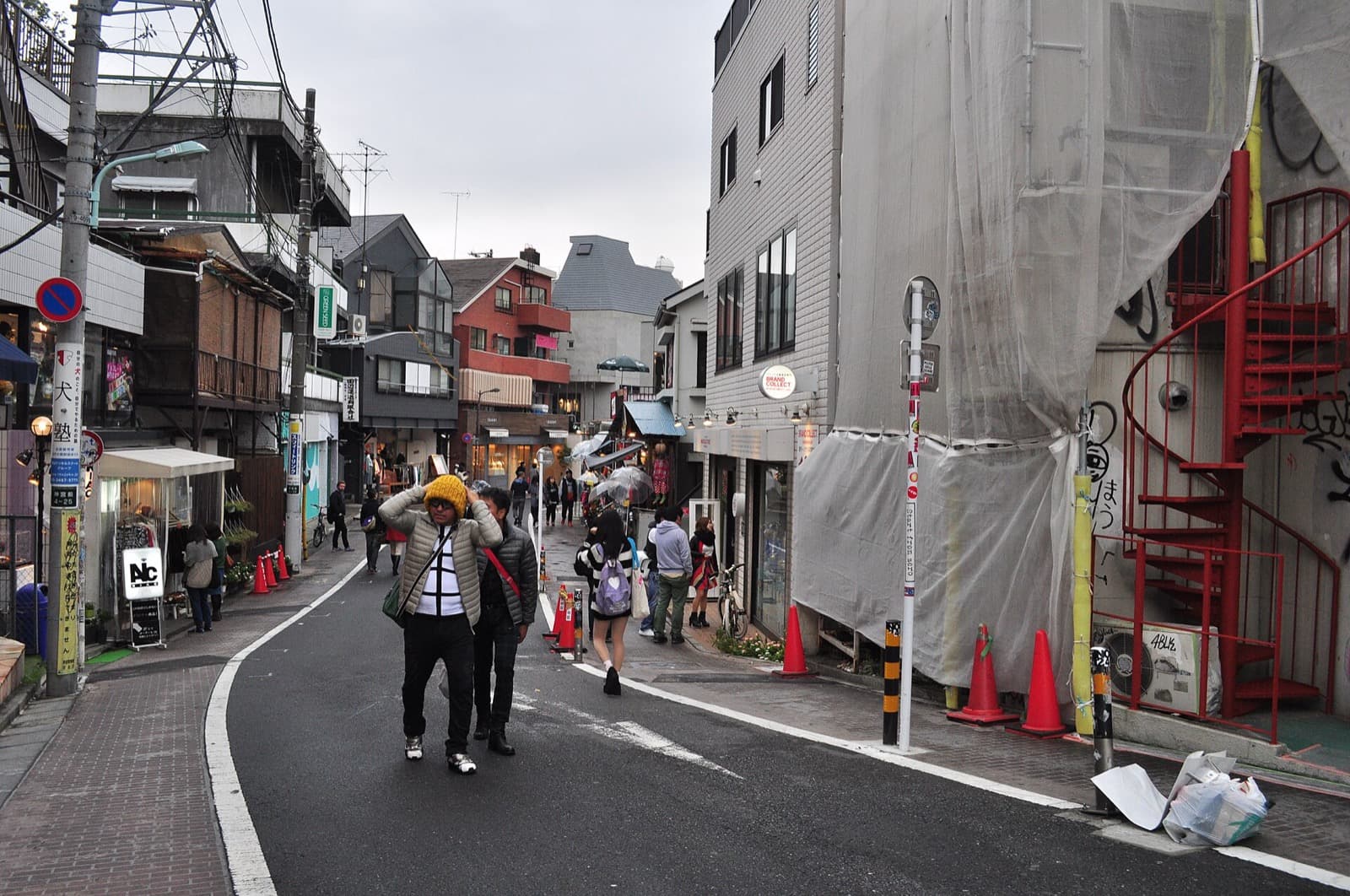
Ura-Harajuku ("back Harajuku") is the grid of side streets in Jingumae between Omotesando and Meiji-dori, roughly around today's Cat Street. It was, and partly still is, a residential neighbourhood with small shops tucked into it.
The usual starting point is Nowhere, the tiny shop Nigo and Jun Takahashi opened in April 1993. The two had met at Bunka Fashion College. The shop was split down the middle: Takahashi's Undercover on one side, Nigo's selection and his new label, A Bathing Ape, on the other. Nowhere no longer exists.
The labels that grew up around it shared a playbook:
- Make very few pieces and stop when they sell out.
- Build a following through magazines and musicians, not advertising.
- Collaborate with each other and with foreign brands on limited releases.
Limited drops, collaborations and lining up on release day all became standard practice in Harajuku in those years.
The founders
BAPE (A Bathing Ape): Nigo founded BAPE in 1993 and sold it first at Nowhere. The ape-head logo, the camouflage and the shark hoodie, which shows a shark face when zipped all the way up, all started there. BAPE was the template: limited drops, collaborations with musicians and artists, a cult built on scarcity. Every hype brand that followed owes it a debt, including the sneaker collaboration culture that grew up alongside it.
The flagship is in Harajuku. In December 2024 BAPE opened BAPE STORE GINZA, its first street-level store in the Ginza area: two floors joined by a spiral staircase at 2-6-5 Ginza, open 11:00–20:00.
Undercover: Jun Takahashi started Undercover with friends in 1990, while still a student at Bunka. He showed his first collection, Autumn/Winter 1994–95, in Tokyo, and moved to Paris in 2002. The collections reference punk, music and literature, and "streetwear" undersells them. The long-running collaborations include Gyakusou with Nike and UU with Uniqlo.
The Aoyama stores, men's and women's side by side, are in the basement of Bleu Cinq Point A at 5-3-22 Minami-Aoyama. There are also counters at Isetan Shinjuku, Hankyu Men's Tokyo and Shibuya Parco.
Neighborhood: Shinsuke Takizawa founded Neighborhood in Harajuku in 1994, under the motto "Craft with Pride". The label is built on American motorcycle and workwear culture: leather jackets, work shirts, things made to be worn for years. The leather jackets are exceptional.
Wtaps: Tetsu Nishiyama launched Wtaps in 1996, out of the same early-1990s Ura-Harajuku scene. It is the gold standard of Japanese military-inspired streetwear: each season reworks the same core shapes, and the archive holds together. Popular pieces can sell out on release day. The Autumn/Winter 2026 collection started dropping on 16 October.
The Tokyo store, W_Lab, is at FROM-1st Building, 5-3-10 Minami-Aoyama, open 11:00–19:00. That's an hour earlier than most shops on this list, so go there first.
Human Made: Nigo's post-BAPE label, founded in 2010, takes a softer, more nostalgic line: vintage Americana, workwear, duck motifs. The company behind it listed on the Tokyo Stock Exchange's Growth market in November 2025, and Nigo has also been artistic director of Kenzo since September 2021.
On 26 September 2026 Human Made opened its first flagship, Human Made Tokyo, on Meiji-dori in Harajuku, in the former Takeo Kikuchi flagship. It has three floors and about 595 m², roughly four times the size of its standard stores. It is also the first to use the brand's mobile ordering: scan an item's QR code with your phone, and staff have it waiting at the till. On a busy weekend that saves you the till queue.
The contemporary wave
From the late 1990s a second group kept the street sensibility but competed on fabric and construction. Prices go up, and the clothes date more slowly.
sacai: Chitose Abe founded sacai in Tokyo in 1999, after working as a knitwear pattern maker at Comme des Garçons. The hybrid garments, knit spliced with woven fabric or two garments merged into one, have been copied endlessly. The women's line first showed in Paris in October 2009, and the Nike collaboration changed sneaker culture.
The flagship, sacai Aoyama, opened in September 2011 in a building designed by Sou Fujimoto, at 5-4-44 Minami-Aoyama. Dover Street Market Ginza, Isetan Shinjuku, Mitsukoshi Ginza and Shibuya Scramble Square also stock it.
Visvim: Hiroki Nakamura's label started with footwear in the early 2000s. The FBT, a moccasin built like a sneaker, changed how people thought about shoes. It's technically the opposite of streetwear: expensive, slow and traditional in how it's made, with natural dyes and old techniques. But it influences everything around it. Tokyo has four stores, all open 11:00–20:00:
- Visvim General Store: 1-22-11 Aobadai, Meguro (Naka-Meguro)
- Visvim: GYRE 2F, 5-10-1 Jingumae (Omotesando)
- F.I.L. Omotesando: B1, 5-9-17 Jingumae
- F.I.L. Ginza: 1-20-17 Ginza
Needles: Keizo Shimizu's label, made by Nepenthes, the company behind the select shop of the same name. The track pants with the side stripe and butterfly embroidery have become one of the defining silhouettes of the past five years. The same company runs Engineered Garments, made in New York, and the fishing and outdoor label South2 West8. Nepenthes Tokyo (5-44-1 Jingumae, 11:30–20:00, open daily) carries all three, with Engineered Garments Tokyo and Nepenthes Woman Tokyo a few doors away.
Kapital: Not from Tokyo. The company was founded in March 1985 in Kojima, Okayama, the town that made Japan's first jeans, and still runs its own sewing and dyeing workshops there. Heavy, indigo, hand-stitched, patched, worn: the aesthetic is industrial folk. The prices are high, and the quality justifies them. Tokyo has seven shops, three of them within a block of each other in Ebisu-Minami 2-chome (Tokyo Naked Store, Duffle with Kapital, Legs Craftsman Store). The others are at Roppongi Hills, Shirokanedai and Ginza 1-chome. For other Okayama labels, see our Japanese denim guide.
The brands at a glance
Neighborhood's store list did not load on its official site, so its area is left blank.
| Label | Founded | Designer | Own stores in Tokyo |
|---|---|---|---|
| Undercover | 1990 | Jun Takahashi | Minami-Aoyama |
| BAPE | 1993 | Nigo (founder) | Harajuku, Ginza |
| Neighborhood | 1994 | Shinsuke Takizawa | — |
| Wtaps | 1996 | Tetsu Nishiyama | Minami-Aoyama |
| sacai | 1999 | Chitose Abe | Minami-Aoyama |
| Human Made | 2010 | Nigo | Harajuku |
| Visvim | Early 2000s | Hiroki Nakamura | Naka-Meguro, Omotesando, Ginza |
| Needles | — | Keizo Shimizu | Jingumae (Nepenthes) |
| Kapital | 1985 (company) | — | Ebisu, Roppongi, Shirokanedai, Ginza |
Source: each brand's official site, checked 17 October 2026; Human Made listing documents.
The right-hand column is the one to plan by: the shops fall into four areas, and two of them can be done in one day.
How to cover it by area
Minami-Aoyama 5-chome. Undercover (5-3-22), Wtaps' W_Lab (5-3-10) and sacai Aoyama (5-4-44) are a few minutes' walk from Omotesando station and from each other. Start here, because Wtaps closes at 19:00.
Harajuku and Jingumae. Cross Omotesando and you're in Jingumae: the BAPE flagship, Human Made Tokyo, Nepenthes Tokyo and the two Visvim stores on the Omotesando side. Walk Cat Street towards Shibuya for the vintage shops and sneaker stores. These first two areas make one comfortable day.
Ginza. Dover Street Market Ginza, BAPE STORE GINZA, F.I.L. Ginza and Kapital's Ginza shop, plus the department stores (Mitsukoshi, Hankyu Men's) that carry sacai and Undercover. Ginza is the best rainy-day option, since much of it is indoors.
Ebisu and Naka-Meguro. Kapital's three Ebisu shops and the Visvim General Store in Aobadai. They're quieter than Harajuku, so come here if you want time to try things on.
Buying several labels in one place
Dover Street Market Ginza: The Comme des Garçons concept store opened on 16 March 2012 in Ginza Komatsu West (6-9-5 Ginza), near Ginza station. Its seven floors run from European houses to young Japanese designers, and it's the one place you can see sacai and Undercover next to everything else.
Beams: The Japanese multi-brand retailer began in 1976 as a 6.5-tsubo shop in Harajuku called American Life Shop Beams. It turned 50 in 2026 and the Harajuku store reopened after a renovation in March. It has the best edit of domestic labels, plus plenty of Beams-only collaborations.
United Arrows: Founded in 1989 by Osamu Shigematsu and colleagues who had helped build Beams. It's similar to Beams but slightly more formal, with the younger Beauty & Youth line alongside. The flagship is in Harajuku.
Before you buy: the November 2026 tax-free change
Until 31 October 2026, visitors show a passport at the till and pay no 10% consumption tax. From 1 November 2026 that ends. You pay the full price, and the tax comes back only after customs confirms the goods are leaving Japan. According to JNTO:
- You still need to spend at least ¥5,000 before tax per shop, per day, and show your passport when you buy.
- Within 90 days of buying, scan your passport at a tax-free terminal at the departure airport, before you check your bags. Once a bag is checked, it can't be brought back for the procedure.
- You must have all the tax-free items with you. A red result on the terminal means taking them to the customs counter.
- Anything used in Japan before you leave isn't eligible. If you wear the new jacket around Tokyo, declare it at the customs counter rather than claiming the tax back.
For a ¥80,000 sacai jacket, that's about ¥7,300 of tax back, as long as the jacket is still in the bag at the airport. The full procedure, including starting it in Visit Japan Web at the big airports, is in our tax-free shopping guide.
Other things worth knowing
Check release days online first. Popular pieces can go on sale in store and online on the same morning. Check the brand's site or Instagram for the date, and whether it's in-store at all.
Opening hours vary. Most flagships open 11:00–20:00, but Wtaps closes at 19:00 and Nepenthes opens at 11:30. Department-store counters follow the store's hours.
Past seasons are second-hand. Old pieces are gone from the flagships. The brand resale shops along Cat Street are the quickest place to look; see our Harajuku fashion guide.
Go by measurements, not size labels. The same "M" varies a lot between labels and seasons. Try on in store, or compare the brand's measurement chart with a garment you own.
FAQ
Where can I find BAPE in Tokyo? The flagship is in Harajuku, and BAPE STORE GINZA (2-6-5 Ginza, 11:00–20:00) opened in December 2024. The original Nowhere shop no longer exists. Drops are announced online; arrive early for limited pieces.
Where exactly is Ura-Harajuku? The back streets of Jingumae 3-chome and 4-chome, between Omotesando and Meiji-dori, centred on Cat Street. It's a 5–10 minute walk from Harajuku or Meiji-jingumae station.
Can I do the main stores in one day? Yes, if you stick to two areas. Start in Minami-Aoyama 5-chome (Undercover, Wtaps, sacai), cross Omotesando into Jingumae for Nepenthes, Human Made and BAPE, then finish on Cat Street. Leave Ginza and Ebisu for another day.
Can I still shop tax-free? Yes, but from 1 November 2026 you pay full price and claim the 10% tax back at the airport before you check in, within 90 days, with the items unused and with you. Purchases through 31 October use the old at-the-till exemption.
Style Desk
The Standard Japan
Shopping and fashion in Japan: denim, vintage, streetwear, and where each scene actually lives.
Facts are taken from primary sources (operators, venues, official tourism and government pages) and dates and prices are checked on the day of writing. Pages are revised when those sources change.
Expertise
Japanese denim, vintage, streetwear, shopping districts
Have a question or a correction?
Ask us anything about Japanese Streetwear Brands You Should Know, or tell us what we got wrong. We reply within 24 to 48 hours.
Related Stories
Tokyo Vintage Shopping Guide: Shimokitazawa, Koenji, Harajuku (2026)
Tokyo vintage by area: Shimokitazawa's 100-plus shops, Koenji's Safari, Berberjin in Harajuku for denim, Ragtag and Kindal on Cat Street for designer.

Japanese Denim in Tokyo: Brands and Stores Worth Visiting
Japanese selvedge denim in Tokyo: the Okayama brands worth knowing, Momotaro's Aoyama and Koenji stores, and when a trip to Kojima is worth it.

Uniqlo in Japan: What's Actually Different From the Store Back Home
The Ginza flagship has 12 floors, a coffee stand, and a UT line you won't find abroad. Here's what's worth shopping for at Uniqlo in Japan specifically.