
Japan for Repeat Visitors: 8 Places for Your Third Trip
Done Tokyo, Kyoto and Osaka? Eight places for a second or third trip to Japan, from the Nakasendo walk and Kurashiki's canal to Shikoku's vine bridge.
Some links in this article are affiliate links. If you book through them, The Standard Japan may earn a commission at no additional cost to you.
A first trip to Japan usually follows the same line: Tokyo, Kyoto, Osaka, maybe Hiroshima. It is the right trip for a first visit. By the second or third, the same cities can feel busy and familiar, and the more rewarding Japan is in smaller places that take a little more planning: an old highway through the mountains, a canal town, a cycling route across the Inland Sea, a valley in the middle of Shikoku.
These eight are chosen for repeat visitors. Most need a night or two, and some need a change of trains and a bus. If you have already done the next tier, such as Kanazawa, Takayama and Shirakawa-go, Naoshima, Koyasan or the Kumano Kodo, this list goes further.
Before you go: the two things that change off the main route
Transport is sparse. Many of these places depend on local buses that run once an hour or less, and the last bus can leave in the late afternoon. You will be checking timetables and connections on your phone all day, often in places without Wi-Fi, so install a travel eSIM before you fly. Our eSIM comparison covers the options, including Saily.
Rooms are scarce. Small towns have a handful of inns, often with only a few rooms each, and Japanese travelers book them up for weekends and holidays. Book as soon as your dates are fixed. Rakuten Travel lists many small Japanese inns and business hotels that the big international sites miss. For what to expect at a traditional inn, see our ryokan guide.
1. The Nakasendo: Magome to Tsumago
Where: the Kiso Valley, on the border of Gifu and Nagano. Getting there: JR Chuo Line to Nakatsugawa (for Magome) or Nagiso (for Tsumago), then a local bus. Allow: a day, ideally with a night in one of the towns.
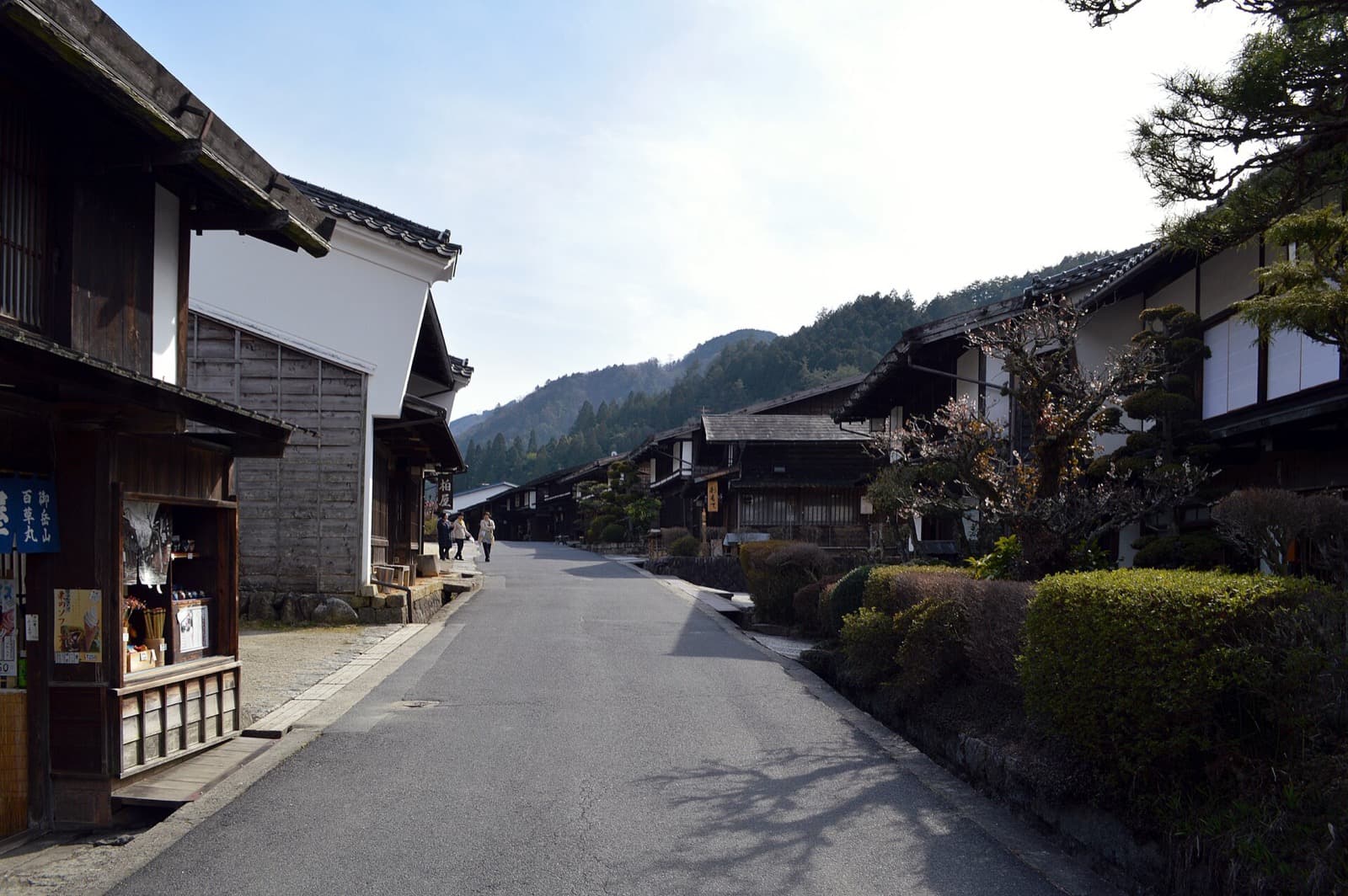
The Nakasendo was one of the great roads of the Edo period, linking Kyoto and Edo through the mountains. Between the post towns of Magome and Tsumago, a stretch of the old road survives as a walking trail through forest, past waterfalls and over stone paving, taking about three hours. Both towns have kept their rows of wooden inns and shops.
Most people walk from Magome to Tsumago: Magome sits higher, so there is less climbing in that direction. From late March to late November, the towns' tourist information centers run a same-day luggage delivery service between them: drop your bag in the morning and collect it at the other end in the afternoon. Check the current fee and drop-off times when you arrive.
2. Kurashiki: a canal town and an art museum
Where: Okayama Prefecture. Getting there: about 17 minutes by local JR train from Okayama, a Shinkansen stop, then a 15-minute walk. Allow: a half day, or an evening and a morning.
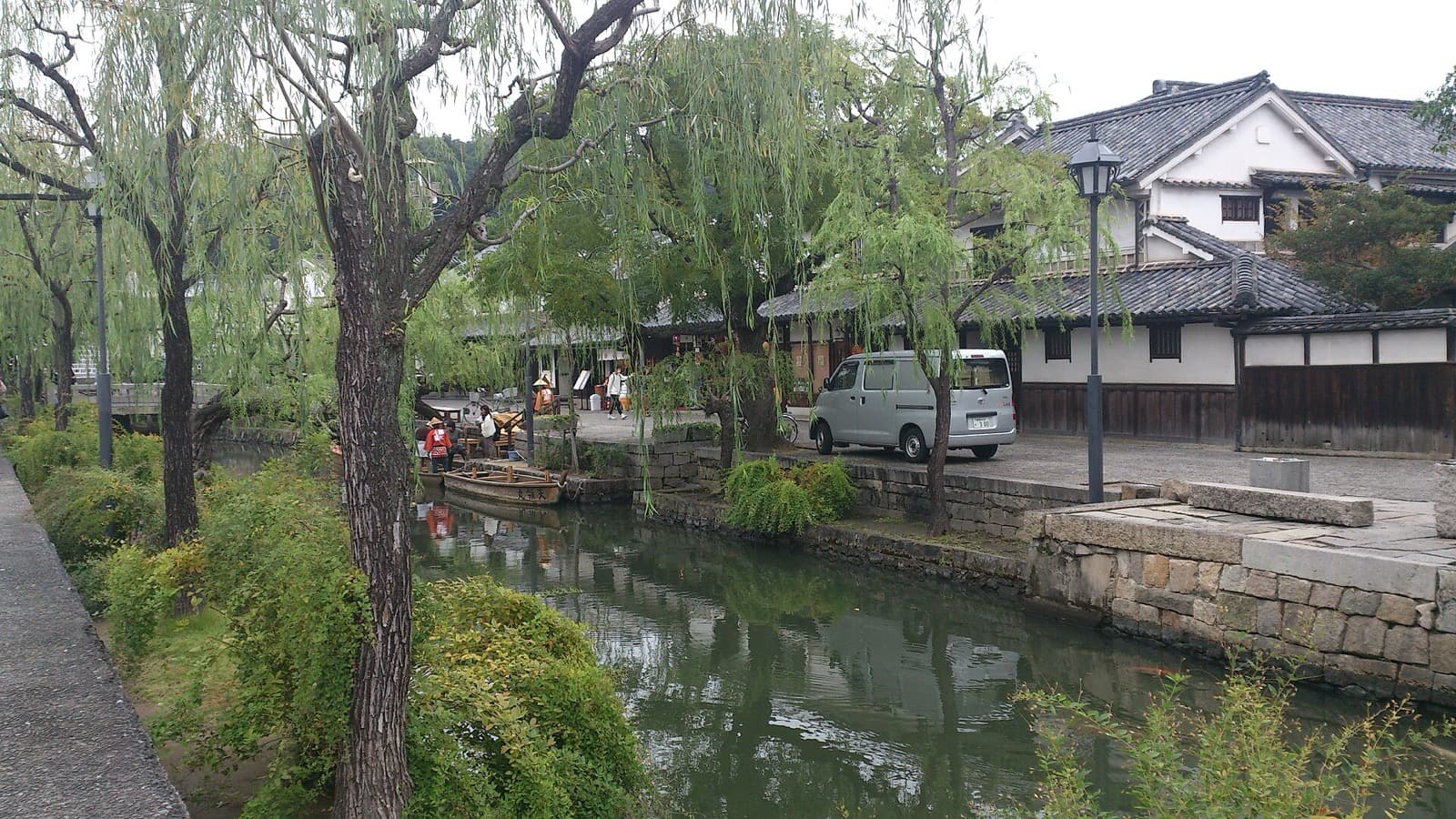
Kurashiki's Bikan historical quarter is built around a willow-lined canal where merchant storehouses with black-and-white walls once held rice and goods for the Edo shogunate's territory. Today they hold cafés, craft shops and small museums. At its center is the Ohara Museum of Art, founded in 1930 as Japan's first private museum dedicated to Western art, with works by Monet, Matisse and El Greco alongside Japanese folk crafts.
Stay the night if you can. The canal is at its best early in the morning and after the day-trippers have left.
3. Onomichi and the Shimanami Kaido
Where: Hiroshima and Ehime prefectures. Getting there: to Onomichi by JR from Fukuyama, a Shinkansen stop. Allow: a full day on the bike, or two with a night on an island.
Onomichi is a hillside port town of temples, steep lanes and cats, with views over the Inland Sea. It is also the start of the Shimanami Kaido, a road that crosses six islands on a chain of bridges to Imabari on Shikoku. The cycling route along it is about 70 km, with dedicated bike lanes on the bridges.
You don't have to ride it all. Rental terminals in Onomichi and on the islands let you pick up a bike in one place and leave it at another, so you can ride a section and take a bus or ferry back. Strong riders do the full route in a day; most people are happier stopping overnight on Ikuchijima or Omishima.
4. Matsue and the Adachi Museum of Art
Where: Shimane Prefecture, on the Sea of Japan side. Getting there: about two and a half hours from Okayama on the Yakumo limited express. Allow: two days.
Matsue is a quiet castle town on Lake Shinji. Its castle is one of only twelve in Japan whose main keep survives from the feudal era, and it was designated a National Treasure in 2015. The lake is known for its sunsets.
From Matsue, take the train to Yasugi and the free shuttle bus to the Adachi Museum of Art, whose garden has topped an annual ranking of Japanese gardens by an American journal of Japanese gardening every year since 2003. You view the garden through the museum's windows, like a series of paintings, and the museum also holds a large collection of works by the painter Yokoyama Taikan.
5. The Iya Valley
Where: western Tokushima Prefecture, in the mountains of central Shikoku. Getting there: JR to Oboke, then a local bus or a rental car. Allow: two days.
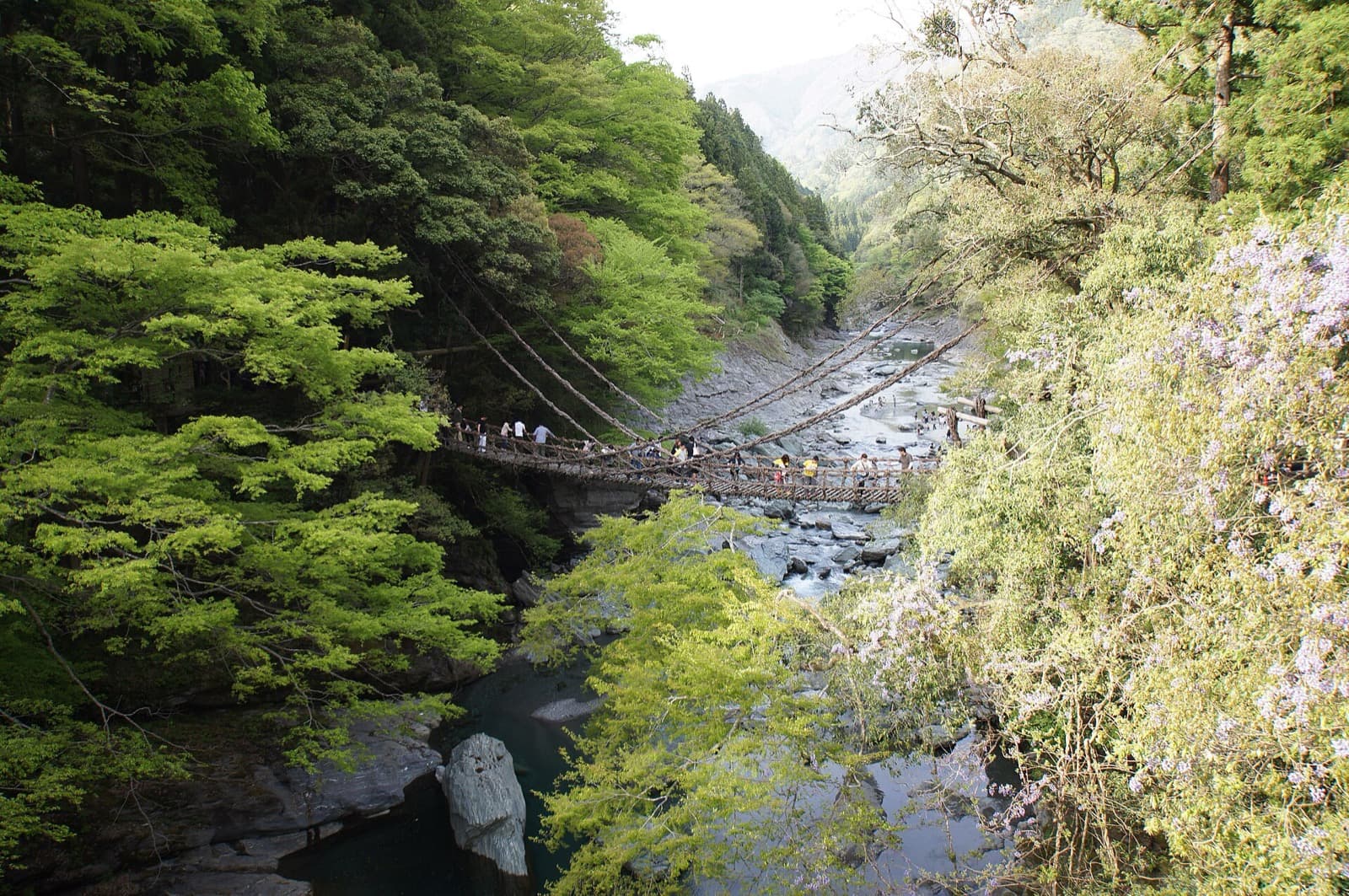
The Iya Valley is one of the most remote places in mainland Japan: steep forested gorges, thatched farmhouses and villages clinging to the slopes. Its best-known sight is the Kazurabashi, a suspension bridge woven from mountain vines, 45 meters long and 14 meters above the river, which is rebuilt every three years. Crossing costs ¥550 for adults, and the gaps between the slats are wide enough to make most people slow down.
Buses through the valley are infrequent, so many visitors rent a car. Stay at least one night: the valley's inns, some in restored farmhouses, are a large part of the reason to come.
6. Ise
Where: Mie Prefecture. Getting there: by Kintetsu train from Nagoya or Osaka. Allow: a day, or a night to see the shrines early.
Ise Jingu is the most sacred Shinto shrine in Japan, a complex of more than a hundred shrines centered on the Inner Shrine (Naiku), dedicated to the sun goddess Amaterasu, and the Outer Shrine (Geku). Every 20 years, the main sanctuaries are rebuilt from new timber on an adjacent site, in a ceremony called the Shikinen Sengu. The last was in 2013, and preparations for the next, in 2033, have already begun.
The approach to the Inner Shrine runs through cedar forest and across the Uji Bridge. Outside, the Oharai-machi and Okage Yokocho streets are lined with restored Edo- and Meiji-style buildings selling akafuku (rice cakes with sweet bean paste) and Ise udon. Visit the Outer Shrine first, as tradition prescribes, and go early, before the tour groups arrive.
7. Kakunodate
Where: Akita Prefecture, in northern Japan. Getting there: about three hours from Tokyo on the Akita Shinkansen. Allow: a day, or combine with a night at an onsen nearby.
Kakunodate's samurai district has kept a street of samurai residences behind black wooden fences, several of them open to visitors, shaded by old trees. In late April, its weeping cherry trees are among the most famous in northern Japan, and the town is busy; the rest of the year it is quiet. It pairs well with a night at Nyuto Onsen, a group of rustic hot spring inns in the mountains nearby.
8. Yakushima
Where: an island south of Kyushu, in Kagoshima Prefecture. Getting there: by high-speed ferry from Kagoshima or by plane. Allow: three days.
Yakushima is a World Heritage site, a mountainous island covered in ancient cedar forest and moss. It is one of the wettest places in Japan, which is why the forests are so green. The Shiratani Unsuikyo ravine, with its moss-covered rocks and streams, is an easy half day. The trek to Jomon Sugi, a cedar estimated to be thousands of years old, takes most of a day and should start before dawn.
Come prepared for rain whatever the forecast, and book your ferry and accommodation early; the island's capacity is small.
How to fit them together
| Place | Nearest big hub | Best combined with |
|---|---|---|
| Nakasendo | Nagoya | Takayama, or Matsumoto |
| Kurashiki | Okayama | Naoshima, Onomichi |
| Onomichi and Shimanami Kaido | Hiroshima, Fukuyama | Kurashiki, Matsuyama |
| Matsue | Okayama | Izumo Taisha shrine |
| Iya Valley | Okayama, Takamatsu | Naoshima, Kotohira |
| Ise | Nagoya, Osaka | Kumano Kodo, Koyasan |
| Kakunodate | Tokyo, Akita | Nyuto Onsen, Hirosaki |
| Yakushima | Kagoshima | Southern Kyushu |
For long journeys between regions, compare a JR Pass with point-to-point tickets; see is the JR Pass worth it. If you are moving every night or two, send your main suitcase ahead with luggage forwarding and travel with a day bag.
FAQ
Where should I go on a second trip to Japan? Somewhere that isn't Tokyo, Kyoto or Osaka. Good choices are the Nakasendo walk between Magome and Tsumago, Kurashiki and Onomichi on the Inland Sea, Matsue on the Sea of Japan coast, and the Iya Valley in Shikoku. If you haven't been yet, Kanazawa and Takayama are easier steps off the main route.
Do I need a car? For most of these, no. The Iya Valley is the exception, where buses are infrequent and a car makes the trip much easier.
What's the best time of year for these places? Spring and autumn for most of them. The Nakasendo luggage service runs from late March to late November. Kakunodate is at its busiest when the cherries bloom in late April. Yakushima is wet all year, but summer brings typhoons.
How far ahead should I book? As soon as your dates are fixed, especially for weekends and Japanese holidays. Small towns have few rooms, and Japanese travelers book early.
Is it harder to travel here without Japanese? A little. There are fewer English signs and fewer English speakers, so a translation app and mobile data matter more than in the big cities.
Travel Desk
The Standard Japan
Trip planning: seasons and crowds, getting around, airports, where to stay, and the practical steps before and after you land.
Facts are taken from primary sources (operators, venues, official tourism and government pages) and dates and prices are checked on the day of writing. Pages are revised when those sources change.
Expertise
Seasonal crowds, transport and airports, itineraries, lodging, pre-trip logistics
Have a question or a correction?
Ask us anything about Japan for Repeat Visitors: 8 Places for Your Third Trip, or tell us what we got wrong. We reply within 24 to 48 hours.
The Standard Newsletter
Tokyo in your inbox. Weekly.
One short email a week: what’s on in Japan, what to book before it sells out, and the guides we’ve just updated.
280+
Guides
Weekly
Editions
Free
Always
Get the weekly email.
One email a week. Unsubscribe anytime.
No spam. We never share your address.
Related Stories
Fukuoka Airport to Hakata & Tenjin: Subway, Shuttle, Bus
Fukuoka's subway reaches Hakata in about 5 minutes, but only from the domestic terminal. International arrivals take a free shuttle or a direct bus.
Hakone Autumn Leaves 2026: Crowds, Traffic, Timing
Hakone's colour moves downhill from late October to early December, and Nov 21–23 is a Japanese long weekend. Where to go, and when to move.
Kansai Airport to Kyoto & Osaka: Haruka, Rapi:t or Bus
From KIX, where you sleep decides the train: Haruka for Kyoto and Umeda, Nankai for Namba, the bus for late landings. Times, visitor fares, traps.