Skip to content

The Best of Tokyo & Japan

Japanese Tea Ceremony Guide: History, Etiquette, Where to Experience in Tokyo and Kyoto

Japanese Tea Ceremony Guide: History, Etiquette, Where to Experience in Tokyo and Kyoto

Complete guide to Japanese tea ceremony (chanoyu/sado): Learn the history, etiquette, and where to experience authentic tea ceremonies in Tokyo and Kyoto. From beginner-friendly sessions to traditional teahouses in 2026.

A
Alex Rivera
·August 11, 2026·13 min read
Share
tea ceremony japanchanoyujapanese culturekyoto culturetokyo experiencesmatchajapanese traditions

Key Takeaways

  • Tea ceremony (chanoyu/sado) is a ritualized way of preparing and serving matcha green tea with deep zen philosophy
  • Four principles — harmony (wa), respect (kei), purity (sei), tranquility (jaku)
  • Ceremony lasts 30min-4 hours depending on style - beginner sessions are 30-60 minutes with English explanation
  • Basic etiquette — bow when entering, rotate tea bowl twice clockwise before drinking, compliment the bowl
  • Best places — Kyoto for traditional teahouses, Tokyo for accessible beginner experiences
  • Cost — ¥2,000-¥5,000 for tourist experiences, ¥8,000-¥15,000 for authentic full ceremonies

The Japanese tea ceremony (chanoyu or sado) is not about drinking tea — it's about choreographed movements, aesthetic contemplation, and creating "ichi-go ichi-e" (一期一会): one time, one meeting. Each ceremony is unrepeatable.

This guide explains what tea ceremony is, why it matters in Japanese culture, proper etiquette, and where to experience authentic tea ceremonies in Tokyo and Kyoto in 2026.

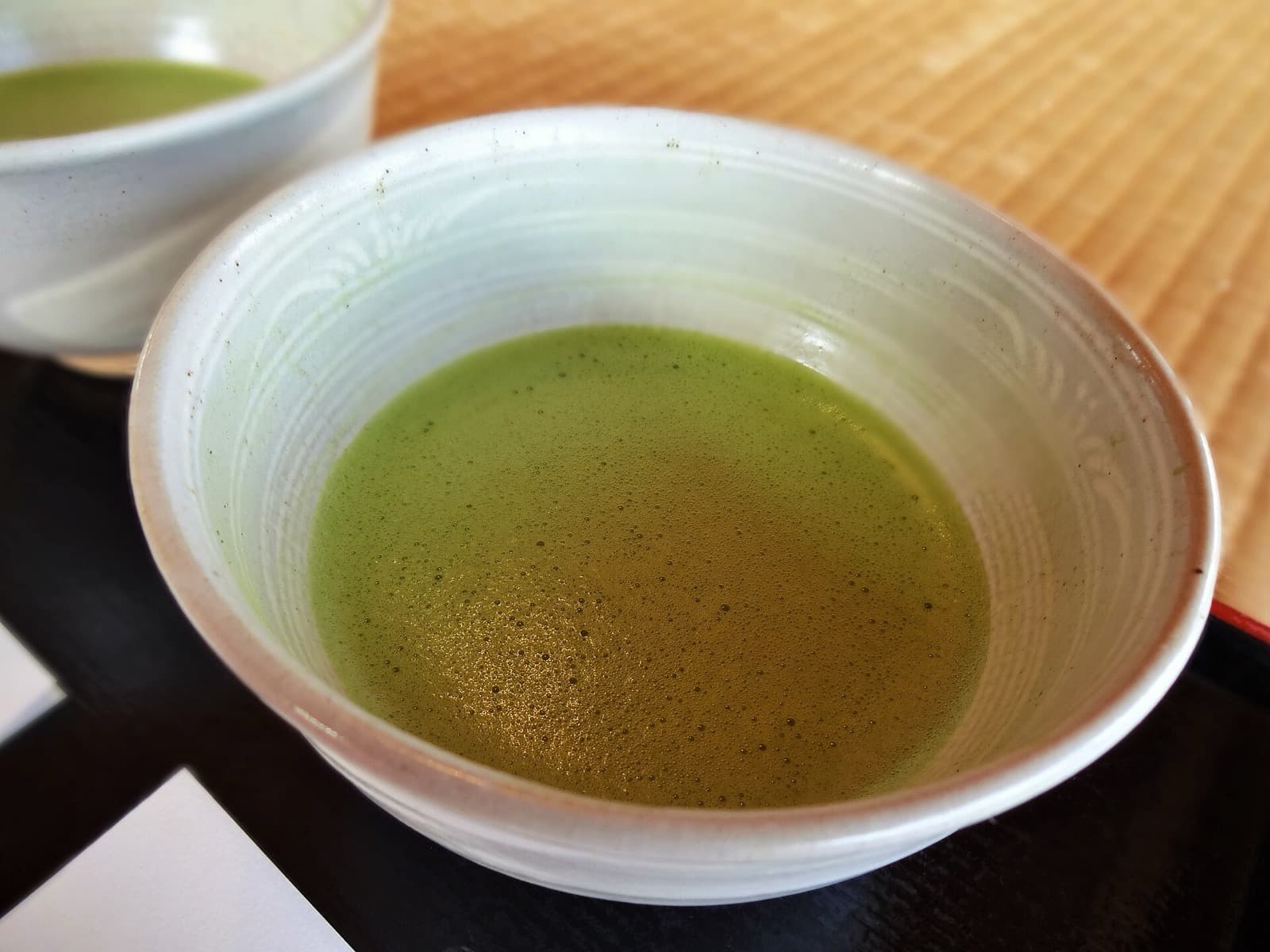
Traditional Japanese tea ceremony with matcha being whisked in ceramic bowl

What Is Japanese Tea Ceremony?

Tea ceremony is a choreographed ritual of preparing, serving, and drinking matcha (powdered green tea). It developed in 15th-16th century Japan, influenced by zen Buddhism and refined by tea masters like Sen no Rikyū.

It's not just about tea — ceremony encompasses:

  • Zen philosophy and mindfulness
  • Aesthetic appreciation (tea bowls, scroll, flowers, architecture)
  • Social etiquette and hierarchy
  • Seasonal awareness
  • Controlled, meditative movements

A full formal tea ceremony (chaji) lasts 4 hours and includes kaiseki meal, thick tea (koicha), and thin tea (usucha). Most tourist experiences are simplified 30-60 minute sessions focused on thin tea.

Four Principles of Tea Ceremony

Wa (和) — Harmony

Harmony between host and guests, harmony with nature, harmony among objects in the room. Everything is chosen to complement everything else.

Kei (敬) — Respect

Respect for tea utensils, respect for guests, respect for the moment. Bowing is essential. Every movement shows consideration.

Sei (清) — Purity

Physical cleanliness of tea room and utensils, but also spiritual purification. Guests wash hands before entering. Host ritually cleans utensils during ceremony.

Jaku (寂) — Tranquility

Inner peace achieved through the ceremony. The goal is to leave worldly concerns outside the teahouse.

These principles (wa-kei-sei-jaku) guide every aspect of the ceremony.

Tea Ceremony Structure

Full Formal Ceremony (Chaji) — 4 Hours

  1. Waiting arbor (15 min) — Guests gather in garden
  2. Entry (10 min) — Guests enter through small door (crawling entrance)
  3. Kaiseki meal (60-90 min) — Light traditional meal
  4. Interlude (15 min) — Guests return to garden
  5. Thick tea (koicha) (45 min) — Shared bowl, intense matcha
  6. Thin tea (usucha) (30 min) — Individual bowls, lighter matcha
  7. Departure (10 min) — Formal goodbyes

Who does this — Tea ceremony practitioners, students, and very dedicated cultural tourists.

Simplified Tourist Ceremony (Chakai) — 30-60 Minutes

  1. Introduction (5-10 min) — Explanation of ceremony and etiquette
  2. Purification (5 min) — Host cleanly tea utensils
  3. Tea preparation (10 min) — Whisking matcha, ceremonial movements
  4. Serving (5 min) — Presentation of tea and wagashi (sweet)
  5. Drinking (10 min) — Proper way to receive and drink tea
  6. Q&A (5-10 min) — Questions and discussion

This is what most tourists experience — accessible, educational, authentic but condensed.

Tea Ceremony Etiquette (What to Do)

Before Entering the Tea Room

  1. Remove shoes — Place neatly, toes pointing outward
  2. Wash hands — Use tsukubai (stone water basin) if available
  3. Silence phone — No phones inside tea room
  4. Calm yourself — Take moment to transition from outside world

Entering the Tea Room

  1. Bow at entrance — Small bow before entering
  2. Duck through door — Nijiri-guchi (small tea room entrance) requires crawling; symbolizes equality (everyone enters humbly)
  3. Appreciate the scroll — Look at hanging scroll (tokonoma) and give small bow
  4. Sit in seiza — Kneel on tatami with legs folded under (or cross-legged if seiza is painful — hosts understand foreigners struggle with this)

Receiving and Drinking Tea

  1. When tea is placed before you — Bow and say "otemae choudai itashimasu" (I gratefully receive)
  2. Acknowledge the person next to you — Slight bow to guest on your right, saying "osakini" (excuse me for going first)
  3. Pick up bowl with right hand, place in left palm
  4. Rotate bowl 90° clockwise twice — This turns the front (most beautiful side) away from you (humility)
  5. Drink in 3-4 sips — Make soft slurping sound on last sip (shows appreciation)
  6. Wipe rim with fingers where your lips touched
  7. Rotate bowl counter-clockwise twice to return front to original position
  8. Place bowl on tatami, admire it — Look at the design, craftsmanship
  9. Ask about the bowl if you wish — "This bowl is beautiful, where is it from?"
  10. Return bowl to host with bow

After Tea

  1. Eat the wagashi (sweet) — Served before tea to balance matcha's bitterness
  2. Appreciate tea utensils if host displays them — Natsume (tea caddy), chashaku (tea scoop), etc.
  3. Exit gracefully — Bow at tokonoma, bow at entrance, exit quietly

Don't stress perfect form — Hosts understand beginners will make mistakes. Sincere effort matters more than perfection.

What Not to Do at Tea Ceremony

  • ❌ Wear strong perfume or cologne (distracts from subtle incense and tea aroma)
  • ❌ Arrive late (disrupts harmony)
  • ❌ Take photos during ceremony unless explicitly permitted
  • ❌ Talk loudly or casually (quiet, respectful tone only)
  • ❌ Touch scrolls or decorations without permission
  • ❌ Step on tatami seams (walk between seams)
  • ❌ Refuse the tea (it's highly impolite)
  • ❌ Rush — ceremony is about slowing down

Best Places for Tea Ceremony in Tokyo

En (縁) — Shibuya

Foreigner-friendly tea ceremony experience with English-speaking instructors. Casual atmosphere, perfect for beginners.

  • Location — Shibuya (near Meiji Shrine)
  • Duration — 60 minutes
  • Price — ¥3,000-¥4,000
  • Language — English available
  • Reservations — Book online, easy
  • Style — Simplified but authentic

Good first tea ceremony experience.

Happo-en Garden — Meguro

Beautiful traditional Japanese garden with authentic tea houses. More formal setting than En.

  • Location — Shirokanedai, Meguro
  • Duration — 45-60 minutes
  • Price — ¥2,000-¥3,000
  • Setting — Traditional tea house in stunning garden
  • Language — Some English support

Pair with garden walk — stunning year-round.

Maikoya Tokyo — Asakusa

Cultural experience center with tea ceremony, kimono wearing, and other activities.

  • Location — Asakusa (near Sensoji Temple)
  • Duration — 60-90 minutes
  • Price — ¥4,000-¥5,000 (includes kimono wearing)
  • Language — English
  • Style — Tourist-oriented but educational

Combines multiple cultural experiences — good value.

Urasenke Foundation — Shibuya

One of three main schools of tea ceremony. Offers formal lessons and occasional public demonstrations.

  • Location — Shibuya
  • Price — Varies (demonstrations free, lessons ¥3,000-¥8,000)
  • Level — Beginner to advanced
  • Authenticity — Highest level

For serious learners, not casual tourists.

Best Places for Tea Ceremony in Kyoto

Kyoto is the spiritual home of tea ceremony. More traditional, more formal, more atmospheric than Tokyo.

Camellia Tea Ceremony — Gion

Located in Kyoto's geisha district, intimate setting, excellent English explanation.

  • Location — Gion, Kyoto
  • Duration — 45 minutes
  • Price — ¥3,000
  • Language — English
  • Atmosphere — Traditional machiya (townhouse)

Highly reviewed by tourists, good balance of authenticity and accessibility.

En (Kyoto Branch) — Near Kinkakuji

Sister location to Tokyo En, set in traditional building near Golden Pavilion.

  • Location — Kinkakuji area
  • Duration — 60 minutes
  • Price — ¥3,500
  • Language — English
  • Pairing — Combine with Kinkakuji Temple visit

Convenient for tourists doing standard Kyoto route.

Ju-An Tea House — Daitokuji Temple

Authentic tea house within Daitokuji zen temple complex. More formal, traditional setting.

  • Location — Daitokuji Temple, North Kyoto
  • Duration — 60-90 minutes
  • Price — ¥5,000-¥8,000
  • Reservations — Required well in advance
  • Level — Intermediate (some tea knowledge helpful)

For those who want deeper, more traditional experience.

Urasenke Foundation (Kyoto HQ) — Central Kyoto

Headquarters of Urasenke school, one of three main tea ceremony schools. Offers formal lessons and demonstrations.

  • Location — Central Kyoto
  • Price — Varies
  • Authenticity — Highest level
  • For — Serious students only

Not for casual tourists — this is where tea ceremony practitioners train.

Tea Ceremony Styles and Schools

Three main schools of tea ceremony (all descended from Sen no Rikyū):

Urasenke (裏千家)

Most popular school. Known for more accessible, slightly less formal style. Uses tea bowls with decorative fronts.

Omotesenke (表千家)

Emphasizes simplicity and traditional forms. Stricter etiquette, more formal.

Mushakōjisenke (武者小路千家)

Smallest of three schools, focuses on rustic simplicity.

Does it matter for tourists? Not really. All three schools share core principles. Most tourist experiences don't strictly follow one school.

Matcha Tea: What You're Drinking

Matcha (抹茶) is powdered green tea made from shade-grown tea leaves (tencha). Entire leaf is consumed, so it's more intense and nutritious than steeped tea.

Two types used in ceremony

Usucha (薄茶) — Thin Tea

  • Consistency — Frothy, lighter
  • Taste — Slightly bitter, grassy, refreshing
  • Whisked — Until foamy
  • Served — Individual bowls
  • Most common in tourist experiences

Koicha (濃茶) — Thick Tea

  • Consistency — Thick paste, almost syrupy
  • Taste — Intense, very bitter, rich
  • Mixed — Stirred slowly, not whisked
  • Served — Shared bowl, passed among guests
  • Reserved for — Formal ceremonies, special occasions

Tea Ceremony Utensils

Essential Tools

ItemJapanesePurpose
Tea bowlChawan (茶碗)Holds tea, chosen for season and aesthetics
Tea whiskChasen (茶筅)Bamboo whisk for mixing matcha
Tea scoopChashaku (茶杓)Bamboo scoop for measuring matcha
Tea caddyNatsume (棗)Lacquer container holding matcha powder
Water ladleHishaku (柄杓)Bamboo ladle for hot water
Waste water bowlKensui (建水)Holds used water
Tea clothFukusa (袱紗)Silk cloth for ritual cleaning

Each utensil is chosen carefully for season, occasion, and aesthetic harmony.

Seasonal Elements in Tea Ceremony

Tea ceremony changes with seasons:

SeasonScroll ThemeFlowersTea Bowl StyleRoom Setup
SpringCherry blossoms, renewalPlum, camelliaLight colors, thin porcelainOpen hearth
SummerWater, coolnessHydrangea, morning gloryGlass or cool-colored glazesBrazier moved
AutumnMoon, harvestChrysanthemum, autumn leavesWarm earth tonesReturn to sunken hearth
WinterSnow, stillnessCamellias, pineDark, heavy stonewareSunken hearth for warmth

This seasonal consciousness is fundamental to Japanese aesthetics. See also cherry blossom guide and autumn Japan.

Cost of Tea Ceremony Experiences

TypeDurationPriceBest For
Tourist intro30-45 min¥2,000-¥3,000First-timers
Full experience60-90 min¥3,500-¥5,000Cultural immersion
Premium/authentic2-3 hours¥8,000-¥15,000Serious interest
Formal lesson2+ hours¥10,000-¥20,000Students of tea

Most tourists do ¥3,000-¥4,000 experiences. Worth it for cultural understanding.

How to Book Tea Ceremony Experience

Online Platforms

  • Airbnb Experiences — Many tea ceremony hosts list here, reviews available
  • Viator/GetYourGuide — Tourist-focused booking platforms
  • Individual websites — Some tea houses have direct booking

Through Hotels

Higher-end hotels in Kyoto and Tokyo can arrange private tea ceremonies at partner tea houses. Concierge service, usually more expensive but hassle-free.

Walk-in

Some locations (Happo-en Garden Tokyo, certain Kyoto temples) offer walk-in tea experiences during specific hours. Availability limited.

Recommendation — Book at least 1 week ahead for popular experiences, 2-4 weeks for Kyoto in peak seasons.

Learning Tea Ceremony Long-Term

If tea ceremony resonates deeply, you can study formally:

In Japan

  • Urasenke, Omotesenke, or Mushakōjisenke schools offer courses
  • Commitment: Years to decades
  • Lessons: Weekly or bi-weekly, ¥5,000-¥10,000 per month
  • Language: Japanese required for serious study

Outside Japan

  • Many cities globally have tea ceremony schools affiliated with Japanese schools
  • Check Urasenke or Omotesenke international chapters

Tea ceremony is lifelong practice — masters study 30-40+ years.

FAQ

What is Japanese tea ceremony? Tea ceremony (chanoyu or sado) is a choreographed ritual of preparing and serving matcha (powdered green tea). It's a meditative practice rooted in zen Buddhism emphasizing harmony, respect, purity, and tranquility.

How long does a tea ceremony last? Tourist experiences: 30-60 minutes. Traditional simplified ceremony (chakai): 60-90 minutes. Full formal ceremony (chaji): 4 hours including meal.

How much does tea ceremony cost? Tourist experiences: ¥2,000-¥5,000. Authentic experiences: ¥8,000-¥15,000. Private formal ceremonies: ¥20,000+.

What should I wear to tea ceremony? Modest, comfortable clothing (you'll sit on floor). Avoid short skirts, strong perfumes, or flashy accessories. Clean socks (you'll remove shoes). Some places provide or rent kimono.

Do I need to speak Japanese for tea ceremony? No — most tourist-oriented tea ceremonies offer English explanations. Kyoto and Tokyo have many English-friendly options.

What is the difference between tea ceremony in Tokyo vs Kyoto? Tokyo ceremonies are generally more accessible, modern settings, English support. Kyoto ceremonies are more traditional, historic tea houses, deeper cultural atmosphere. Both offer authentic experiences.

Can I take photos during tea ceremony? Usually not during the ceremony itself (disrupts atmosphere). Before/after is often okay. Always ask permission first.

What is the tea used in tea ceremony? Matcha — powdered green tea from shade-grown leaves. Two types: usucha (thin tea, common in tourist experiences) and koicha (thick tea, formal ceremonies only).

Is it hard to sit in seiza position? Yes, for most foreigners. Legs fall asleep. Hosts understand — you can sit cross-legged or shift position as needed. Don't suffer in silence.

What is ichi-go ichi-e? "One time, one meeting" (一期一会) — core tea ceremony philosophy meaning each gathering is unique and unrepeatable. Approach each ceremony with full presence and appreciation.

Need Help with This?

Have questions about Japanese Tea Ceremony Guide: History, Etiquette, Where to Experience in Tokyo and Kyoto? We're here to help. Send us a message and we'll get back to you within 24-48 hours.

Alex Rivera

Alex Rivera

Travel & Living Editor

6 years in Japan

Expat guide. Helps people actually move to and navigate Japan.

Moved from London to Tokyo in 2018. Went through the full gaijin experience—visa, housing, banking, the works. Now writes the guide he wished he had.

Tokyo

Expertise

Moving to Tokyo, expat life, travel, Kyoto vs Tokyo, onsen

The Standard Newsletter

Tokyo in your inbox. Weekly.

No algorithms curating your culture. No sponsored content disguised as journalism. Just the real Tokyo — the izakayas at 2am, the Harajuku kids who never made it to the algorithm, the ramen shop with no sign.

8K+

Subscribers

Weekly

Editions

Free

Always

Join the underground.

One email a week. Unsubscribe anytime.

No spam. No sharing your data. Tokyo only.

Related Stories
More →