
Japanese Knitwear: BATONER, Yonetomi and COOHEM
Compare BATONER, Yonetomi and COOHEM by knit construction, texture, fit and care, with Tokyo shopping details and questions to ask before buying.
Some travel links on The Standard Japan are affiliate links. If you book through one, we may earn a commission at no extra cost to you.
Start with the sweater you will actually wear: against a T-shirt, under a coat, or next to your skin. That decision is more useful than deciding that cashmere is always better than wool, or that the chunkiest knit is the best-made one.
Japan's knitwear labels give you several ways to approach the same wardrobe gap. This guide focuses on BATONER, Yonetomi and COOHEM because their official descriptions explain how the garments are developed. It is a buying guide based on those sources, checked on 16 November 2026, not a hands-on durability test.
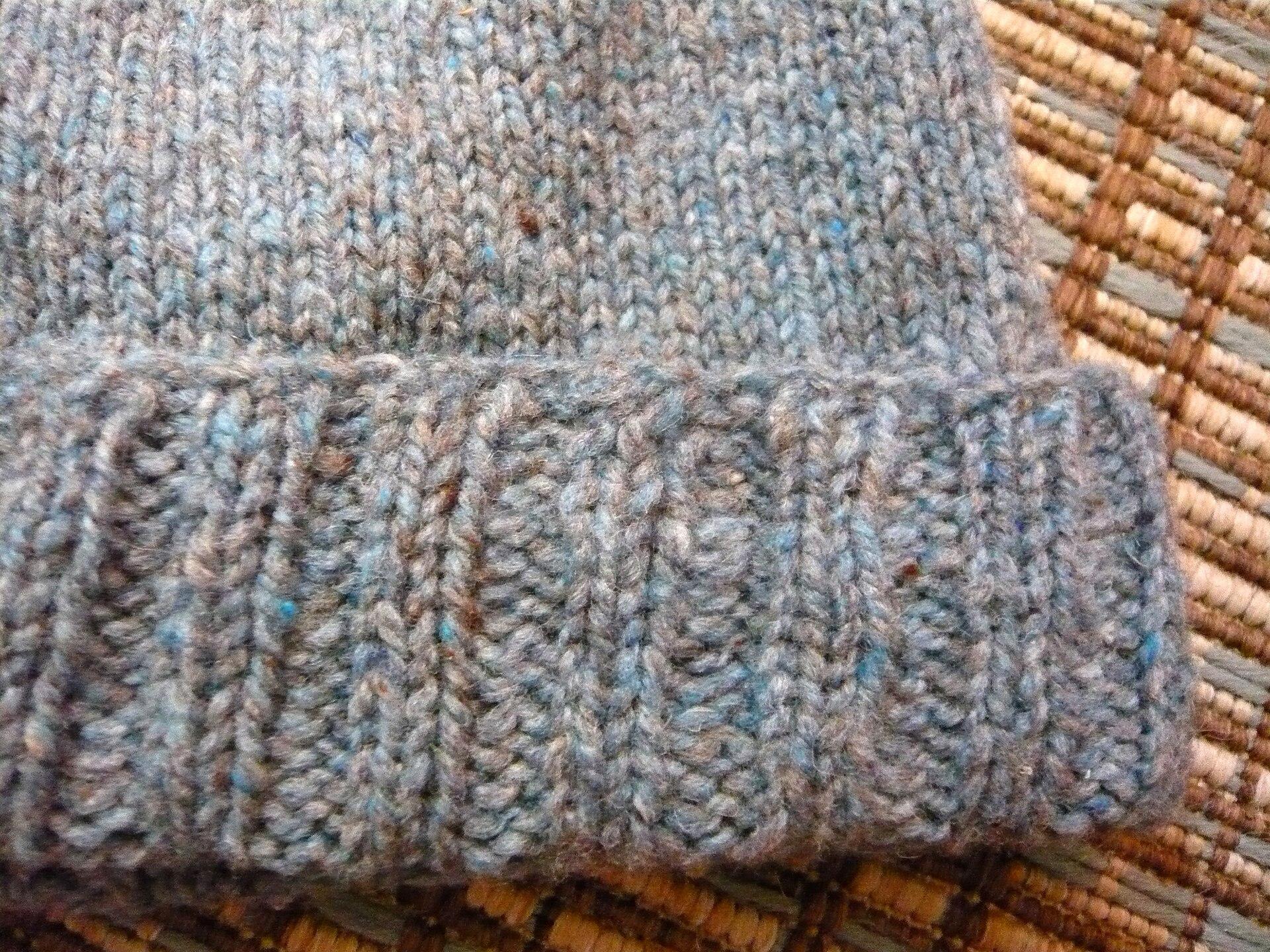
The cover and stitch photographs are construction references. They do not show products made by these labels.
Three labels, two manufacturing businesses
BATONER began as a label of Okuyama Meriyasu in Sagae, Yamagata. Yonetomi and COOHEM come from Yonetomi Seni. That relationship matters: two different-looking labels may share a manufacturing organisation while offering different design choices.
| Label | Company relationship | Start with | Compare before buying |
|---|---|---|---|
| BATONER | A brand of Okuyama Meriyasu | A named construction or material range, such as SIGNATURE | Weight, texture, shape and the individual care label |
| Yonetomi | A label of Yonetomi Seni | New Basic pieces with classic knit structures | The particular material combination and its role in your wardrobe |
| COOHEM | Yonetomi Seni's first in-house brand | Expressive combinations of colours and materials | Surface texture, movement and how much visual detail you want |
Source: BATONER factory information and official shop; Yonetomi Seni Original Brands, checked 16 November 2026. Shopping starting points are editorial interpretations.
Pick two actual garments to compare. A company relationship explains provenance; it does not make their fabrics, fits or care instructions interchangeable.
BATONER: compare the range, not just the name
BATONER's factory history places the brand's start in Sagae in 2013 and identifies Okuyama Meriyasu as its parent factory. Its official shop separates men's, women's and unisex products and offers several material and construction ranges.
The useful next step is to compare items within that range. A crew neck, a cardigan and a zip-front knit solve different layering problems, even when their yarn description sounds similar. Consider whether you need room for a shirt underneath or enough clearance to wear the knit under your usual jacket.
As a dated price reference, the official women's catalogue listed SIGNATURE CREW NECK at ¥33,000 including tax on 16 November 2026. Other products cost different amounts; this is not a universal BATONER sweater price or a promise of stock. Official women's catalogue
For a Tokyo try-on, the flagship directory lists 1F Yoshida Building, 3-41-3 Jingumae, open 12:00–20:00 and closed Wednesdays. Ask about the model and size before travelling. Official flagship information
Yonetomi: ordinary-looking knits need close comparison
Yonetomi describes New Basic as combining classic knit structures with distinctive material combinations. A simpler surface can make colour, proportion and feel more important to your decision, because there is less pattern doing the work of the outfit.
Try the neck opening and cuff rather than judging only the body width. Check the length both standing and seated. If you intend to tuck the front into trousers or wear it over a longer shirt, try that arrangement before deciding the hem is right.
A useful comparison is a knit you already wear frequently. What would the new piece change: the weight under a coat, a cleaner hem, a different neckline, or a colour you cannot currently combine? If the answer is only the label inside, you may not need another sweater.
For a concrete comparison, its official shop listed a WAVE COTTON KNIT PULLOVER at ¥26,400 and RIGID CASHMERE SWEATER Crew Neck Pullover at ¥51,700, including tax, when checked on 16 November 2026. Those are product snapshots, not evidence that one fibre is always the better purchase. Official Yonetomi range
A useful care example is the RIGID CASHMERE Muffler – Raw: its product page specifies 100% cashmere and permits hand-washing, while explicitly warning that shrinkage can occur depending on washing conditions. Read the instructions for your own item rather than extending this permission to other cashmere knits. Official muffler specification
Yonetomi's official company page links to its own shop. Use that connection to find the correct retailer rather than assuming an account using the brand name is authorised.
COOHEM: let texture be the main decision
COOHEM is also a Yonetomi Seni label, not an unrelated manufacturer. The company's description emphasises the combination of colours and materials in its knit textiles and says its production process is conducted on-site at the factory.
This is the comparison to investigate if you want the textile surface to be visible in the outfit. Look at a piece from a normal conversation distance as well as close up. A texture that is fascinating in a product photograph may be more pattern than you want for everyday wear.
Try it with something plain that you already own. With a cardigan or jacket-like knit, check the inside surface and how it moves over a shirt sleeve. Ask whether an individual design has any areas that need particular care around jewellery, bags or fastenings. Do not infer a snag-resistance rating from a textured appearance.
The official company page links to COOHEM's own site, where you can inspect the current collection and retailer information.
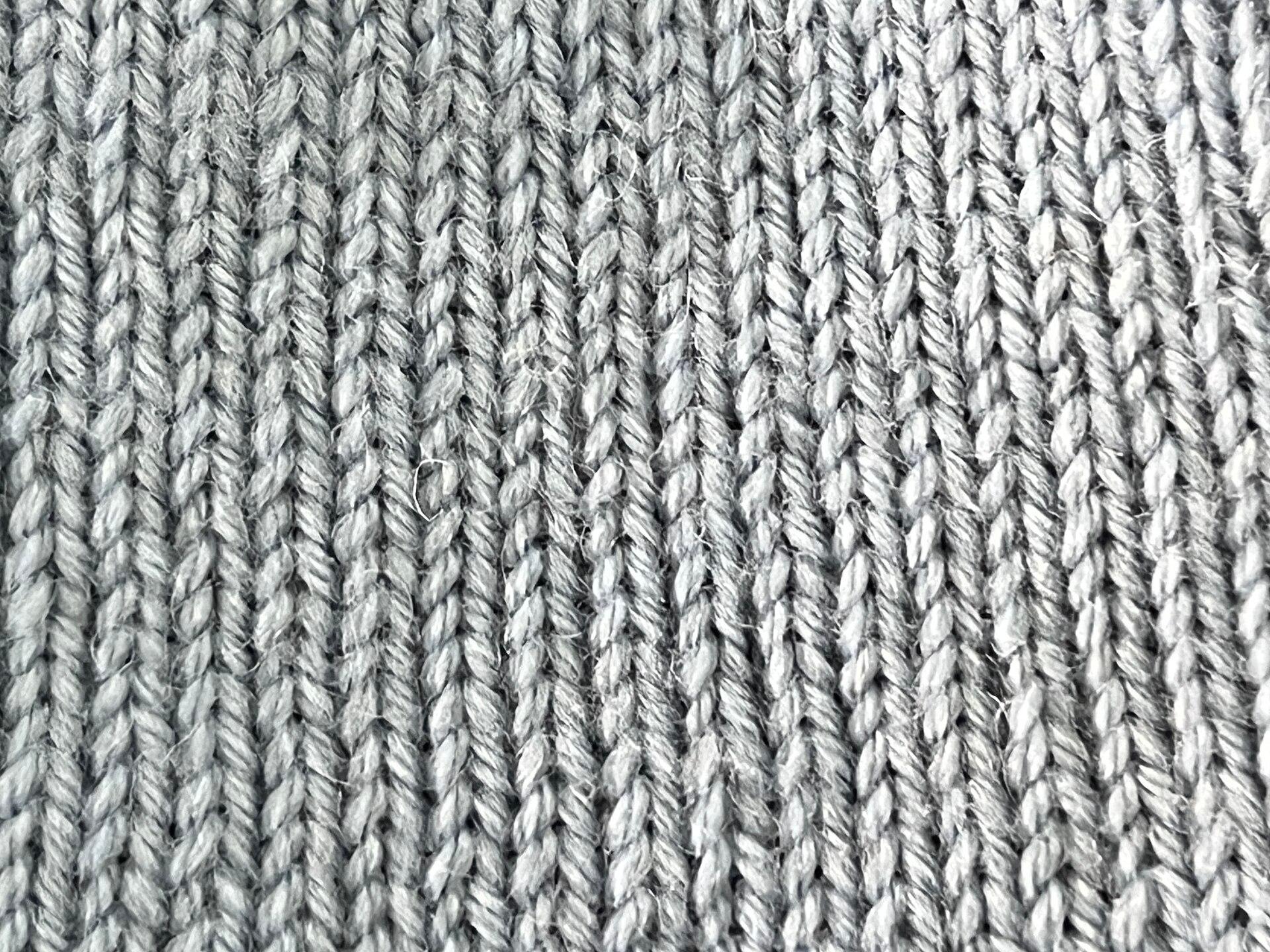
Stockinette shows repeated V-shaped stitches. This generic reference helps make construction visible; it is not a photograph of a shortlisted brand's garment.
Wool, cashmere, cotton and gauge: what do they tell you?
A fibre name describes material, not the whole garment. BATONER's fabric and care guide discusses materials, dyeing and gauge separately. That is a useful model for reading a product description.
Composition tells you which fibres are used and in what proportions. Gauge describes the knitting machine's needle density. Structure describes how the knitted surface is formed. None is a standalone ranking of quality.
A fine-looking knit and a substantial rib can be useful for different jobs. If you want a layer underneath a fitted jacket, judge the complete combination. If you want the sweater to be your outermost layer indoors, its shape and surface may matter more than how small it packs.
Do not assume a cotton knit should be treated like a cotton T-shirt, or that every wool garment should be hand-washed. The garment's own care label is the instruction that matters.
What to check while trying on
Keep the comparison focused on how the garment behaves on you.
| Check | What to do | Why it changes the purchase |
|---|---|---|
| Neck and skin contact | Try it with the layer you intend to wear | Comfort over a shirt does not answer comfort against skin |
| Sleeves and cuffs | Bend your elbows and reach forward | A good standing photograph can hide an inconvenient sleeve length |
| Hem | Sit down, then stand without pulling it into place | You need to like where the garment settles naturally |
| Layering | Put your own coat or jacket over it | Volume and surface can change the complete outfit |
| Care | Read the label before leaving the shop | Cleaning and drying requirements become part of ownership |
Source: The Standard Japan editorial shopping checklist. These are fitting questions, not laboratory performance claims.
If you like the fabric but keep adjusting the hem, try a different model rather than accepting an irritating fit as part of the brand's aesthetic.
Care before the first wash
BATONER recommends letting knitwear rest after wearing, allowing absorbed moisture to dissipate before storage, and checking the washing symbols before laundering. Its guide also discusses gentle brushing rather than rubbing the surface. Those are the maker's general recommendations; a particular garment's instructions still take priority. Official fabric and care guidance
Before paying, ask how to handle a spill, how the item should be dried after its permitted cleaning method, and whether the seller offers a repair service. These are more useful ownership questions than an unsupported promise that a sweater will never pill.
Keep the product reference and care label information with the receipt. If you buy from an overseas retailer later, the reference helps distinguish a similar-looking garment from the same one.
Buying in Japan or ordering from abroad
Start from the brand's own shop or stockist directory. BATONER's official site separates its Japan and overseas online stores, so check the correct storefront for your destination. Yonetomi's company page links to its own labels and shop.
Compare the final cost, return conditions and size information for your country. Do not assume a Japanese domestic price includes overseas shipping or import charges. Nor should you assume a factory address is a walk-in shop: production information and retail opening information are different.
If you are visiting Tokyo, confirm the exact model before building a day around a store. Our minimalist clothing guide adds AURALEE, ATON and Graphpaper to the wider comparison; our Japanese fabric guide explains more of the textile vocabulary.
Questions readers ask
Are Yonetomi and COOHEM the same brand?
They are distinct labels within Yonetomi Seni. Check each product's design, fit and care rather than treating the labels as interchangeable.
Is cashmere automatically the best choice?
A fibre name cannot settle the fit, thickness, construction or care of a finished garment. Decide how you will wear it, then compare the particular pieces. This guide does not rank fibre types by durability or value.
Does Japanese knitwear run small?
There is no reliable rule for every label and model. Compare the retailer's garment measurements with a knit you own, and check how the seller measures sleeves. Try the actual silhouette when possible.
Can I visit the factories?
Do not treat a company address as an invitation to enter. Use published retail details or contact the business about any explicitly offered visit. BATONER's Tokyo flagship is a documented shopping option; its factory history describes a different location and purpose.
Style Desk
The Standard Japan
Shopping and fashion in Japan: denim, vintage, streetwear, and where each scene actually lives.
Facts are taken from primary sources (operators, venues, official tourism and government pages) and dates and prices are checked on the day of writing. Pages are revised when those sources change.
Expertise
Japanese denim, vintage, streetwear, shopping districts
Have a question or a correction?
Ask us anything about Japanese Knitwear: BATONER, Yonetomi and COOHEM, or tell us what we got wrong. We reply within 24 to 48 hours.
Related Stories

Japanese Minimalist Brands: AURALEE, ATON and Graphpaper
Compare AURALEE, ATON and Graphpaper by fabric, silhouette and fit, with Tokyo shop details and a practical checklist for your first purchase.
Luxury Shopping in Tokyo: Ginza or Aoyama?
Plan Tokyo luxury shopping around Ginza's boutiques or Aoyama's Japanese designers, with verified stores and questions to ask before buying.
Buying Watches in Japan: Brands, Shops and Warranty
Compare Seiko, Grand Seiko, Citizen, Casio and Orient, plan Tokyo watch shops, and check warranty, used condition and the new tax-free refund process.