
Japanese Fabrics: Makers, Weaves and What to Buy
Understand Japanese fabrics through KAIHARA, NUNO, HOSOO and tamaki niime: cloth versus clothing, weave terms, retail options and buying checks.
Some travel links on The Standard Japan are affiliate links. If you book through one, we may earn a commission at no extra cost to you.
“Japanese fabric” is the beginning of a question, not a complete specification. It might mean denim woven by a large manufacturer, an experimental textile developed with specialist workshops, or cloth made into a finished shawl. Those lead to different shops, prices and practical decisions.
Start with what you want to take home: a garment, a piece of cloth for sewing, a textile for an interior project, or a finished object that lets you appreciate the weave without making anything yourself.
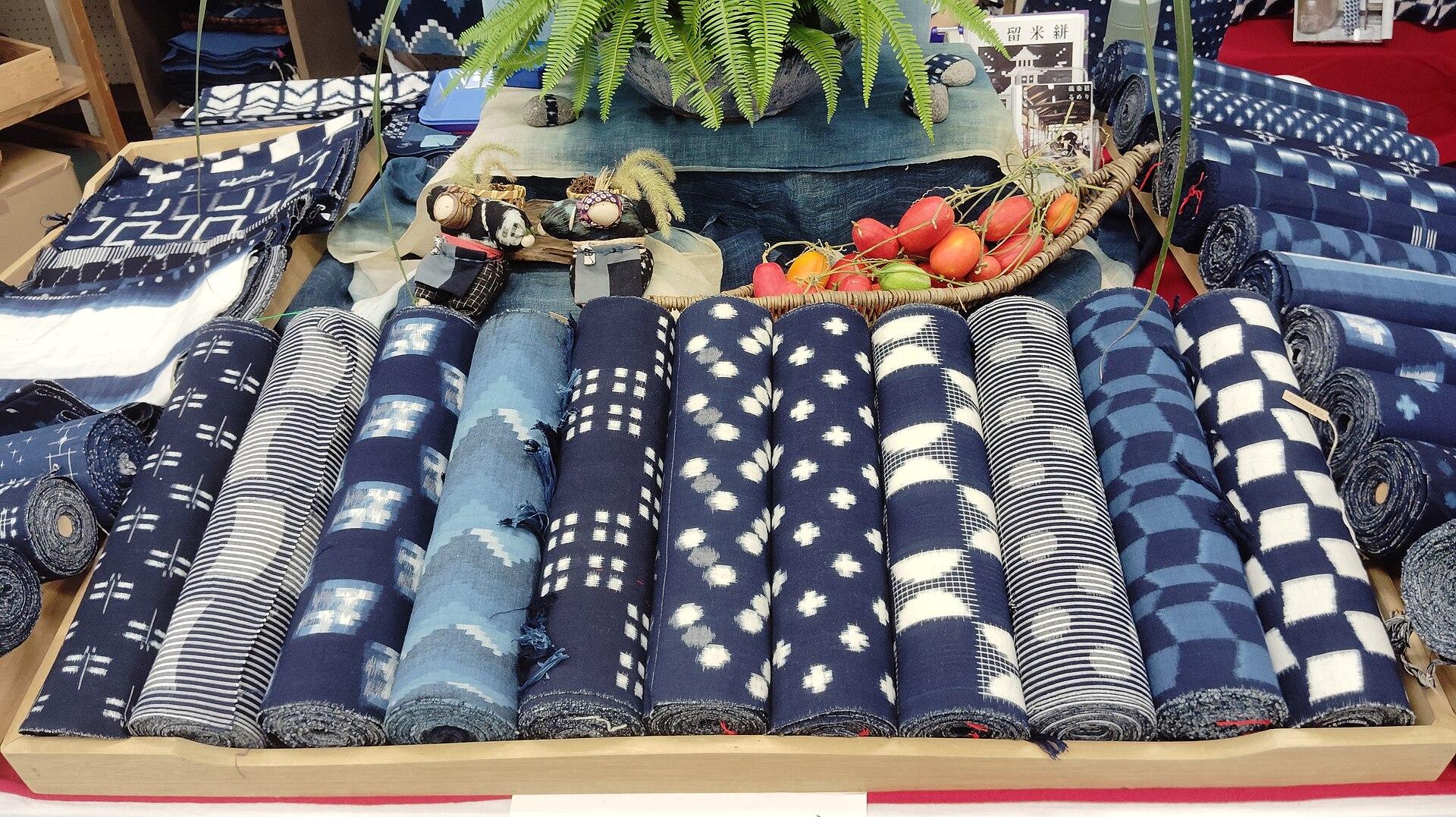
The maker and shop information below was checked against official sources on 16 November 2026. The cover shows Kurume kasuri cloth at Hirokawa Town Industrial Exhibition Hall. It is a reference for that textile tradition, not a display from one of the four businesses compared below.
Four makers and designers, four buying routes
KAIHARA's denim production, NUNO's textile development, HOSOO's contemporary weaving and tamaki niime's original cloth offer different ways into the subject. Do not assume an industrial mill has the same walk-in retail arrangements as a design shop.
| Business | What the official source describes | A useful starting point | Do not assume |
|---|---|---|---|
| KAIHARA | Denim manufacturing through multiple production stages | Understanding the cloth behind a garment | A factory address is a public fabric shop |
| NUNO / NUNO WORKS | Textile development; NUNO WORKS also offers printed fabrics | Design-led cloth and enquiries about cut lengths | Every textile has the same care or sale format |
| HOSOO | Contemporary textiles manufactured at its Kyoto facility and workshop | A specified textile or a home/design project | An interior textile is automatically right for a shirt |
| tamaki niime | Original fabric and finished works developed from Banshu-ori | A shawl or garment, with the cloth as part of the purchase | Every item is handwoven or every piece of cloth is sold by the metre |
Source: KAIHARA production information, NUNO About and Shops, HOSOO Design & Craftsmanship, and tamaki niime brand and production information, checked 16 November 2026.
Choose the intended use first. Then ask the relevant business about the specific product and purchase format.
KAIHARA: understand the manufacturer behind denim
KAIHARA's production information follows denim through stages including spinning, dyeing and weaving. It is a useful reminder that a jeans label and a fabric producer are not necessarily the same business.
When you see a garment described as using a mill's denim, ask what the claim covers. Does the product identify the cloth, its weight, composition and wash state? The mill's name alone does not tell you the cut of the jeans or how the finished garment was treated.
For someone sewing, the next question is whether a retailer sells that exact cloth in a suitable quantity. Do not plan a factory visit on the assumption that industrial production also means walk-in cut-length sales. KAIHARA publishes a separate archive visitor page with specified opening dates and an application process; it is not a general invitation to enter production areas. Official archive visitor information
For ready-to-wear jeans, start with our Japanese denim buying guide. For wash state and shrinkage questions, use the denim sizing and care guide.
NUNO: textile design is more than a familiar fibre
NUNO describes working with weavers and dyers in Japan, combining traditional practices and newer technologies. Its NUNO WORKS line includes textiles printed with techniques such as silk screens, stamps and stencils.
This makes it a useful place to investigate when you want the construction, surface or print to be the main feature. Ask to see how the cloth hangs and how the reverse looks. A striking small sample does not tell you how a large panel or garment will behave.
The official shop directory places NUNO Tokyo in the basement of the AXIS Building at 5-17-1 Roppongi. It lists 11:00–19:00, holidays until 18:30, and Sunday closure. NUNO WORKS Warehouse is listed at the same address, and the page says NUNO WORKS fabrics are available in custom widths and lengths. Confirm the particular fabric, cutting arrangement and current opening exceptions before travelling.
If you want a finished piece rather than sewing cloth, ask which collection meets that brief. Do not buy a large length simply because it is available: first establish a project, an appropriate care method and the quantity you need.
HOSOO: check the specification, not just “Kyoto silk”
HOSOO's craftsmanship information describes applying traditional three-dimensional weaving techniques to contemporary textiles, with production at its Kyoto facility and workshop. Its range is relevant to design and interior projects as well as an interest in weaving.
The product specification matters more than a shorthand description. For example, HOSOO's No.5504 Earth lists 56% silk and 44% rayon, a total width of 150 cm and an effective width of 142 cm. It also publishes weight and pattern-repeat information. Those figures belong to that textile, not the whole collection. Official Earth specification
For a sewing or interior project, effective width is the dimension you need to discuss with the maker or person doing the cutting. A pattern repeat can also affect how much material you need. A beautiful sample is not enough to settle either question.
The craftsmanship page lists the flagship store/showroom at 412 Kakimoto-cho, Nakagyo-ku, Kyoto. Contact it about the relevant textile, sample and purchase arrangements. A showroom address does not confirm unrestricted workshop access or a demonstration on your chosen day.
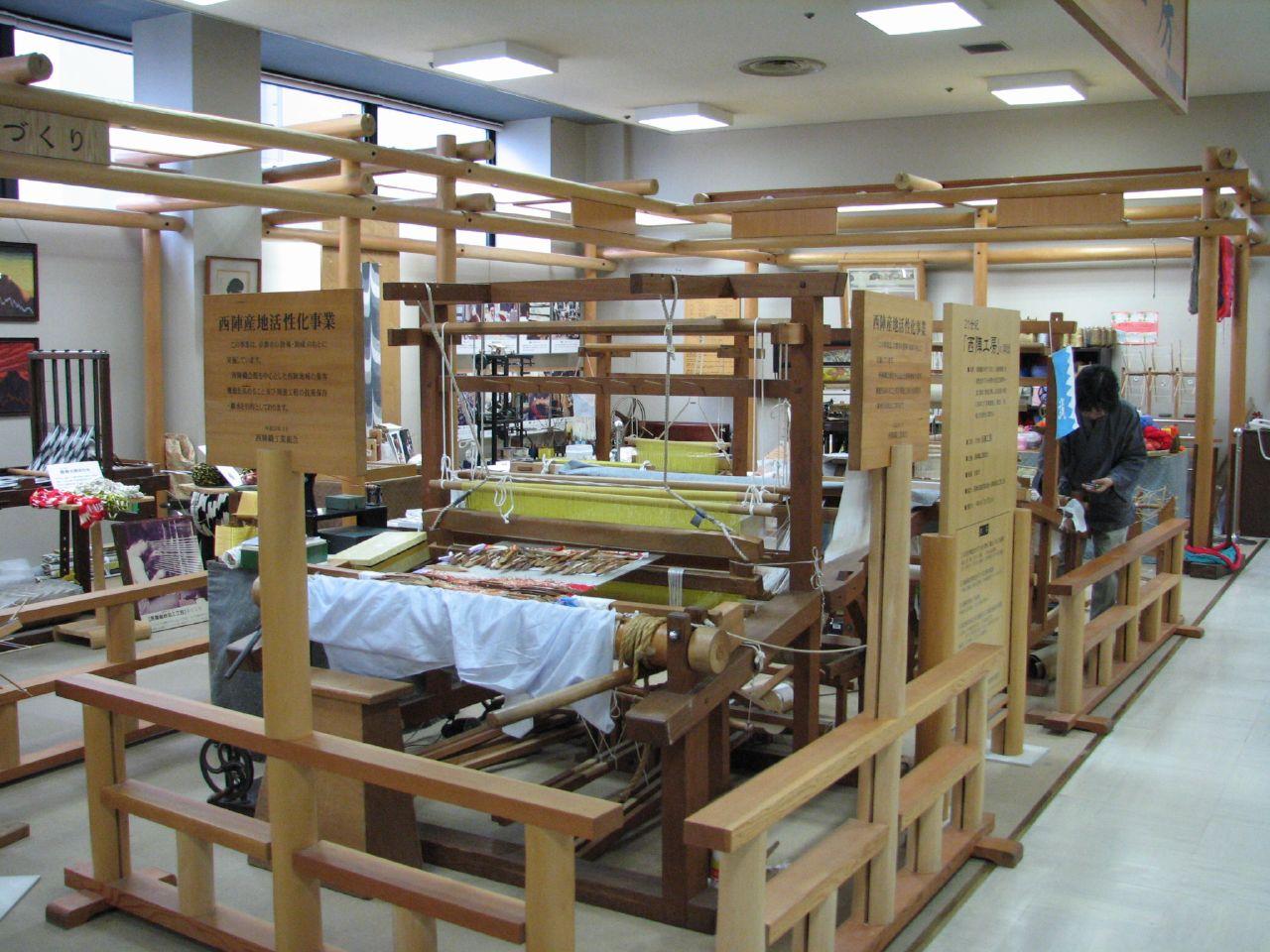
Treadle looms photographed at Nishijin Textile Center in 2005. This is historical context for weaving in Kyoto, not HOSOO's workshop or a current visitor schedule.
tamaki niime: take the cloth home as something to wear
tamaki niime's brand story places its work in Nishiwaki, Hyogo, developing a new interpretation of Banshu-ori. Its own account describes producing original fabrics for shawls and clothing, using looms and knitting machines rather than a single production method.
The production page discusses yarn dyeing as a characteristic of Banshu-ori and describes the company's approach to weaving. This is a useful route if you want a finished piece in which colour and texture are central, without needing to plan a sewing project.
Compare the actual piece rather than treating a colour family as an exact repeat. For a shawl, try the weight, length and feel against the layer you plan to wear. For a garment, investigate shape and care as carefully as the textile story.
Use the official shopping guide to understand how the business describes its products and ordering process. Check whether your chosen item is available for your destination; do not infer current stock or overseas service from a photograph of an earlier piece.
Fabric words that answer different questions
A single textile can have several descriptions at once. Separate them before comparing products.
- Fibre: what the yarn is made from, such as cotton, silk, wool or a blend. The percentages belong to the actual item.
- Woven or knitted: a construction distinction. Weaving interlaces warp and weft yarns; knitting forms loops. For a buying comparison focused on knits, see our Japanese knitwear guide.
- Kasuri: a pattern made through yarns with deliberately undyed sections, arranged through weaving. Kurume City's explanation describes patterns formed in the warp, weft or both. It is not simply any blurred-looking print. Kurume City: What is Kasuri?
- Yarn-dyed: the yarn is dyed before the cloth is formed. tamaki niime discusses this in its Banshu-ori production explanation. It is a process description, not a synonym for handwoven.
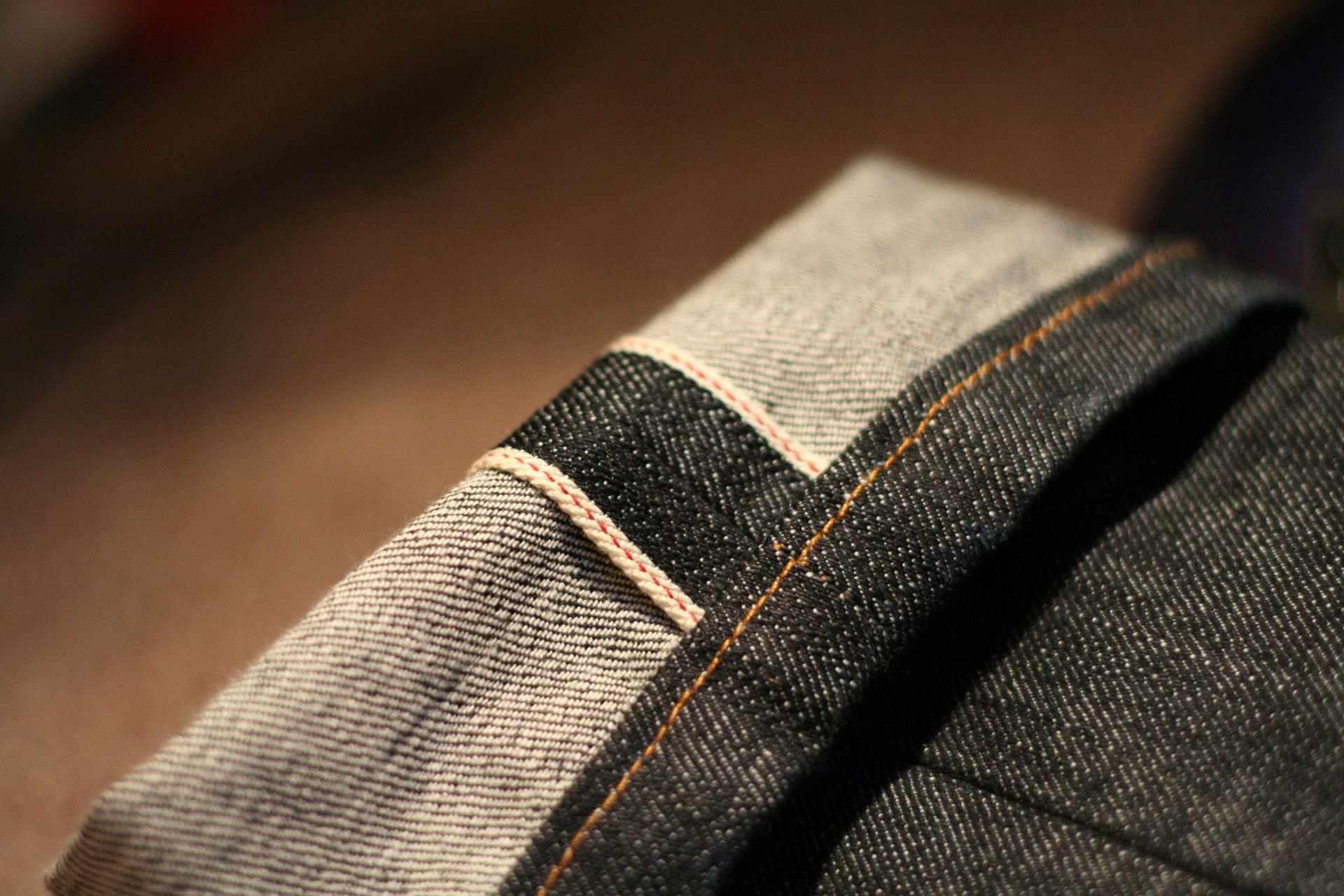
- Selvedge: the finished edge of woven cloth. Levi’s glossary describes the self-finished edge. It does not identify the fibre or guarantee the suitability of a whole garment. Our denim guide covers the term in its jeans-buying context.
Place names, company names and techniques can appear together. Avoid turning any one of them into a promise about all the others.
Buying cloth by the length: a project checklist
Before a cut is made, resolve what will be supplied. Buying too little of a distinctive textile can be harder to fix than leaving with no cloth at all.
| Detail | Ask the seller | What to bring from your project |
|---|---|---|
| Sale unit | Is the price per metre, another length, panel or finished piece? What is the minimum cut? | The quantity calculated for that unit |
| Usable width | What is the effective width, excluding any unusable edge? | Your pattern or cutting plan |
| Pattern | Does the design repeat or run in one direction? | The intended orientation and matching requirements |
| Composition and finish | What fibres, surface treatments and care instructions apply? | The intended end use and cleaning method |
| Continuity | Is this one continuous length, and can more be ordered? | Whether piecing would be acceptable |
| Cut goods policy | Can cut cloth be returned, and on what terms? | A confirmed project rather than a guess |
Source: The Standard Japan editorial project checklist, informed by the specifications and retail formats above.
If you are uncertain about suitability, ask about a sample or buy a finished object instead. Do not assume that a cloth appropriate for an accessory has the performance needed for frequently used upholstery.
Questions readers ask
Where can I buy Japanese fabric in Tokyo?
NUNO's official directory gives a specific Roppongi location and describes cut-length options for NUNO WORKS. Confirm the material and sales format first. A designer's shop, fabric retailer and industrial manufacturer are different kinds of destination.
Are Japanese fabrics always made from Japanese-grown fibres?
No single origin claim settles the whole production chain. Ask about fibre source, spinning, weaving or knitting, dyeing and finishing separately where those details matter to you. Read the product specification rather than relying on the nationality of the seller.
Is handwoven always better than machine-woven?
Better for which use? Compare the cloth's appearance, structure, intended application and care. A production method alone does not tell you whether you will like wearing or using the finished item.
Can I wash every cotton textile at home?
Do not decide from fibre content alone. Finishes, dyes, construction and the finished item's other components can change the instructions. Obtain the specific care guidance before buying.
What should I buy if I do not sew?
A finished shawl, garment or textile object lets you judge and use the material without committing to a project. Compare the actual piece and care requirements. For clothing labels that make fabric central to the purchase, see AURALEE, ATON and Graphpaper.
Style Desk
The Standard Japan
Shopping and fashion in Japan: denim, vintage, streetwear, and where each scene actually lives.
Facts are taken from primary sources (operators, venues, official tourism and government pages) and dates and prices are checked on the day of writing. Pages are revised when those sources change.
Expertise
Japanese denim, vintage, streetwear, shopping districts
Have a question or a correction?
Ask us anything about Japanese Fabrics: Makers, Weaves and What to Buy, or tell us what we got wrong. We reply within 24 to 48 hours.
Related Stories
Japanese Minimalist Brands: AURALEE, ATON and Graphpaper
Compare AURALEE, ATON and Graphpaper by fabric, silhouette and fit, with Tokyo shop details and a practical checklist for your first purchase.
Japanese Denim Jackets: Type I, II, III and Fit
Choose a Japanese denim jacket by fit, wash state and useful details. Compare Type I, II and III references without assuming every brand uses the same cut.
Japanese Denim Sizing: Raw, One-Wash and Hemming
Choose Japanese jeans by measurements, wash state and shrinkage. What to check before hemming, plus care advice grounded in manufacturers' instructions.