
How to Use the Tokyo Metro: Tickets, IC Cards, and Rush Hour Survival
How to use the Tokyo Metro: get a Suica, tap in, find your platform, tap out. It's simpler than it looks. Tickets, IC cards and rush hour explained.

How to use the Tokyo Metro: get a Suica card, tap it on the reader when you enter, find the right platform using the signs (all major stations have English), board, tap out when you exit. Done. You've used the Tokyo Metro.
The rest of this guide is for every question that arises between those steps.
Some links in this article are affiliate links. If you book through them, The Standard Japan may earn a commission at no additional cost to you.
Step 1: Get a Suica Card
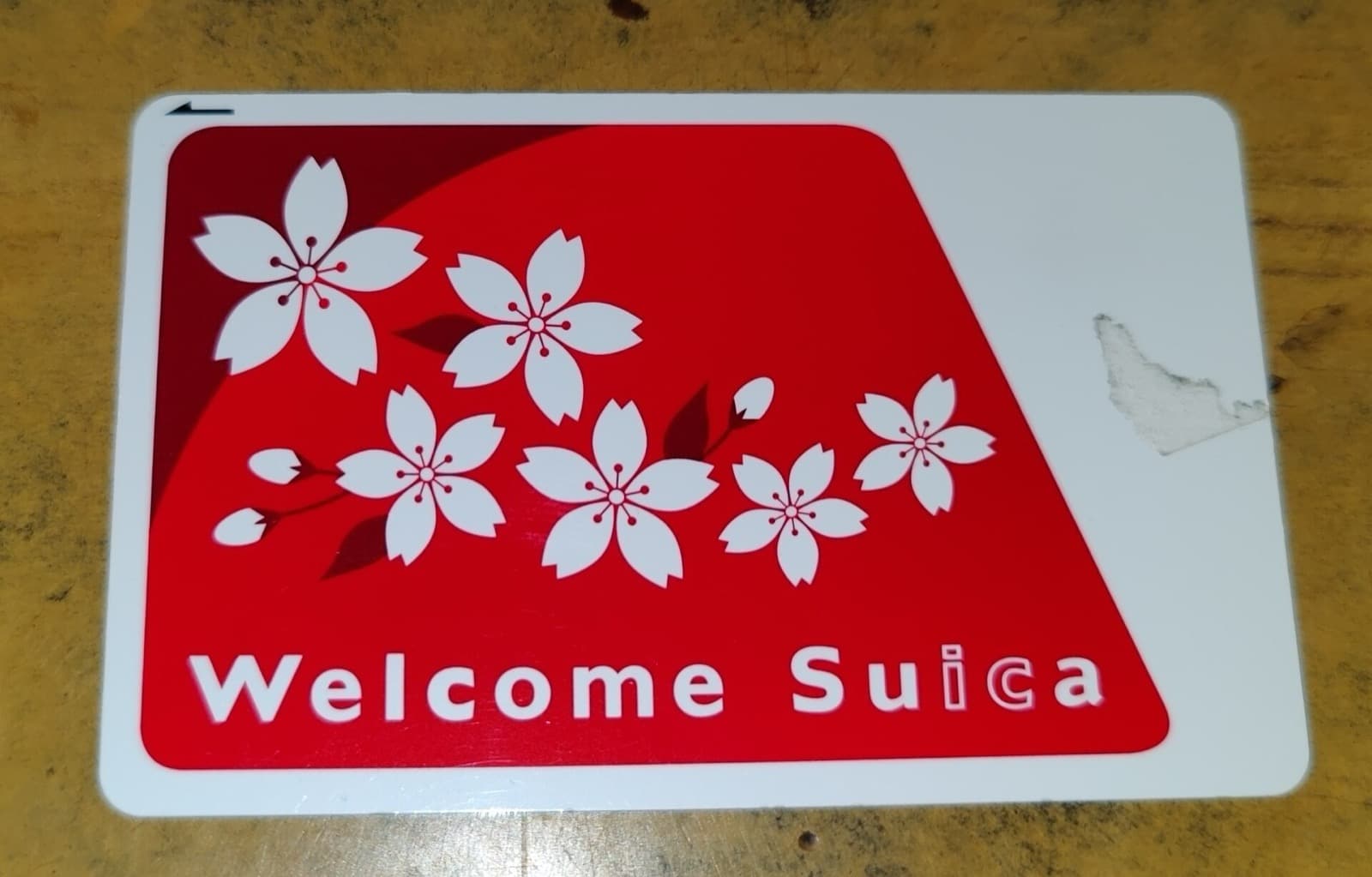
A Suica is a rechargeable IC card that works on every train, subway and bus in Tokyo, and at convenience stores, vending machines and many taxis. There are two kinds for visitors:
- Welcome Suica, made for short-term visitors: no deposit, valid for 28 days, and any balance left at the end is lost. Its PASMO equivalent, Tourist PASMO, has been sold at the airport stations since May 2026. Sold at JR East Travel Service Centers at Narita and Haneda airports, from machines at Narita and Haneda Terminal 3, and at the travel centers in Tokyo, Ueno, Ikebukuro, Shibuya and Shinagawa stations.
- A standard Suica or PASMO, sold again from station machines since March 2025: a ¥500 deposit, refunded when you return the card, and no expiry.
On an iPhone or a compatible Android phone, you can also add Suica or Welcome Suica Mobile to your phone instead. Load ¥2,000–¥3,000 to start.
Alternatively: Pasmo cards work identically to Suica. Get whichever is at the machine in front of you.
Recharge: At any train station vending machine (look for "チャージ / Charge" buttons) or at convenience stores.
Step 2: Understand the Network
Tokyo has two main operators:
- Tokyo Metro (9 lines, color-coded) — covers most of central Tokyo
- Toei Subway (4 lines) — supplements the Metro
Plus the JR lines (particularly the Yamanote Line — the green loop that connects Shinjuku, Shibuya, Harajuku, Akihabara, Ueno, and more) and numerous private railway lines.
Your Suica covers all of these. You don't need to know which operator runs which line — just follow Google Maps and tap your card.
This guide leans on Google Maps twice more below, so it is worth saying plainly: that only works with mobile data. Station WiFi in Tokyo exists but drops the moment you walk to the platform, which is exactly when you need the direction confirmed. Sort data out before you land rather than in the arrivals hall — a travel eSIM is the cheapest way and installs at home in a few minutes (Airalo is the one most visitors use).
Step 3: Navigate the Station
Major Tokyo stations have signs in Japanese, romaji (romanized Japanese), English, Chinese, and Korean. The key information:
- Line color and number — Each line has a letter and color (e.g., Ginza Line = G, orange). Platforms are numbered and labeled.
- Direction — Platforms go in two directions (e.g., "for Shibuya" and "for Asakusa"). Google Maps will tell you which direction.
- Bound for [Station] — Trains are labeled by their final destination, not every stop. Check that the final destination is in the right direction.
Step 4: Board and Ride
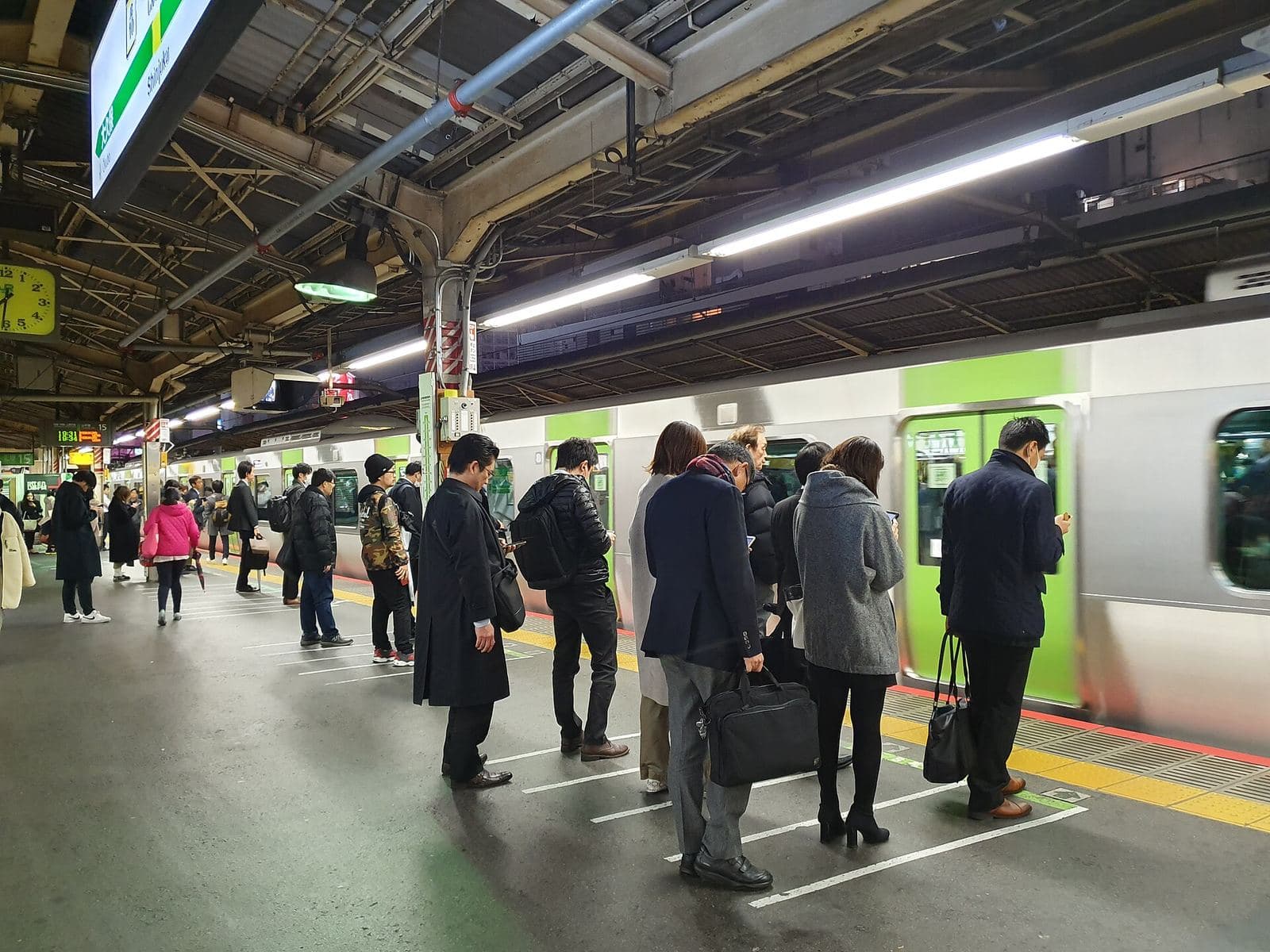
Queuing is orderly in Tokyo. Stand in the marked lines on the platform. Let passengers off first, then board from the sides of the door. Priority seats, at the ends of each car, are for elderly, pregnant and disabled passengers and people with small children.
No phone calls on the train. Bags on your lap or in the overhead rack, not blocking the aisle. Quiet.
The announcements come in Japanese and English at major stations. Google Maps will tell you your stop.
Step 5: Exit and Tap Out
Find the exit gates (改札 / kaisatsu). Tap your Suica on the reader. The gate opens. The correct fare is automatically deducted — you don't need to know the fare in advance.
If you don't have enough balance, the gate won't open. Go to the "Fare Adjustment" machine (精算機 / seisanki) near the gate, add money, and try again.
The Yamanote Line: Your Best Friend
The JR Yamanote Line is a green loop that runs around central Tokyo. Learn its major stops:
Clockwise from the top: Ueno → Akihabara → Shimbashi → Shinagawa → Ebisu → Shibuya → Harajuku → Shinjuku → Ikebukuro → Ueno
This loop connects the major hubs. If you're going anywhere in central Tokyo, you'll likely use it. Trains run every 2–4 minutes during the day.
Reading the Fare Maps
If you need to check fares (rare with a Suica), fare maps are displayed above the ticket machines. They show prices in yen from the current station. You don't need to calculate anything if you're using an IC card — the gate does it automatically.
Train Hours
Tokyo trains stop at midnight and restart around 5am. This is important. If you're out after midnight, you'll need to take a taxi or wait until trains restart. Many nightlife areas (Shinjuku, Roppongi, Shibuya) are designed around this — there are late-night restaurants and bars specifically for people waiting out the train gap.
Common Mistakes
Getting on the wrong line. Google Maps fixes this, but always double-check the line color and platform number. Big stations like Shinjuku have more than a dozen lines run by several companies.
Exiting at the wrong exit. Large stations have numbered exits. The right exit matters — Shinjuku has exits that are a 15-minute walk from each other. Google Maps specifies which exit to use.
Not tapping out. Your card won't work at the next station if you haven't tapped out of the previous one. The gate system tracks this.
Running out of balance. Add more than you think you need. ¥2,000 lasts about 2–3 days of normal travel in Tokyo.
FAQ
Do I need a JR Pass? Probably not for Tokyo alone. The JR Pass covers JR lines nationwide (including the Shinkansen) and makes sense if you're traveling between multiple cities over a week or more. For Tokyo-only travel, a Suica is more practical.
Can I use my phone instead of a Suica card? Apple Pay and Google Pay support Suica in Japan. You can add a Suica to your phone's wallet and use it exactly like a physical card. This also allows you to add money from your phone.
What's the difference between Tokyo Metro and Toei? Two different government operators. Fares are separate — transferring between them costs slightly more than staying on one network. In practice, your Suica handles this automatically and you won't notice the difference.
How do I get from Narita Airport to Tokyo? Three main options. (1) The Narita Express (N'EX), easiest with luggage: ¥3,330 to Shinjuku (about 80 minutes) since the March 2026 fare change, with seats reserved. (2) The Keisei Skyliner, fastest: ¥2,580 to Ueno, about 40 minutes. (3) Keisei's regular Access Express or limited express trains, slowest but cheapest at around ¥1,000–¥1,300. The N'EX and Skyliner need a reserved-seat ticket in addition to the fare; the regular Keisei trains take Suica.
How do I get from Haneda Airport to Tokyo? Haneda is much closer to the city. The Tokyo Monorail to Hamamatsucho takes about 20 minutes and costs ¥520; the Keikyu Line to Shinagawa takes about 15–20 minutes. Both accept Suica.
What if I get lost? Go to the station information window (みどりの窓口 / Midori no Madoguchi, or the general info desk). Station staff are almost always helpful, even with limited English. Show them your destination on your phone if needed.
Travel Desk
The Standard Japan
Trip planning: seasons and crowds, getting around, airports, where to stay, and the practical steps before and after you land.
Facts are taken from primary sources (operators, venues, official tourism and government pages) and dates and prices are checked on the day of writing. Pages are revised when those sources change.
Expertise
Seasonal crowds, transport and airports, itineraries, lodging, pre-trip logistics
Have a question or a correction?
Ask us anything about How to Use the Tokyo Metro: Tickets, IC Cards, and Rush Hour Survival, or tell us what we got wrong. We reply within 24 to 48 hours.
Related Stories
25 Japan Travel Tips Locals Actually Use (Suica Cards, Cash, Tipping, Etiquette)
Practical Japan travel tips: get a Suica at the airport, carry ¥10,000–¥20,000 in cash, don't tip, download offline maps. The things that save hours.
How to Ride Trains in Japan: A Foreigner’s Practical Guide
How to ride trains in Japan: IC cards, ticket gates, shinkansen seats, rush hour, luggage rules, and the etiquette that keeps you from being That Person.
Suica vs Pasmo: Complete IC Card Guide for Japan 2026
Suica vs Pasmo: both work identically on trains, buses and in shops nationwide. Visitors can get Welcome Suica or Tourist PASMO at the airport, or add Suica to an iPhone.